How Methanol Fuel Delivery Mechanism Improves Efficiency
When it comes to storing, pressurising, and providing methanol fuel to naval engines and industrial power systems, the Methanol Fuel Delivery Mechanism is the only option that was carefully thought out and built. Unlike most fuel systems, this one uses special materials and cutting-edge control technologies to handle methanol's unique chemical qualities, such as its higher polarity, corrosiveness, and lower lubricity. These systems keep pressure, temperature, and flow rates steady even when the working load changes. This makes combustion stable while reducing wear and increasing fuel atomisation. Optimised injection time, less engine knocking, and better heat management all lead to higher efficiency. This is why Methanol Fuel Delivery Mechanisms are necessary for ships that want to decarbonise without losing speed.
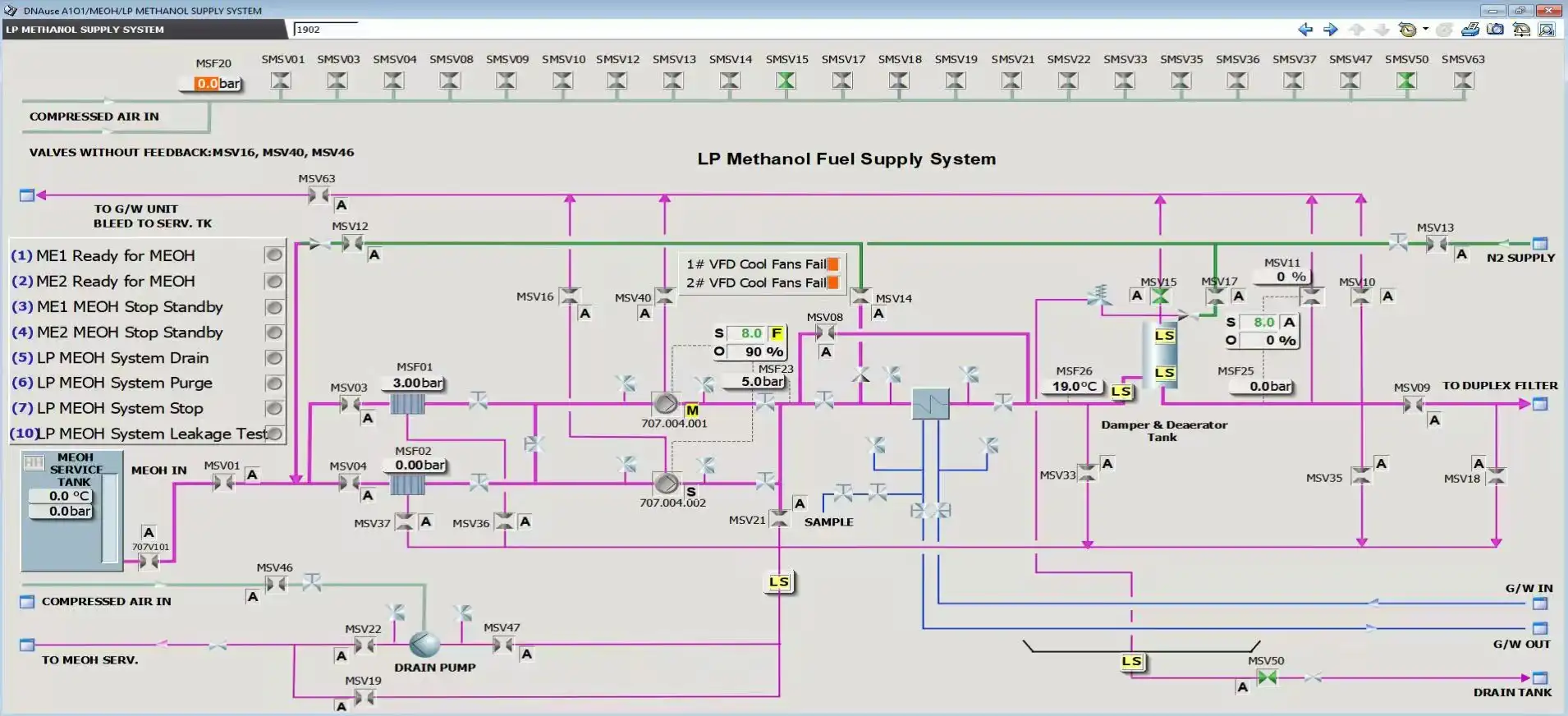
Understanding the Methanol Fuel Delivery Mechanism
What Makes Methanol Fuel Systems Different?
When compared to other naval fuels, methanol has special handling needs. Because of how it's chemically structured, the supply line needs materials that don't rust. When exposed to methanol, standard elastomers and soft metals break down quickly. This means that special closing parts and stainless steel construction are needed. Because the fuel has a lower viscosity, pumps and injectors need to be more precise to keep it from leaking inside. Also, because it absorbs water, it's important to keep the system dry.
When buying, professionals understand these basic differences; they can see why special methanol fuel supply systems can't just use diesel infrastructure. CM Energy's TSC brand has designed solutions that especially deal with these material compatibility issues. These solutions ensure long-term dependability in harsh naval settings.
Core Components of Efficient Delivery Systems
A full methanol fuel supply system is made up of several smaller systems that work together. The filling and transfer system takes care of bunkering, which is required by strict chemical vessel rules for safekeeping and the movement of methanol. Pressure, temperature, and flow rate are all precisely controlled by the supply unit, which adapts to changes in engine load. Auxiliary devices clean the air, heat the engine for cold starts, and cover it with nitrogen to keep dampness out. Control and safety tools keep an eye on processes all the time to make sure they follow the rules for low-flashpoint fuel.
These parts work together to make a transport system that can handle everything from chemical trucks to bulk carriers. The modular design theory lets customisations be made based on the needs of each craft, whether they are added to new ships or made to fit older ships. This flexibility is especially helpful for operators who are in charge of different teams with different working traits.
Pressure and Flow Rate Management
One of the most important parts of efficiency is keeping the fuel supply stable as the engine's load changes. The Methanol Fuel Delivery Mechanism needs to work correctly during start-up, load change, and stop processes. Advanced electrical control units keep changing the time and speed of the pumps and injectors to keep the combustion conditions at their best.
Because methanol has about half the energy density of other marine fuels, delivery systems need to be able to handle about twice as much mass flow rate to produce the same amount of power. Because of this need, engineers are working on bigger pipes and pumps with more capacity to avoid cavitation problems that could make the system less reliable.
Key Efficiency Advantages of Methanol Fuel Delivery
Enhanced Combustion Performance
Because methanol has a higher octane number, engines can run at higher compression ratios without knocking, which directly leads to better heat efficiency. Because the fuel has a high latent heat of vaporisation, it naturally cools the input charge, which raises the volumetric efficiency. The Methanol Fuel Delivery Mechanism must properly atomise and measure the fuel in order for these factors to work together to increase power output while lowering specific fuel usage.
In the real world, uses on chemical tankers and offshore support boats show that they work better. Because methanol burns cleanly, operators say their engines run more smoothly across a wide range of loads and need less upkeep on parts of the combustion chamber. Since there are no sulphur or particulate emissions, there is no soot buildup on the injector valves. This means that the system lasts a lot longer than heavy fuel oil systems.
Optimized Fuel Atomization
How well fuel burns depends on how precisely it is atomised. The Methanol Fuel Delivery Mechanism uses high-pressure pumping techniques to get around the high surface tension of methanol. Modern injector designs make small spray patterns that help the fuel evaporate quickly and mix completely with the air in the combustion chamber. Electronic control systems change the time of injections to within a millisecond, so they can adapt to changes in engine load and speed.
Modern systems keep an eye on the injection process in real time and use feedback loops to keep the atomisation at its best, even as parts wear down naturally. This ability to change makes sure that the system stays efficient over its entire working life, protecting shipowners' return on investment.
Corrosion Management and System Longevity
Because methanol is an active chemical, it needs strong rust protection. The transport system has passivated stainless steel pipes, FFKM seals that are resistant to chemical attack, and special coatings on parts that will wear out quickly. These choices of materials stop the fast wear and tear that would happen with regular gas engine parts.
Managing corrosion well has a direct effect on working efficiency because it keeps pumps and injectors within tight limits for long periods of time. As long as the gaps stay within the limits, the volumetric efficiency stays high, and the loss stays low. The TSC systems from CM Energy use full materials engineering to deal with these issues all along the fuel route, from storage tanks to the end injection.
Maintenance Efficiency Through Design
A system design that is well thought out makes upkeep easier. Technicians can repair or replace individual pieces without having to wait for a long time because the design uses modular components. Filtration systems placed in a planned way along the delivery path catch contaminants before they get to the sensitive injection equipment. Better tracking tools let you know about problems before they get too bad, which lets you do condition-based maintenance instead of fixed-interval service.
The self-cleaning properties of the Methanol Fuel Delivery Mechanism also help make upkeep easier. The solvent properties of methanol help get rid of deposits in fuel lines and injectors. However, this same quality means that the system needs to be closely watched during the initial starting process, as old deposits come loose. Systems that are properly built take this break-in time into account by incorporating better filtration and plans for frequent filter element replacement during the first few months of use.
Comparing Methanol Fuel Delivery with Other Fuel Systems
Structural Differences from Diesel Systems
For diesel fuel delivery, the fuel itself keeps the high-pressure pumps and nozzles running smoothly. Because methanol has almost no lubricity, it needs very different methods. Usually, diamond-like carbon layers are used on wear-prone surfaces, or separate lubrication systems are used for pump mechanisms. This difference is one of the most important engineering changes when making methanol fuel supply systems.
The standards for injection pressure are also very different. Modern diesel systems may need to run at very high pressures to finely atomise the thick fuel. On the other hand, because methanol is less sticky, it is possible for systems to do a great job of atomising it at lower pressures. This makes it possible for pump designs to be a bit simpler while still providing better combustion performance.
Energy Density Considerations
Diesel has 42.7 MJ/kg, while methanol has only 20 MJ/kg. This means that 2.1 times the mass flow rate is needed to get the same amount of power. The Methanol Fuel Delivery Mechanism needs to be able to handle these larger amounts without causing pressure drops or flow instability. Planning for the amount of space in tanks becomes more important, but methanol's lower cost per unit of energy often makes up for the need for more space.
Bulk carriers and crude oil tankers that use methanol as a fuel must carefully weigh the amount of room they have for fuel storage against the amount of goods they can carry. The small size of the delivery device helps keep the profile of pumping and conditioning equipment to a minimum, freeing up valuable vessel room for activities that make money.
Environmental Performance Advantages
In addition to improving effectiveness, the Methanol Fuel Delivery Mechanism has a big positive effect on the environment. Burning methanol doesn't produce sulphur fumes or much particulate matter, which makes it easier to treat the waste after it's been used. Carbon dioxide emissions depend on the material used to make methanol. Renewable methanol made from biomass or recovered carbon has much lower lifetime emissions than fossil fuels.
These environmental benefits directly lead to operating freedom and legal compliance for ship owners who operate in emission control areas or ports with strict air quality rules. Proper fuel supply not only allows for clean combustion, but it also lowers the need for upkeep on exhaust systems and turbochargers, which increases the total efficiency.
Procurement Considerations for Methanol Fuel Delivery Systems
Assessing System Compatibility
Making sure methanol fuel source systems are compatible is the first step. Engine manufacturers specify fuel pressure, flow, and quality requirements. From frigid beginnings in the Arctic to high rates in tropical seas, the distribution system must match these specifications.
Regulatory compliance depends on ship type and itinerary. International commerce ships must follow the IMO IGF Code for low-flashpoint fuels. Ships in rural waterways must observe regional norms. Buying managers should verify classification group certifications for tools.
Tank coatings, seals, and instrumentation must be compatible with the gasoline supply system. A rigorous procurement process checks the whole fuel system to make sure all wet parts can withstand methanol for the tank's intended usage.
Critical Technical Specifications
The key size consideration is flow capacity. The Methanol Fuel Delivery Mechanism must ensure that the engine has adequate fuel to create maximum power and additional fuel in case it has to be modified or utilised differently. Pressure levels must account for regular operating circumstances and short-term occurrences like load shifts.
Temperature regulation is crucial for reliability. To evaporate enough gasoline when beginning in cold areas, integrated heating systems may be required. To prevent fuel line vapour lock in warm areas, cooling is essential. No matter the weather, the delivery equipment should maintain gasoline within the specified range.
The performance of filters affects the injection system's lifespan. Multiple filtering stages with finer particles protect critical sections from bunkering and tank rust pollutants. The purchasing parameters should include filter efficiency rates and element maintenance frequency to ensure safety.
Evaluating Manufacturer Credentials
A supplier's methanol fuel system track record often indicates project success. CM Energy has designed and built dual-fuel boats, liquefied petroleum tankers, and chemical vehicles. They also have methanol-related information that they may apply immediately. For rigorous RoRo work, the business produced proven methanol fuel delivery system skids, proving its practical technical skills.
Quality standards demonstrate a product's accurate manufacturing and reliability. Independent tests confirm systems meet international requirements. DNV AIP and a well-known classification group perform these inspections. So sellers maintain high standards throughout manufacturing, procurement teams should request documented documentation of testing and quality control systems.
Global service networks and technical assistance define long-term relationship value. The setup, troubleshooting, and maintenance of Methanol Fuel Delivery Mechanisms need expertise. More useful than equipment sellers are suppliers that provide complete lifecycle support, from design guidance to installation supervision and continuing professional aid.
Implementation Best Practices and Future Trends
Installation and Commissioning Excellence
For execution to go well, the shipyard, the equipment seller, and the vessel master must first agree on all the technical details. It's important to be clear about what the interface needs are for things like mechanical mounting, piping links, electrical integration, and contact with the control system. Modern methanol fuel supply systems are made up of separate modules that can be put together more easily if the right attention is paid to the connections during the planning stages.
When prefabricated pieces get to installation places, they are already positioned and connected, so there is less work to do on-site and less chance of delays. If you prepare the foundations correctly, the modules will be able to attach tightly to the vessel frame and be protected from vibrations. Before commissioning can start, the system is checked for leaks and made sure to be fully functional by carefully connecting the transfer pipes, other systems, and control wires in a planned way.
Through tests of both individual parts and the whole system, the Methanol Fuel Delivery Mechanism meets all performance requirements in all modes of operation. Protocols for testing should include cold starts, load acceptance, fuel switching, and emergency stop processes that happen in the real world. Keeping detailed records of the results of testing sets performance standards and provides useful reference data for future debugging.
Operational Monitoring and Maintenance
Setting up good tracking methods makes the system work better and be more reliable. Instruments that measure fuel pressure, temperature, flow rate, and filter differential pressure give workers real-time information about the health of the system. By plotting these factors over time, you can see how problems are growing before they affect operations. This lets you do preventative maintenance.
Areas that are most likely to have problems because of methanol should be the focus of regular inspections. The state of seals, especially in pumps and valves, needs to be checked on a regular basis. Filter elements need replacement based on differential pressure readings rather than fixed intervals, accounting for variations in fuel quality and system cleaning. Sampling and analysis of fuel quality ensure contaminant levels remain within acceptable limits.
The complete lifecycle support offered by CM Energy helps operators create the best repair plans for their unique operating situations. Technical specialists help with fixing strange situations and can send out field service engineers to fix more complicated problems as quickly as possible to keep operations on schedule.
Emerging Technologies and Industry Outlook
The marine industry's faster push to reduce carbon emissions keeps pushing new ideas in methanol fuel systems. Next-generation injection technologies offer even smaller particles and more accurate dosing, which will get even more efficiency from the way methanol burns. Artificial intelligence is used in digital fuel management tools to improve injection methods in real time using a lot of sensor data and forecast modelling.
IoT-enabled diagnostics allow for remote tracking, which lets expert teams on land keep an eye on the performance of the whole fleet and find ways to make things better. With these digital tools, centralised knowledge can help ships all over the world, so they don't have to rely on service providers in faraway places. By looking at practical data, predictive maintenance programs can predict when a component will break down, which changes the way maintenance is planned in a big way.
New rules are still making it easier for methanol to be used. Enforcing stricter rules on emissions in important coastal areas helps ships that use clean fuel systems do their jobs better. Possible future ways to price carbon would make methanol even more competitive in the market, especially green methanol made from sustainable feedstocks. Operators will be in a better position as the industry moves toward sustainable fuels if their procurement plans take these trends into account.
Conclusion
As a mature and tried-and-true technology, the Methanol Fuel Delivery Mechanism makes naval transportation more efficient and helps solve important environmental problems at the same time. Modern solutions handle methanol's special handling needs by using advanced materials engineering, precise electrical control, and careful system integration. These methods ensure reliable performance in a range of vessel types and working conditions. The benefits of efficiency, such as better combustion performance, less upkeep, and environmental compliance, make them very appealing to owners who are thinking ahead. As the marine industry speeds up its efforts to reduce carbon emissions, methanol fuel supply systems offer an instant way to become more environmentally friendly without affecting operations or the industry's ability to make money.
FAQ
1. Can existing diesel engines be converted to methanol fuel?
Technically, conversion is possible, but it needs a lot of changes that go beyond simple power system changes. The Methanol Fuel Delivery Mechanism needs to be completely rebuilt with parts that won't rust. Improvements to engines usually include new seals all over, new fuel injection maps, possible changes to the compression ratio, and the addition of cold-start assist systems. Because converting is hard to do and costs a lot of money, purpose-built methanol engines or dual-fuel configurations are often more valuable in the long run than retrofits. This is especially true for big marine uses.
2. What maintenance intervals apply to methanol fuel systems?
When systems are properly planned and made with the right materials, they can last as long between maintenance checks as regular naval fuel systems. Seals are usually checked and replaced during regular overhauls, so they don't need any extra care. At first, filtration needs to be checked on more often while methanol cleans old layers from tanks and pipes. Once everything is back to normal, changing the filters will be part of the regular maintenance plan. CM Energy suggests condition-based tracking methods that keep track of the real system performance instead of just using calendar or hourly intervals. This makes maintenance more efficient and ensures stability.
3. How do you verify supplier quality for methanol delivery systems?
To make sure that systems meet international standards for handling low-flashpoint fuel, procurement teams should ask for approval paperwork from well-known classification groups. Look at the supplier's past projects, especially works that went well on similar types of vessels. DNV licenses are an independent way to make sure that the design is good and that the manufacturing is good. For specific quality control and testing methods, ask for them. Check out the world service networks and technical help that are available. Companies like CM Energy that have a history of providing methanol fuel supply systems to tough environments are more reliable than sellers who don't have much experience with methanol.
Partner with CM Energy for Advanced Methanol Fuel Supply Solutions
Through our complete TSC-branded fuel supply systems, CM Energy is ready to help you make the switch to environmentally friendly and efficient methanol transportation. Our engineering team has a lot of experience coming up with ways to send methanol to different kinds of ships, from chemical carriers to offshore support boats. We have successfully provided integrated systems that meet the strict requirements of international shipping. These systems are backed by DNV approval and have been used in the real world and shown to work. Our modular method lets you set up things in a way that fits your specific business needs, whether you're installing a new building or doing a retrofit.
If you choose CM Energy as your Methanol Fuel Delivery Mechanism provider, you'll be working with leaders in the field who created these important technologies before the market needed them. Our world service network makes sure that you can get quick technical help wherever your ships are working. Get in touch with our experts at info.cn@cm-energy.com to talk about your project needs and find out how our methanol fuel supply systems can help your fleet be more efficient, better for the environment, and in line with regulations for long-term success.
References
1. International Maritime Organization. "IGF Code: International Code of Safety for Ships Using Gases or Other Low-flashpoint Fuels." IMO Publishing, 2021.
2. Verhelst, S., Turner, J.W., Sileghem, L., & Vancoillie, J. "Methanol as a Fuel for Internal Combustion Engines." Progress in Energy and Combustion Science, Vol. 70, 2019.
3. Methanol Institute. "Marine Methanol Fuel Delivery Systems: Technical Guidelines for Ship Owners and Operators." 2023 Edition.
4. American Bureau of Shipping. "Guide for Methanol and Ethanol Fueled Vessels." ABS Technical Publications, 2022.
5. Society of Automotive Engineers. "Fuel System Requirements for Methanol-Capable Marine Engines." SAE International Journal of Fuels and Lubricants, 2023.
6. DNV GL Maritime. "Alternative Fuels for Shipping: Methanol Fuel Handling and Storage Systems." Classification Notes No. 104, 2022.