How Marine Methanol Fuel Handling Systems Work on Ships
A methanol fuel handling system on a ship is an integrated engineering suite that stores, conditions, and delivers liquid methanol from bunker tanks to dual-fuel engines. Unlike conventional diesel setups, a marine methanol fuel handling system must address methanol's low flashpoint (approximately 11°C), toxicity, and low viscosity through purpose-built components: corrosion-resistant tanks, sealed pumps, double-walled piping, nitrogen padding, and precision control modules. The entire system is engineered to supply fuel at exact pressure, temperature, and cleanliness levels that engine manufacturers demand, across all operating conditions from cold start to full load.
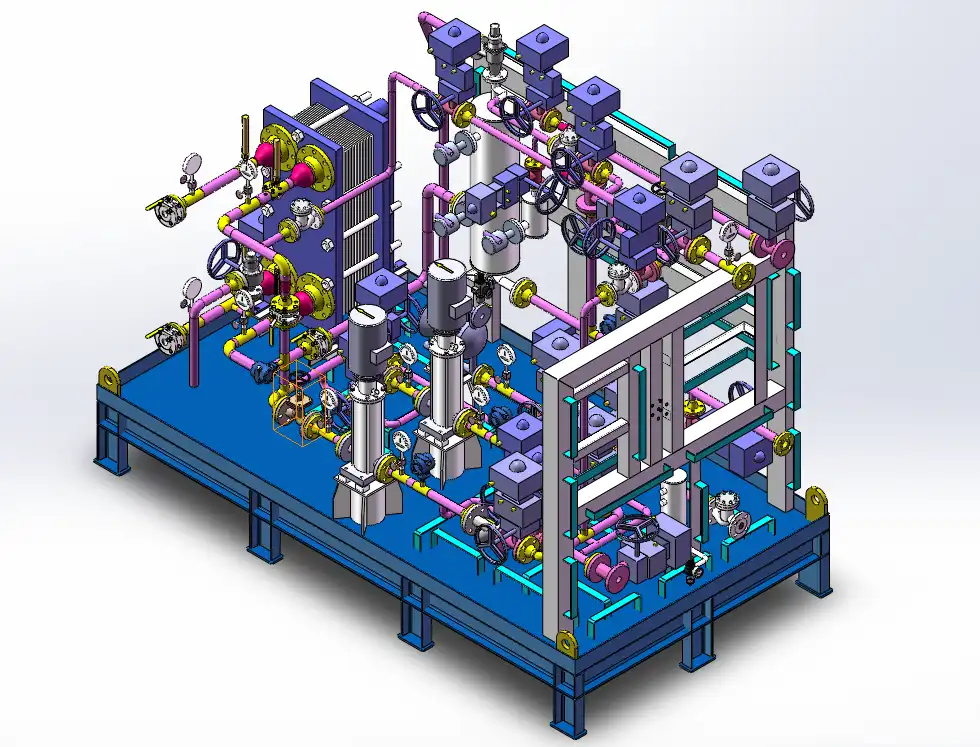
Understanding Marine Methanol Fuel Handling Systems
About 2.89 percent of the world's greenhouse gas emissions come from shipping, and the IMO wants to cut that number by half by 2050. Methanol is one of the few alternative fuels that can be used on a large scale in business today. This means that a well-designed methanol fuel handling system is an important tool for any fleet that wants to reduce its carbon footprint.
Core System Architecture
There are four main parts of a naval methanol fuel handling system. These are the methanol supply unit, the filling and delivery system, the support system, and the control and safety system. In the fuel path from the bunker tank to the engine injector, each block has a specific job to do.
The Methanol Supply Unit
The system's heart is the supply unit. It makes sure that the methanol meets the engine manufacturer's requirements for pressure, temperature, flow rate, and cleanliness. When the ship's load changes quickly, like when container ships and tankers do, the unit must keep its output steady without any pressure spikes or flow stops.
Filling, Transfer, and Delivery
It is the job of the filling and transportation module to load bunkers from land or a barge, move fuel to service tanks, and send it to the engine room. Under SOLAS and the IBC Code, methanol is a poisonous, low-flashpoint liquid. This means that before the first drop of fuel gets on the ship, every transfer line, valve, and fitting must meet chemical vessel standards.
Safety Measures and Guidelines for Methanol Fuel Handling
Methanol is colorless, has a spark that is almost transparent, and is very dangerous to eat or touch. If the methanol fuel handling system doesn't pay attention to any of these factors, the whole ship is at risk. Because of this, safety design is not a choice; it is the basic requirement for engineering.
Double-Walled Piping and Containment
The IMO IGF Code and MSC.1/Circ.1621 say that all low-flashpoint fuel lines that go through occupied areas must have double-walled pipes. Infrared or electrochemical sensors are always watching and ventilating the space between the inner and outer walls. The Safety Instrumented System (SIS) immediately shuts down the plant if the methanol air level rises above 20% of the Lower Explosive Limit.
Nitrogen Inerting and Vapor Control
Anywhere from 6.5% to 36.5% by volume in air, methanol vapor can catch fire. A nitrogen layer is always kept above the liquid surface in storage bins so that explosive atmospheres don't form inside. Before the engine is turned off, the same nitrogen source cleans the fuel lines to make sure that no liquid methanol is still stuck in the pipes in the engine room.
Crew Training and Emergency Response
The people who use the methanol fuel handling system are just as important as the technology itself. Crew members must have proof that they know how to handle low-flashpoint fuels safely. This includes knowing how to use personal protective equipment, deal with spills, and get medical care for methanol exposure. Regular drills that are in line with the ship's Safety Management System help people follow the rules.
Maintenance and Troubleshooting Tips for Optimal Performance
The way a diesel fuel system wears out is different from the way a methanol fuel system wears out. Because methanol has almost no lubricity, it can damage normal pump seals and gear surfaces. Also, because it absorbs water, water can build up in storage tanks over time. Taking care of these failure modes ahead of time keeps the ship on plan.
Scheduled Inspections and Filter Maintenance
Depending on the quality of the bunkered fuel, the filter elements in the fuel purification module need to be cleaned or replaced every so often. Particulate pollution is especially bad for methanol systems because the low-lubricity pumps can't handle much debris. The number of inspections should match the manufacturer's instructions and the needs of the class society poll.
Pump and Seal Integrity Checks
If you choose a mag-drive or DLC-coated pump for methanol service, you should still check the pressure and seals on a regular basis. Because methanol is poisonous, any sign of outward weeping around a pump case means that work must stop. It is more cost-effective to replace seals on a set schedule than to wait for them to break.
Sensor Calibration and Control Logic Verification
Pressure, temperature, and flow sensors feed data to the automated control system. Drift in any one sensor can cause the methanol fuel handling system to deliver off-spec fuel to the engine. Annual calibration against certified references, combined with periodic logic testing of ESD sequences, confirms the system responds correctly under fault conditions.
Comparing Methanol Fuel Handling Systems with Alternative Fuels
When procurement teams look at green fuel options, they often compare methanol to LNG, ammonia, and regular diesel. There are different infrastructure, safety, and total-cost profiles for each fuel.
Methanol vs. Diesel
It is easier to work with diesel fuel because it is not highly poisonous, has a high flash point, and is very good at lubricating. Diesel doesn't need any of the things that a methanol fuel handling system does: PTFE or EPDM elastomers, double-walled pipes, and nitrogen inerting; it just needs 316L stainless steel wetted parts. But green methanol can cut CO₂ emissions by up to 95% over the course of its lifecycle compared to dirty diesel. That's why the biggest container companies have ordered more than 100 ships that can use methanol by 2024.
Methanol vs. LNG
Keeping LNG in a cold environment at a temperature of about -163°C makes building structures and insulating them more difficult. At room temperature, methanol stays liquid, which makes tank design easier and cuts down on boil-off losses. A methanol fuel handling system takes up less space on the deck than a similar LNG fuel gas supply system, which is good for ships with limited space for accommodations.
Methanol vs. Ammonia
Another zero-carbon candidate is ammonia, but it is much more difficult to handle as a fuel because it is very toxic (TLV-TWA of 25 ppm compared to 200 ppm for methanol) and breaks down copper alloys. Methanol has an edge for newbuilding projects that need to be finished soon because it already has port bunkering facilities and a history of shipping chemicals.
Procurement Considerations for Marine Methanol Fuel Handling Systems
There's more to choosing a methanol fuel handling system supplier than just looking at unit prices. Over the course of a ship's 25-year life, its technical depth, class-society recognition, delivery history, and global service coverage all affect its total cost of ownership.
When expert buying teams choose a methanol fuel supply system, these are the main things they look at:
- Class society certification: The supplier must hold valid DNV AIP and Product Certificates, and must support the ship's classification documentation through the full approval process. Without class approval, the system cannot be installed.
- Engine OEM alignment: The methanol fuel handling system must satisfy MAN ME-LGIM or WinGD engine-specific requirements for supply pressure, temperature, and cleanliness. Misalignment at this interface causes start-up failures and warranty disputes.
- Modular delivery options: Shipowners need flexibility. A supplier capable of delivering either a standalone methanol supply unit skid or a fully integrated system—filling, transfer, supply, auxiliary, and control—reduces multi-vendor coordination risk.
- Retrofit feasibility: For existing vessels, the supplier must assess structural interfaces, available deck space, and class change requirements before committing to a retrofit scope.
These things have a direct effect on whether a system works on the first day of sea trials or creates expensive "punch list" items when it is delivered. A provider with confirmed references for both new builds and retrofits is a good way to build technical trust.
Conclusion
The ship's methanol fuel handling system is the link between its promise to reduce carbon emissions and how well its engines actually work. It has to handle a fuel that is chemically strong, meet OEM specs when the load changes, and work safely within strict international rules. Getting the system right, including the materials, safety architecture, control logic, and support after the sale, is what determines whether a green methanol strategy cuts down on emissions as promised or causes costly problems with operations. During the design stage, procurement teams that spend time on technical due diligence always get better results during launching and throughout the service life of the vessel.
FAQ
1. Why does a methanol fuel handling system need double-walled piping?
Per the IMO IGF Code, methanol's low flashpoint and toxicity require all fuel lines in occupied spaces to use double-walled piping with monitored annular ventilation, so a primary pipe failure does not release toxic vapors into crew areas.
2. Can an existing diesel vessel be converted to use a methanol fuel handling system?
Yes, though conversion requires a structural survey, re-classification of relevant spaces under low-flashpoint fuel rules, and replacement of all non-compatible seals, gaskets, and piping. CM Energy's TSC team offers technical assessment for retrofit projects.
3. How often does the system require maintenance?
Filtration elements need inspection every service interval defined by the engine OEM. Pump seals and sensor calibration typically follow annual survey cycles aligned with class society requirements.
4. Is the methanol fuel handling system compatible with green methanol produced from renewable sources?
Yes. The system handles both gray and green methanol without hardware changes, as both share the same physical and chemical properties.
5. What certifications should a supplier hold?
Look for DNV AIP Certificate and DNV Product Certificate at minimum, plus documented compliance with the IMO IGF Code and SOLAS IBC Code.
Partner with CM Energy for Your Next Methanol Fuel Handling System Project
CM Energy (brand name: TSC) has supplied methanol fuel supply system skids for ships, such as Stena RoRo newbuilds. They have 19 ship-set references in clean fuel supply and cargo handling to back them up. Each methanol fuel handling system is designed and built by TSC to DNV-certified standards, and they offer full lifetime support from proposal to commissioning. Visit cm-energy.com or email our engineering team at info.cn@cm-energy.com to talk to an approved methanol fuel handling system provider about your needs for a new build or a retrofit.
References
1. International Maritime Organization (IMO). Interim Guidelines for the Safety of Ships Using Methyl/Ethyl Alcohol as Fuel (MSC.1/Circ.1621). IMO, 2019.
2. MAN Energy Solutions. MAN B&W ME-LGIM Engine — Project Guide for Methanol Fuelled Engines. MAN Energy Solutions, 2023.
3. DNV. Rules for Classification: Ships — Low Flashpoint Liquid Fuelled Engines and Fuel Systems. DNV, 2023.
4. International Maritime Organization (IMO). International Code of Safety for Ships Using Gases or Other Low-Flashpoint Fuels (IGF Code). IMO, 2015.
5. IRENA. Innovation Outlook: Renewable Methanol. International Renewable Energy Agency, 2021.
6. Lloyd's Register. Fuel for Thought: Methanol as a Marine Fuel. Lloyd's Register Marine & Offshore, 2022.
