How do AHC cranes contribute to the efficiency of offshore logistics?
AHC Crane technology changes the way offshore lifting is done by stopping the vertical movement caused by ocean waves. This keeps loads in the air fixed no matter how much the ship leans. These cranes have Motion Reference Units and their own control systems that make it possible for them to work in more weather conditions, lower the risk of damage to equipment, and finish projects faster in harsh sea settings. This active compensation feature directly leads to measured efficiency gains in wind farm installations, underwater developments, and FPSO operations, all of which depend on accuracy and safety to make a project profitable.
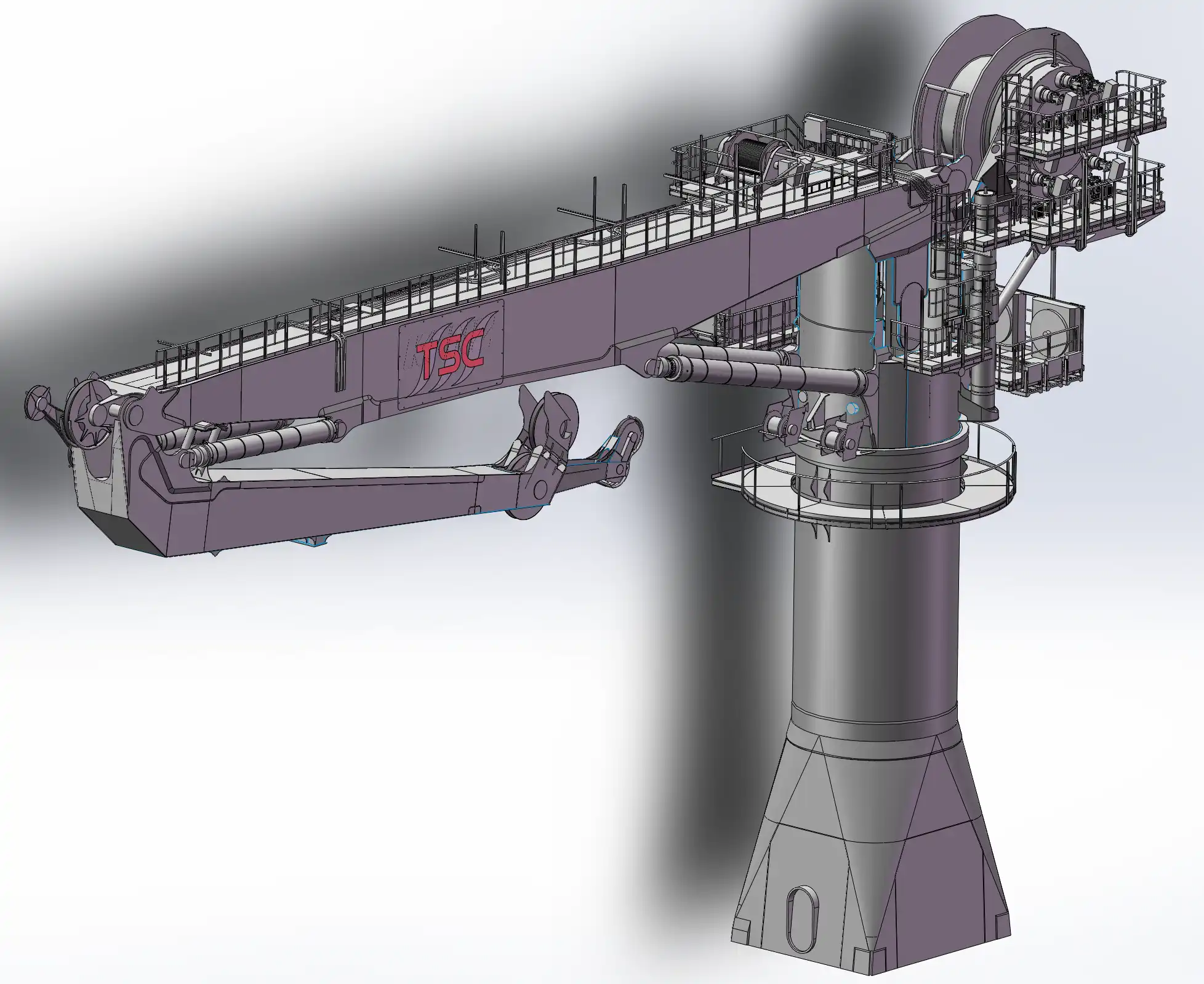
Understanding AHC Cranes and Their Role in Offshore Logistics
What Makes Active Heave Compensation Technology Different?
Usually, marine cranes move at the same speed as the ship, which can cause forces that are hard to predict to act on cargo that is suspended. Real-time sensors on an AHC Crane pick up on pitch, roll, and heave movements, breaking this stiff link. The electro-hydraulic power unit of the system reacts in milliseconds, changing the speed of the winch to stop it from moving up and down. Because of this separation, the lifting environment stays steady even when waves push ships through three-meter amplitude cycles.
Core Working Principles Behind Motion Compensation
Motion Reference Units constantly watch how the vessel moves and send information to programmable logic computers, which figure out what changes need to be made to the winch. When a wave pulls the ship off the water, the system quickly sends out wire rope at speeds of up to 120 meters per minute. It gathers rope at the same rate as it moves downwards. This constant change keeps the load position within a few centimeters of perfection during the splash zone and underwater landing phases, which is where regular equipment fails.
Types of Compensation Systems Serving Different Needs
Passive heave adjustment uses spring accumulators to soak up motion energy. This gives basic safety but not much control. Through closed-loop input, active systems like those made by TSC give exact control over where the load is placed. Constant tension modes in AHC Crane keep the wires from getting too loose during ROV deployment, and auto-landing features let manifolds land safely on bottom models without any help from a person during the most important final approach stages.
Challenges in Offshore Logistics and Limitations of Traditional Cranes
Weather Windows Restrict Operational Availability
Offshore projects have to follow strict sea state limits that are set by measurements of large wave heights. When Hs goes above 1.5 meters, most conventional cranes stop working, leaving workers to wait days or weeks for conditions to get better. This downtime adds up to big daily charter costs for building ships and Platform Supply Vessels. Weather delays affect project plans, changing when turbines are put into service and when hydrocarbon output can begin, which affects investment returns.
Dynamic Load Behavior Creates Safety Hazards
When slack wire snaps tight, it puts too much stress on rigging parts, which is called uncompensated lifting in wave action. Because of this, the snatch loading hurts the lifting ropes, shackles, and structural connection spots on both the load and the crane boom. Unpredictable load swing patterns make it more likely for people working near hanging goods to get hurt. In addition to the immediate operating delays, the costs of replacing equipment and investigating accidents add to the financial strain.
Precision Requirements Exceed Conventional Capabilities
Installing wind turbine parts requires alignment errors in millimeters when connecting transition pieces to monopile supports. When putting up a Christmas tree underwater, exact stab-in processes are needed because even a small amount of vertical movement during the final approach can damage hydraulic connectors worth millions of dollars. Usually, crane workers have a hard time getting this precise by hand while also adjusting for the movement of the ship. This causes multiple landing tries, which adds time to the critical path and raises the risk of being exposed to the weather.
Core Efficiency Benefits of AHC Cranes in Offshore Logistics
The amazing thing about active heave adjustment for marine material handling is that it can keep working even when normal equipment can't because of the conditions. With improved lifting systems, vessels can reach project goals more quickly and with fewer safety incidents that lead to government scrutiny and insurance claims.
Extended Weather Windows Maximize Vessel Utilization
Offshore wind installation ships using AHC Crane systems can work in sea conditions with waves up to 2.5 meters high, which is almost twice as many weather windows as standard cranes can use. This bigger operating envelope cuts down on standby time and gives project planners more trust when scheduling important lifts. With active compensation, a Platform Supply Vessel can keep transferring goods from the deck to FPSOs even when conditions are bad enough for other ships to stay away, so drilling activities don't have to stop.
Load Stability Protects High-Value Equipment
Subsea gear that is shipped abroad is a concentrated investment in capital that can be damaged by impact during handling. Active adjustment systems stop the swinging motion that happens when loads in the air move in patterns that match the heave of the vessel. When umbilical termination kits, hydraulic flying leads, and sensor packages get to the installation sites, they don't have the tiny cracks and broken seals that come from being shocked over and over again. This protection of cargo quality lowers the rate of equipment failure during startup and the first few months of operation.
Operational Safety Performance Improvements
Getting rid of dynamic load behavior makes the workplace safer for deck workers who are in charge of rigging operations. Predictable load placement makes it safer for workers to get close to suspended goods while attaching and disconnecting guide ropes. Safety records show that incidents happen much less often on ships using active systems than on ships using regular cranes in the same sea conditions. This behavior leads to better measures of safety culture and lower rates of experience change for insurance underwriting.
Versatility Across Multiple Lifting Scenarios
Modern compensation systems, like the ones made by TSC, have more than one way to work that can be adjusted to meet different pulling needs. Harbor lift mode increases the amount of space available for moving goods in calm water. For open-water moves, the offshore lift mode combines capacity with the ability to handle bad weather. Subsea mode puts placing accuracy first when installing parts underwater. Because of this, a single crane can be used for different stages of a project without having to switch out equipment. This saves money on transportation costs and deck room.
Selecting the Right AHC Crane for Offshore Logistics
Assessing Load Capacity and Reach Requirements
Before making a procurement choice, it's important to look at the maximum component weights and the needed working radius across the whole project scope. When lifting, wind turbine nacelles that weigh 80 to 100 metric tons need enough capacity reserves to account for dynamic amplification factors. The required reach is based on the width of the vessel's beam and the distance between set-down points on jackets or semi-submersible pontoons. Configurations of cranes with adjustable boom lengths allow for practical freedom as the needs of a project change.
Vessel Integration and Structural Considerations
Mounting arrangements must spread crane loads across the body of the vessel in a way that can absorb pedestal reactions at the highest toppling moments. Naval engineers look at the deck reinforcements that are already there and decide if any other structural changes need to be made before the installation. The placement of an electro-hydraulic power unit changes the estimates for the stability of the vessel and needs to be coordinated with how the machinery room is already set up. Talks about AHC Crane equipment specifications are shaped by how well it works with the ship's power systems and the control room's connections.
Evaluating Manufacturer Support and Certification
Classification society approvals from DNV, ABS, BV, LR, and CCS show that ocean lifting equipment meets international standards. Manufacturers who keep these licenses show that they are dedicated to quality systems and testing to make sure designs work. Response time is based on the service network's ability to help with technology issues that come up during remote operations. The supply of spare parts and the time it takes to get them affect how maintenance is planned for ships that have ongoing charter commitments and can't go on long dry docking.
Economic Considerations in Procurement
Capital spending analysis compares the cost of the crane system to the expected efficiency gains, which can be seen by the wider weather windows and shorter operating delays. When active pay extends working days by even small amounts, vessels that earn day rates above $150,000 quickly recoup their equipment investments. Leasing options are available for project-specific vessels with set operating lifespans. On the other hand, buying assets outright makes sense for long-term field development efforts. Lifecycle cost modeling for users who care about sustainability data takes into account how much energy hydraulic and electric drive systems use.
Maintenance and Operational Best Practices for AHC Cranes
Routine Inspection Protocols
The health of the hydraulic system has a direct effect on how well and reliably the correction works. Fluid samples are taken once a month to check for contamination before they damage the servo valves, and the cleanliness standards meet NAS 1638 Class 6 requirements. Using magnetic rope testing tools to look at the wire rope can find internal wire breaks that are caused by the high-cycle wear that comes with continuous compensation movements. Accumulator pre-charge checking makes sure that there is enough energy storage for times of high demand when the highest compensation speed is being used.
Operator Training and Competency Development
To operate a compensation system, you need skills that go beyond what you learn as a crane operator. Knowing how to calibrate a Motion Reference Unit, how to choose a compensation mode, and how the system responds helps workers get the most out of their tools. Simulation-based training programs act out difficult working situations, such as how to handle system failures and emergencies. Project managers and classification society inspectors can see that operators are qualified by the certification programs they keep track of in their logbooks.
Leveraging Manufacturer Technical Support
During factory acceptance testing, standard performance data is collected and used as a guide for ongoing system tracking. Building connections with approved repair shops guarantees access to original replacement parts that are made to meet original standards. Technical support hotlines filled by experts familiar with certain equipment setups cut down on the time needed to fix problems during activities offshore, where communication bandwidth limits the ability to diagnose. Representatives from the maker do routine repair visits that find new problems before they become system failures that need emergency response.
Conclusion
Active heave correction is a major improvement in the ability to move materials abroad. It directly addresses the problems caused by motion that make traditional lifting operations limited. Ships that use these systems have better access to weather windows, more accurate cargo handling, and better safety performance. This gives players in the wind energy, oil and gas, and marine building markets a competitive edge. Better sensor integration and control algorithms are making the technology keep getting better, which means that AHC Crane systems will be needed on the next wave of offshore cargo ships that help build subsea infrastructure around the world.
FAQ
1. How does an AHC Crane differ from standard offshore cranes?
Standard offshore cranes keep the length of the wire rope the same while they lift, which makes loads in the air move with the vessel as it moves up and down. Using high-speed winch systems controlled by motion sensors, an AHC Crane constantly changes the length of the rope. This keeps loads set in place on the bottom or a fixed installation structure, even when waves are moving.
2. What sea state limitations apply to active compensation systems?
Each system has performance charts that show the highest important wave height and period combos that will still work for compensation. Professional-grade gear can usually work in conditions up to 2.5 meters Hs, but the exact limits rely on the weight of the hanging load and the depth of the water. When mechanical limits are reached, safety devices automatically stop activity.
3. Can compensation systems fail during critical lifts?
Single-point breakdowns can't cause load drops because of redundant design. If the power goes out, fail-safe safety systems start working right away, and backup control routes keep important functions running. A lot of systems have passive compensation backup modes that use shock absorbers to give basic safety when the main system fails.
Partner with CM Energy for Advanced Offshore Lifting Solutions
CM Energy, which does business under the TSC name, has been making active heave compensation systems for the world offshore industry for more than 15 years. Our engineering team creates unique solutions that fit the shape and needs of your vessel. These solutions are backed by full classification society certifications from DNV, ABS, BV, LR, and CCS. We understand the performance and reliability standards your operations need because we have more than 350 deck cranes in use around the world and cover more than 25% of the world's offshore drilling equipment.
Our services as an AHC Crane provider go beyond just delivering equipment. We also offer full lifecycle support through plant acceptance testing, onboard installation supervision, operator training programs, and quick technical support. Email our offshore equipment experts at info.cn@cm-energy.com to talk about how our tried-and-true crane technology can help your project run more smoothly and safely. We'd love the chance to talk about your business problems and come up with custom lifting solutions that will add measured value to your asset for as long as it's in use.
References
1. "Offshore Crane Systems: Technology and Operational Performance in Harsh Environments," Journal of Marine Engineering and Technology, Vol. 22, Issue 4, 2023.
2. "Active Heave Compensation: Principles and Applications in Subsea Operations," Society of Underwater Technology Annual Report, 2024.
3. "Wind Turbine Installation Vessel Equipment Requirements and Performance Standards," Renewable Energy Marine Operations Technical Paper Series, 2023.
4. "Lifting Appliance Standards for Offshore Installations," DNV-ST-0378 Classification Guidance Document, 2024 Edition.
5. "Hydraulic System Reliability in Offshore Crane Applications: Maintenance Best Practices," International Association of Drilling Contractors Technical Publication, 2023.
6. "Economic Analysis of Weather Window Extension Through Advanced Crane Technology," Offshore Engineer Magazine Research Report, March 2024.
