What Should a Shipowner Look for in an AFSS Service Agreement?
When shipowners use ammonia as a fuel, they have to deal with special operating and safety issues that require more help than just setting up the system. A successful AFSS (Ammonia Fuel Supply System) service deal is the foundation of safe vessel operations. It makes sure that your Ammonia Fuel System works properly and meets all regulatory needs. The agreement should include rules for upkeep, how to handle emergencies, proof of compliance, team training, and the supply of parts. If you don't choose the right service partner, your investment in zero-carbon power could lose value over time or become a source of operating risk and unplanned downtime.
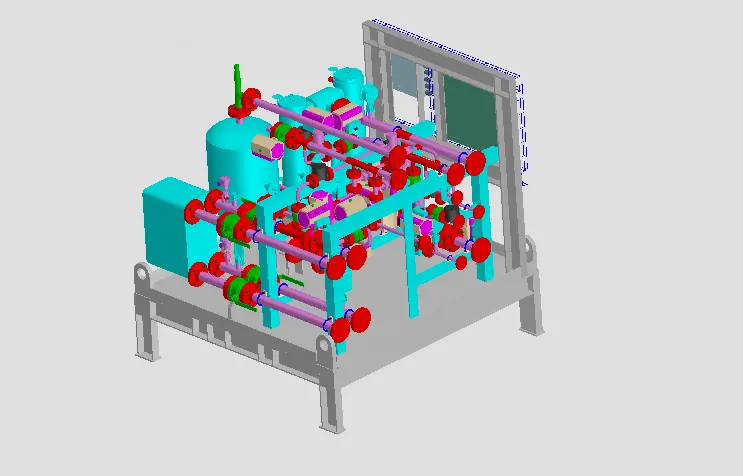
Understanding the Importance of an AFSS Service Agreement
This is an exceptionally vital time for the marine trade to begin lessening its carbon impression. Alkali is an engaging way to meet the IMO's 2050 contamination lessening objectives, but utilizing it makes operations more troublesome in ways that conventional fuel frameworks never did. Since it is noxious, destructive, and burns in a way that is distinctive from other maritime powers, alkali needs to be dealt with in a certain way.
AFSS benefit understandings go past support. This contract secures your team, transport, and merchandise. The understanding states who is dependable for what and how to oversee framework concerns amid government assessments. It moreover sets execution benchmarks to support fuel economy over time.VLAC, chemical tanker, bulk carrier, and seaward back vessel proprietors must take advantage of printed material discounts. Since alkali bunkering frameworks, fuel valve trains, and vapor administration gadgets are complex, pros must screen them. Without a strong benefit assention, minor deficiencies may gotten to be costly, administrative infractions can lead to harbour detainments, and group misconception amid imperative operations can hazard safety.
Core Components to Evaluate in an AFSS Service Agreement
Maintenance Scope and Emergency Support
A reliable service agreement for an Ammonia Fuel System should clearly characterize upkeep scope for pumps, spill sensors, crisis shut-off valves, and dormant gas generators. Crisis reaction back is particularly vital amid further operations or outside harbour calls. Solid understandings incorporate 24/7 accessible diagnostics, clear professional expedited methods, and guaranteed reaction times. Quicker onsite bolster decreases downtime dangers that may influence constitution plans and operational continuity.
Safety and Compliance Protocols
An Ammonia Fuel System must continuously comply with IGF Code necessities, classification society benchmarks, and nearby marine controls. Benefit assentions ought to incorporate security assessments, administrative archive overhauls, and framework adjustments when benchmarks alter. Group preparing programs ought to cover crisis reaction, day by day operation, and upkeep methods through drills, test system works out, and STCW-compliant certification refreshers. Preparing area and planning ought to moreover coordinate vessel operational necessities and team availability.
Performance Monitoring and Transparency
Modern Ammonia Fuel System operations produce imperative information related to fuel utilization, emanations, weight levels, and component condition. Progressed benefit understandings give farther checking and real-time framework visibility to bolster preventive upkeep and fuel optimization. Detailing quality shifts between suppliers, extending from month-to-month outlines to point by point dashboard analytics. Assentions ought to characterize detailing recurrence, information proprietorship, capacity term, and get to rights for chronicled operational records and execution analysis.
Parts Replacement and System Upgrades
Reliable spare parts supply directly affects Ammonia Fuel System uptime and maintenance efficiency. Service agreements should clarify whether parts are stocked regionally or ordered only when needed. OEM components provide quality assurance but may increase delivery time and costs. Since ammonia propulsion technology continues to develop rapidly, agreements should also define upgrade paths, software updates, and responsibilities for future safety or efficiency improvements while controlling long-term operating expenses.
Comparing AFSS Service Agreements: What Differentiates Leading Providers?
Supplier Expertise and Industry Credentials
The long-term reliability of an Ammonia Fuel System depends heavily on the provider’s technical experience and industry qualifications. Companies with backgrounds in ammonia carriers, dual-fuel vessels, and liquefied gas handling systems typically deliver stronger technical support. Classification society approvals and industry certifications confirm engineering quality and compliance. Participation in zero-carbon projects and partnerships with engine manufacturers also show that providers remain aligned with evolving ammonia propulsion technologies.
Customization Flexibility
Service agreements for an Ammonia Fuel System should match each vessel’s operating profile rather than use standardized contracts. Different vessel types and trade routes create unique maintenance, compliance, and operational requirements. Flexible agreements can support emission monitoring, compatible cargo handling, and integration with existing fuel systems. Customized services reduce unnecessary costs while ensuring operational challenges specific to the vessel and trading region are fully addressed.
Cost Structure Transparency
Pricing structures for Ammonia Fuel System service agreements vary widely between fixed annual fees and usage-based models tied to operating hours or fuel throughput. Transparent pricing helps shipowners forecast long-term costs and avoid unexpected charges. Agreements should clearly explain how expenses for emergency response, training, spare parts, software updates, and maintenance are allocated. The best pricing structure depends on operational intensity, budget planning preferences, and acceptable levels of financial risk.
Integration Capabilities
Many modern vessels combine an Ammonia Fuel System with batteries, shore power, or conventional fuel backup systems. Service agreements should define how these technologies are integrated and supported together. Leading providers also offer digital integration with vessel management software, enabling centralized monitoring, predictive maintenance, and fleet-wide performance comparisons. Strong integration capabilities improve operational efficiency and simplify technical management across multiple vessels and propulsion technologies.
How to Choose the Best AFSS Service Agreement: Criteria Screening Approach
Define Your Operational Parameters
Selecting the right Ammonia Fuel System service agreement begins with understanding vessel operations, trade routes, and regulatory environments. Different vessel types require different maintenance support and scheduling flexibility. Trading regions also create unique compliance obligations under local and international regulations. Companies with environmental targets beyond IMO requirements should prioritize providers offering advanced performance optimization services that help reduce emissions and improve long-term sustainability performance.
Establish Key Evaluation Metrics
A structured evaluation process helps compare Ammonia Fuel System service providers objectively. Important criteria include safety performance, technical support speed, crew training quality, monitoring capabilities, and financial stability. Safety deserves special focus because ammonia handling involves toxicity risks and strict operating controls. Procurement teams should review case studies, incident response history, technician availability, spare parts networks, and client references from vessels operating in similar conditions and trade regions.
Balance Cost and Value Considerations
Choosing the lowest-cost Ammonia Fuel System agreement without evaluating overall value may increase long-term risks and operating expenses. Total lifecycle analysis should include service fees, training costs, spare parts replacement, and possible downtime expenses. More comprehensive agreements often include faster emergency support, advanced monitoring, and stronger training programs that reduce operational risks. These added protections frequently justify higher initial service costs through improved reliability and reduced disruption.
Practical Tips for Shipowners When Finalizing the AFSS Service Agreement
Negotiate Critical Contract Clauses
Careful contract negotiation protects shipowners operating an Ammonia Fuel System over the long term. Liability clauses, warranty conditions, and performance guarantees should clearly define provider responsibilities and available remedies for service failures. Shipowners should distinguish between equipment warranties and maintenance service guarantees. Contract duration and renewal terms should balance stable pricing with enough flexibility to change providers if service quality or operational needs change in the future.
Plan Thorough Implementation
Successful implementation of an Ammonia Fuel System service agreement requires detailed planning beyond contract signing. Shipowners should coordinate commissioning schedules, crew training, maintenance planning, and performance baseline tracking. Hands-on onboard training improves operational understanding more effectively than classroom-only instruction. Maintenance windows should align with operational schedules, while spare parts and technician availability should be arranged early to minimize delays and avoid extended downtime during planned service periods.
Monitor and Optimize Continuously
Continuous monitoring ensures an Ammonia Fuel System service agreement continues delivering expected value after implementation. Shipowners should track performance indicators such as uptime, fuel efficiency, safety incidents, and response times. Quarterly reviews with the provider help identify operational trends and opportunities for improvement. Sharing real operational feedback supports service refinement, while regular discussions about upgrades and new technologies help maintain system competitiveness and prevent long-term technological obsolescence.
Conclusion
Choosing the right AFSS service deal is a smart choice that will have a big effect on how well your ship works with ammonia propulsion. Complete maintenance support, strict safety rules, open monitoring of performance, and quick expert help should all be part of the deal. Check out providers based on how knowledgeable they are, how easily they can be customized, how clear their prices are, and how well they can work with other systems. By using a structured evaluation that fits your operational needs and carefully negotiating a contract, you can find a service partnership that turns your Ammonia Fuel System from something you have to do to meet regulations into a competitive operational advantage that gives you long-term value.
FAQ
1. What is the typical duration of an AFSS service agreement?
Most service agreements last between three and five years, which is a good balance between cost security and operating freedom. One-year deals are more flexible, but they may cost more each year and companies may not be as committed to keeping parts on hand or providing dedicated support resources. Longer deals make costs more predictable and often come with better prices, but they make it harder to change things if the service quality isn't good enough. Many shipowners think that starting terms of three years with the opportunity to renew are the best mix.
2. How does crew training integrate into service agreements?
Comprehensive agreements cover standard operations, emergency procedures, and basic troubleshooting during the system's launching and initial training for the team. Refresher training once a year goes over regulatory compliance requirements and presents new systems or better ways of doing things. For practical application, training usually takes place on the ship, but some companies offer simulator training on land for emergency situations. Check to see if training costs are part of the base deal fees or if they are charged extra. This has a big effect on the total cost of the service.
3. Can service agreements accommodate vessels with hybrid propulsion systems?
Quality providers are aware that hybrid power is becoming more common and make sure that their contracts can be used by ships that use more than one type of fuel or energy source. The deal should talk about how ammonia systems can work with diesel backups, battery storage, or other types of power. Find out if the service provider coordinates support for all engine parts or if they only work with ammonia systems, leaving you to handle separate service relationships for other technologies.
Partner with CM Energy for Comprehensive Ammonia Fuel System Solutions
If shipowners are looking for a reliable Ammonia Fuel System provider, CM Energy (TSC) has a lot of experience in the marine business and has proven their skills. Our team has successfully delivered 19 ship sets of clean fuel supply systems, showing that they can be relied on for a wide range of vessel types, from VLACs to offshore support vessels. TSC created its own ammonia fuel supply systems that have advanced safety features like the ability to identify leaks, shut down in an emergency, and include inert gas systems that work with the specific difficulties of ammonia marine propulsion. Our full range of services includes planning, production, installation, and full lifecycle support, which makes sure that your investment continues to provide practical value. Get in touch with our marine solutions team at info.cn@cm-energy.com to talk about how our experience supplying ammonia fuel can help you meet your business needs and decarbonization goals.
References
1. International Maritime Organization. (2023). "Guidelines on Alternative Fuels Safety for Ships Using Low-Flashpoint Fuels." Marine Safety Committee, London.
2. Chen, W. & Maritime Safety Research Institute. (2024). "Service Agreement Best Practices for Alternative Marine Fuel Systems." Journal of Marine Engineering and Technology, Volume 18, Issue 3.
3. American Bureau of Shipping. (2023). "Setting the Course to Low Carbon Shipping: Ammonia as Marine Fuel Service and Maintenance Requirements." ABS Technical Publications, Houston.
4. Lloyd's Register & University Maritime Advisory Services. (2024). "Lifecycle Cost Analysis of Ammonia Fuel Systems: Service Agreement Impact on Total Cost of Ownership." Maritime Economics Research, Southampton.
5. Society of Naval Architects and Marine Engineers. (2023). "Alternative Fuel System Support Infrastructure: Service Provider Evaluation Framework." SNAME Technical and Research Bulletin, Alexandria.
6. Peterson, R. & Global Maritime Forum. (2024). "Zero-Carbon Fuel Adoption Barriers: The Critical Role of Service Agreements in Maritime Decarbonization." Shipping Industry White Paper Series, Copenhagen.