How do AHC cranes adapt to varying sea conditions during operations?
When offshore operations demand precision in unpredictable marine environments, understanding how active heave compensation cranes respond becomes essential. These specialized lifting systems continuously counteract vessel motion caused by waves, swells, and wind, enabling offshore teams to perform subsea installations, ROV deployments, and heavy equipment transfers safely with AHC Crane. Through real-time sensor feedback and advanced control algorithms, compensation cranes adjust wire rope payout and retrieval speeds to maintain load stability regardless of sea state fluctuations. This dynamic adaptation protects critical assets from shock loading during splash zone transits and ensures millimeter-level accuracy when landing equipment on the seabed—capabilities that directly expand weather windows and reduce project downtime across oil and gas, offshore wind, and marine construction sectors.
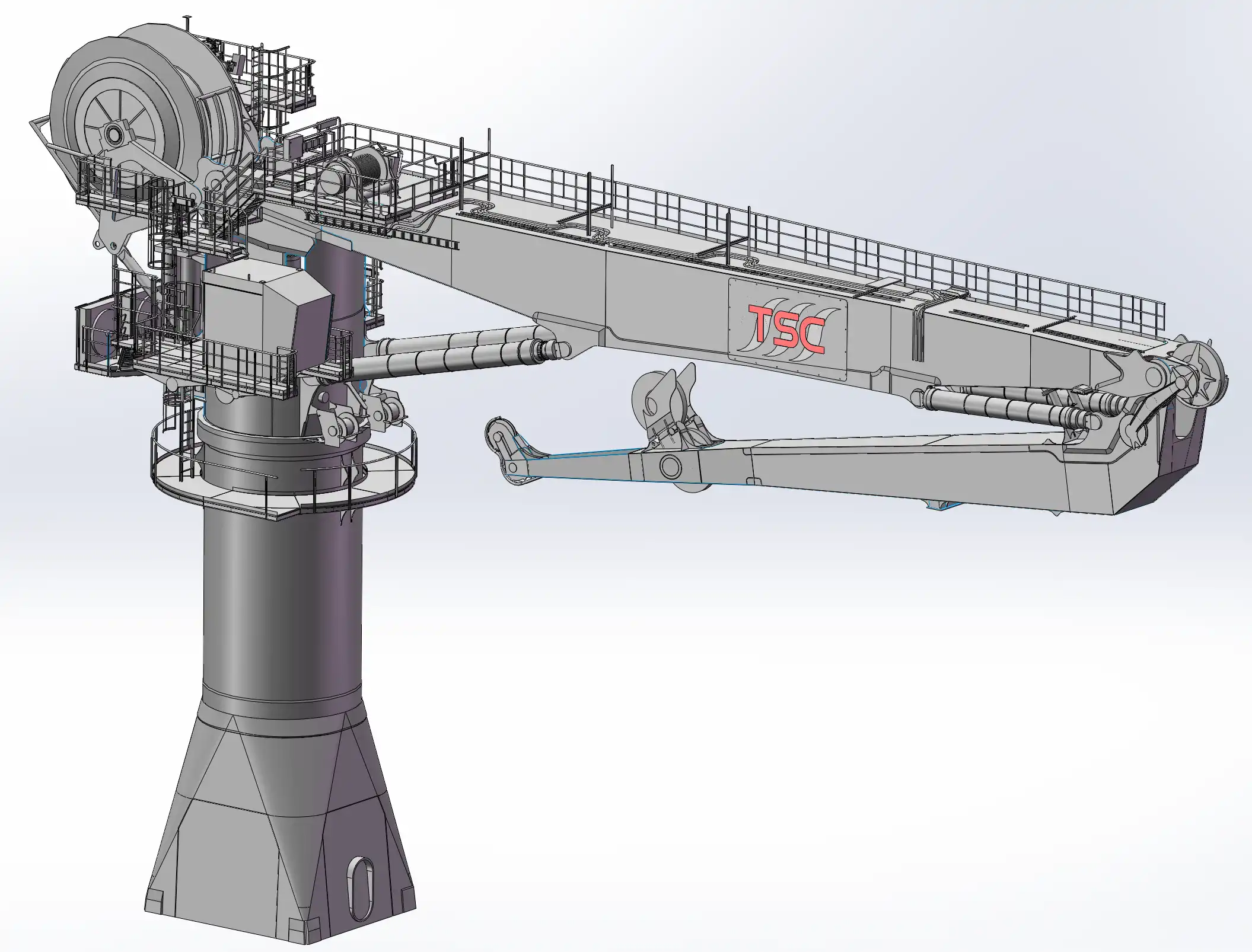
Understanding AHC Cranes and Their Operational Challenges at Sea
Active Heave Compensation (AHC) technology changes the way offshore lifting is done by separating loads in the air from how the ship moves. Unlike traditional offshore cranes, which send every lift, tilt, and roll straight to the load, these systems use Motion Reference Units (MRUs) to track changes in vertical position in real time. The information gathered is sent to Programmable Logic Controllers (PLCs), which tell winch motors to extend or withdraw wire rope at high speeds. This stops the vessel's movement from being transmitted to the payload.
Every offshore project manager knows the problems that this technology solves. Load swings caused by waves create dangerous pendulum effects that put people and equipment at risk. Unpredictable weather makes operating windows smaller, which forces expensive standby times. Traditional inactive systems that only use shock dampers or the elasticity of wire rope cannot provide the accuracy needed for current underwater hardware installations, where positioning errors of just a few centimeters are needed for mating surfaces.
Putting Christmas trees, manifolds, and umbilicals in ultra-deepwater fields is what offshore oil and gas projects depend on these systems for. Marine construction crews use them to move heavy modules from ships to fixed structures. Offshore wind farms need more and more compensation technology for moving turbine parts from service operation ships, where even small impacts can damage assets worth millions of dollars. The main problem in all of these situations is the same: keeping the load under control while the supporting vessel moves in three directions at the same time.
The operational environment makes things more difficult. Corrosive saltwater environments damage mechanical parts. Even when temperatures are very high or very low, hydraulic devices must still work effectively. Continuous twisting cycles under high strain speed up the wear and tear on wire ropes. When procurement teams understand these problems, they can better understand why compensation systems need complex engineering and why choosing tools requires more than just looking at its lifting ability.
Core Technologies Behind AHC Crane Adaptation to Sea Motion
Integrated sensor networks and rapid-response actuation systems are the technologies that make it possible for sea levels to change. Motion Reference Units (MRUs) on the vessel measure the intensity and speed of the heave with a precision of less than one centimeter. These sensors send streams of data to control units that run complicated algorithms that figure out how the ship will move milliseconds in the future. This ability to predict is very important because mechanical systems need to know ahead of time how to effectively counteract multi-meter heave amplitudes with AHC Crane.
The majority of ocean systems today are hydraulic because they have the highest power density and can hold the most weight. When the ship is moving down, high-pressure accumulator banks hold energy. When the ship is moving up, they release the energy to power winch drums at speeds that often go over 100 meters per minute. The electro-hydraulic power unit and the winch assembly work together to make a single motion system that is best for quickly changing directions and changing speeds precisely. Response latency is the important time between motion detection and mechanical correction. This integration cuts down on response latency.
Electric drive options are getting more attention because they use less energy. During the rope payout phases, these systems use regenerative braking to store the energy that was lost and use it again during the retrieval cycles. Electric systems need careful temperature management to keep the motor from burning during long compensation activities in rough seas, but they can save up to 30% of the energy used by hydraulic designs alone.
The proprietary control system is likely the most valuable piece of technology. Software algorithms keep tension constant to keep wire ropes from slack, limit acceleration rates to avoid shock loading, and find the best response speed to accurately track the motion of the vessel. In more advanced versions, adaptive learning is used to change the adjustment settings based on what is seen about the sea state. This makes the system work better during long operations. Because of how complex the software is, top makers protect their control system designs as their most valuable intellectual property.
Types of AHC Cranes and Their Suitability for Various Sea Conditions
Offshore AHC systems come in a number of different forms, each of which is best for a certain type of operation. Subsea building cranes focus on their heavy lift capacity and have a compensation efficiency of more than 95%, which lets them land multi-ton structures precisely on set seabed locations. These systems usually have strong luffing booms that can reach loads beyond the edges of the vessel and keep things from getting in the way during deployment processes.
When it comes to ROV launch and return systems, quick compensation reaction is more important than maximum payload capacity. These specialized AHC Cranes can lift lighter loads, but they have to react right away when the ship moves to protect the delicate tether connections. Small forms make it possible to fit them into tight deck areas on survey ships and dive support ships. High-performance ROV handling systems are different from general-purpose offshore cranes because they can keep the rope tension while the vehicle ascends through changing current profiles.
Pipe-laying ships have special systems that keep the pull forces on pipeline strings under control while they are being placed on the seabed. Even though these systems are technically different from standard lifting uses, they use the same compensation principles, but they are changed so that they work with horizontal load vectors instead of vertical suspension. The technology crossover shows how the ideas behind active motion correction can be used in a wide range of naval situations.
To choose the right equipment, you have to make sure that the system's capabilities match the needs of the project. The severity of the environment that the AHC Crane has to deal with is determined by the wave height and period. The necessary compensation speeds and control accuracy are based on the load's properties, such as its weight, shape, and hydrodynamic drag factors. Operational water depths affect the lengths of wire ropes and the way systems work together. These factors must be clearly stated in the procurement specs so that the equipment provided works in the real world and not just according to general performance claims.
Operational Best Practices for Optimizing AHC Crane Performance at Sea
Planning ahead is the first step to making marine cranes work as well as possible. Crews can plan important lifts during the best sea state windows when they have accurate marine weather forecasts. Dynamic load estimates that take into account weight loss due to submersion and hydrodynamic forces help operators set the right compensation settings before lifts start. These steps help make sure that there are no surprises in the middle of an activity that could put people in danger or damage tools.
Operator skill has a direct effect on how well the system works and how safe it is to use. Skilled AHC Crane operators know how to read real-time load tracking screens, spot early warning signs of system stress, and make smart choices about whether to keep working even when things get worse. It is important for training programs to stress getting hands-on practice with compensation control interfaces, scenario-based decision-making exercises, and a full understanding of the limiting operating curves that set safe working envelopes.
More and more, modern systems have automated features that make them more consistent and lower the amount of work that needs to be done by humans. Auto-positioning features move loads to set positions with little help from the user. Collision avoidance systems keep an eye on the structures around them and stop the vehicle automatically when the space between it and the next object gets too small. These smart features don't get rid of the need for skilled operators; instead, they add to human judgment with computer precision, which makes operations safer overall.
Safety alternatives are very important for protecting against broken equipment. If hydraulic pressure drops suddenly, fail-safe brakes will automatically engage, stopping the load from falling without control. Motion recognition systems that use dual sensor arrays don't have single-point failure weaknesses. Emergency stop circuits let operations end right away from anywhere on the deck. These engineered safety measures are in place because offshore lifting operations are very dangerous. If equipment breaks down, terrible accidents and damage to the environment can happen.
Maintenance and Longevity Tips for AHC Cranes Operating in Marine Environments
Maintaining steady performance over 26-year design lifespans requires repair plans that are planned ahead of time. Regular checks focus on areas that are likely to rust because saltwater speeds up the breakdown of materials. Protective coats need to be renewed every so often to keep working as a shield. It's important to change the disposable anodes before they run out and let galvanic corrosion happen to the main structure steel. These preventative steps save a lot more money than fixing things that are already broken because of rust.
Monitoring the state of wire ropes is an important part of upkeep. Magnetic rope testing finds internal wire breaks that cannot be seen with the naked eye. This finds wear and tear before it causes a catastrophic failure. Because compensation operations involve a lot of bending, wire fatigue happens faster than in normal lifting situations. This means that wires need to be inspected more often and replaced earlier. Using the manufacturer-recommended derating factors takes this faster wear into account and keeps the right safety gaps throughout the rope's service life.
How clean the hydraulic system is has a direct effect on how long servo valves last and how well they control. Keeping the levels of fluid contamination within the limits set by NAS 1638 Class 6 stops precision parts from wearing out too quickly. Regular oil sampling and monitoring of the filtration system can find signs of wear and tear before they affect performance. Managing the temperature of the hydraulic fluid is especially important during long compensation processes that make a lot of heat by turning the directional valves over and over again.
Verification of sensor calibration makes sure that the quality of measurements does not change over time. Motion Reference Units (MRUs) need to be checked against known standards on a regular basis to make sure the result is accurate. To keep measuring weight accurately, load cells need to be recalibrated according to the manufacturer's instructions. Updates for control system software include both speed gains and security patches. However, updates need to be carefully tested to make sure they work with existing hardware. These ongoing technical investments protect the large amounts of money that have been put into offshore lifting systems.
Conclusion
Active Heave Compensation (AHC) technology completely changes the way offshore lifting is done by letting precise work be done in rough sea conditions that would stop other equipment. Modern offshore AHC Cranes keep their load under control even when the ship is moving quickly because they have motion sensors, predictive control algorithms, and high-speed actuation systems built in. This advanced technology increases the range of operational weather windows, safeguards priceless underwater assets, and ultimately lowers project costs by cutting down on weather-related downtime. For implementation to go smoothly, it is important to carefully choose the right equipment, make sure that the system's specs match the needs of the project, train operators well, and keep up with regular maintenance that keeps the system running well for longer. As offshore industries move into harsher environments and deeper waters, AHC Crane technology keeps changing to keep up with growing operational needs while maintaining the high safety standards that are necessary for maritime operations.
FAQ
1.How do compensation cranes differ from traditional offshore lifting equipment?
Traditional offshore cranes directly connect the movement of the ship to the loads that are hung. AHC Cranes, on the other hand, use real-time motion tracking and quick changes in winch speed to separate the loads from the movement of the ship. Because of this basic difference, compensation systems can keep the object in place even when the seas are rough enough for traditional cranes to stop working.
2.What operational limits exist for compensation cranes during severe weather?
Every compensation system has restricting shapes that show the highest wave heights and times that can be used with a certain load. When these mechanical limits are reached, automatic safety cutoffs stop the flow of power to keep the equipment from breaking. For rated loads, most systems keep their full compensation effectiveness in large wave heights up to 1.5 meters. Performance that is reduced but still works extends the working envelopes even more.
3.What factors influence compensation crane procurement decisions?
The main selection factors are technical details like compensation efficiency percentages, maximum compensation speeds, and system reaction delay. Classification society certificates from well-known marine officials show that the design meets the standards for offshore lifts. Performance confidence comes from operational track records on similar types of vessels. Customization options that let them fit with existing deck layouts and specific operational needs also play a big role in procurement decisions.
Partner with CM Energy for Advanced Offshore Lifting Solutions
Through our TSC brand of engineered lifting tools, CM Energy is ready to help you with your offshore activities. Our designs for AHC Cranes combine our own control systems with strong electro-hydraulic power units, which ensures they work reliably in harsh marine environments. We bring years of experience to every job. We have installed more than 350 deck cranes around the world and have full licenses from CCS, DNV, ABS, BV, and LR classification societies. TSC systems can be set up in a way that fits the needs and working patterns of each vessel, and they are backed by our full ISO quality control structure. Our engineering team can help you choose the best system whether you're choosing equipment for a new ship or to improve offshore assets that are already there. Please email us at info.cn@cm-energy.com to talk about your project needs with a crane provider who has a lot of experience and knows how to handle the technical needs of offshore operations.
References
1. Det Norske Veritas, "Standard for Offshore and Platform Lifting Appliances DNV-ST-0378," Classification Society Technical Standards, 2021.
2. American Petroleum Institute, "Specification for Offshore Cranes API Spec 2C," Eighth Edition, Industry Technical Publication, 2020.
3. Marine Technology Society, "Active Heave Compensation Systems: Technology Review and Operational Considerations," Offshore Engineering Journal, Volume 48, 2022.
4. International Marine Contractors Association, "Guidance on the Use of Active Heave Compensated Cranes for Subsea Operations," IMCA Technical Report M-224, 2019.
5. Society of Naval Architects and Marine Engineers, "Dynamic Analysis of Offshore Lifting Operations in Severe Sea States," SNAME Maritime Technology Conference Proceedings, 2023.
6. Offshore Technology Conference, "Evolution of Active Heave Compensation Technology for Deepwater Construction," OTC Technical Paper Series, Houston, 2022.