Centrifugal Pump Selection Guide for Drilling Mud
Selecting the right centrifugal pump for drilling mud operations requires careful consideration of flow rates, head pressure requirements, and fluid characteristics. The ideal centrifugal pump must handle abrasive slurries, maintain consistent performance under extreme conditions, and provide reliable service across various drilling applications. Understanding your specific operational parameters—including viscosity, solids content, and required capacity—ensures optimal pump selection that maximizes efficiency while minimizing downtime and maintenance costs.
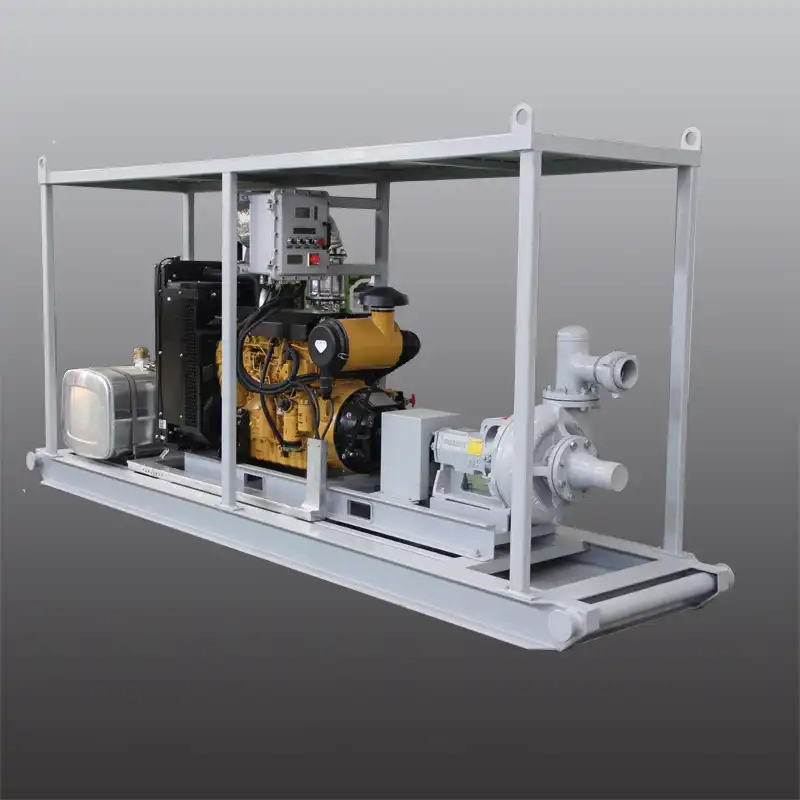
Understanding Drilling Mud Characteristics and Pump Requirements
Mud drilling poses its own set of issues, which need the use of specialist pumping systems. Slurries with high viscosity and abrasive qualities are produced by this complicated fluid combination, which is composed of bentonite clay, barite, polymers, and a variety of additives. When dealing with fluids that are very demanding, the design of the impeller becomes extremely important since conventional closed impellers are prone to clogging.
Open propeller designs work best with drilling mud because they lower axial thrust loads while still letting bigger particles pass through. The bigger blade spacing improves the flow of fluid and keeps it from getting stuck, which could stop activities. Impeller retention bolts built into modern pumps keep the impeller from breaking when the pump turns around, which happens a lot in digging settings.
The flow rates that are needed for different digging jobs are very different. Offshore sites usually need bigger capacities, often well above normal flow rates. On the other hand, businesses on land might be able to get by with smaller amounts. Head pressure needs change depending on how deep you are digging and how your drainage system is set up.
Critical Performance Parameters for Mud Circulation Systems
In the process of choosing pumps for drilling applications, NPSH calculations, which stand for "Net Positive Suction Head," prove to be essential. Cavitation, which is caused by insufficient NPSH, is responsible for the destruction of pump components and a reduction in operating efficiency. The circumstances of the suction must take into consideration the fluctuations in fluid density that occur when the weight of the mud changes during the drilling stages.
Across a wide variety of operating conditions, the connection between flow rate, head pressure, and efficiency may be seen shown by pump curves. By gaining an understanding of these curves, operators are able to locate the sweet spot, which is the point at which their centrifugal pump provides the highest possible performance while spending the least amount of energy. You should make sure that the best efficiency point (BEP) is in close alignment with the operating circumstances that you expect.
Mechanical seal selection directly impacts pump reliability and maintenance frequency. Drilling mud's abrasive nature accelerates wear on standard sealing systems. Advanced mechanical seal designs with hard-face materials and proper seal flush systems extend service life significantly. Some applications benefit from packed seal configurations, particularly when handling extremely abrasive fluids.
Bearing systems must withstand the radial and axial loads generated by heavy slurries. Double row outboard bearings combined with inboard roller bearings provide superior load distribution. Oil lubrication systems become mandatory for high-speed applications exceeding 2,400 RPM, ensuring adequate bearing protection under demanding conditions.
Material Selection for Harsh Drilling Environments
Pump casing materials must resist both abrasive wear and chemical corrosion common in drilling operations. Hard iron construction offers excellent durability for standard applications, while high chrome alloys provide superior abrasion resistance for severely abrasive muds. Stainless steel options suit corrosive environments, particularly in geothermal or offshore applications where saltwater exposure occurs.
Shaft protection requires careful attention to prevent costly downtime. Heavy-duty alloy steel shafts protected by replaceable stainless steel sleeves offer the ideal combination of strength and maintainability. When shaft wear occurs, operators can replace the sleeve rather than the entire shaft assembly, reducing repair costs and turnaround time.
Single-piece casing designs eliminate potential leak paths while providing superior structural integrity. This construction method reduces maintenance requirements and ensures consistent performance throughout the pump's service life. The volute casing design must optimize fluid velocity to minimize wear while maintaining hydraulic efficiency.
Application-Specific Considerations for Different Drilling Operations
Offshore drilling platforms face unique space constraints and power limitations that influence Centrifugal pump selection. Jack-up and semi-submersible rigs require compact, high-performance units capable of handling variable sea conditions. The pump's mounting configuration must accommodate vessel movement while maintaining consistent performance.
The majority of the time, land-based shale gas operations entail continuous pumping at large volumes, with frequent variations in the composition of the mud. The ability of pumps to adjust to different fluid characteristics without experiencing a major drop in performance is essential. The ability to adjust pump performance in response to changing drilling circumstances is made possible by quick-change impeller designs.
Horizontal directional drilling (HDD) operations demand portable, efficient pumping solutions. Space-critical applications benefit from shortened frame designs that reduce overall equipment footprint while maintaining full performance capabilities. Hydraulic motor drive compatibility expands installation options for mobile drilling rigs.
Pumps are put under a lot of stress when they are employed in geothermal drilling circumstances since they are exposed to high temperatures and fluids that might potentially degrade them. In these difficult conditions, aluminum bronze and specialist stainless steel alloys give superior performance. As a result, the selection of materials is much more crucial than it was before.
Design Features That Maximize Operational Reliability
The option to rotate counterclockwise contributes to operational flexibility, especially in situations where alternate mounting configurations are required due to space limits or drive design. Because of this characteristic, there is no longer a demand for bespoke impeller designs, which in turn reduces the necessities for spare parts inventories.
Modular power end designs across different pump sizes streamline maintenance operations. When multiple pump sizes share common power end components, operators maintain smaller spare parts inventories while ensuring rapid repair capabilities. This approach proves particularly valuable for offshore operations where parts availability becomes critical.
In order to maximize hydraulic performance, discharge and suction arrangements for the Centrifugal pump need to be able to handle both current pipe systems and new ones. Efficiency is increased by the reduction of velocity-related losses when full pipe diameter entries are used. A well-designed pipe system eliminates the possibility of turbulence, which may hasten the wear of components or decrease the effectiveness of pumping.
It is important that motor connection configurations be able to support both diesel and electric driving systems. The designs of flexible couplings are able to withstand shock loads while yet allowing for a minor misalignment while they are in operation. Drive system choices for particular applications are expanded thanks to the many mounting options available for SAE hydraulic motors.
Maintenance Strategies and Service Life Optimization
Preventive maintenance schedules must account for drilling mud's harsh characteristics and operational demands. Regular inspection of mechanical seal condition, bearing lubrication, and impeller wear patterns helps prevent catastrophic failures. Monitoring discharge pressure and flow rate trends identifies developing problems before they cause operational disruptions.
Component replacement timing depends heavily on mud characteristics and operating conditions. Abrasive muds accelerate impeller wear, while corrosive additives attack sealing systems. Establishing baseline performance parameters allows operators to predict maintenance requirements and schedule downtime appropriately.
In order to maintain the long-term sustainability of operations, pump refurbishing skills are essential. At a fraction of the cost of replacement, complete pump rebuilding services may return equipment to a state that is comparable to that of brand new. When it comes to high-capacity units, namely those with large replacement costs, this technique shows to be very beneficial.
Maintaining operational dependability is directly impacted by the availability of service support. The availability of technical support around the clock helps to address operational difficulties in a timely manner, while local service networks provide the capability of field service and the supply of components in a timely manner.
Conclusion
Successful centrifugal pump selection for drilling mud applications requires balancing performance requirements, environmental conditions, and operational constraints. Understanding fluid characteristics, hydraulic performance parameters, and material compatibility ensures optimal equipment selection. Modern pump designs offer enhanced reliability, reduced maintenance requirements, and improved efficiency compared to legacy systems. Proper selection, installation, and maintenance practices maximize equipment life while minimizing operational disruptions, ultimately improving drilling project economics and safety outcomes.
Partner with CM Energy for Superior Centrifugal Pump Solutions
CM Energy delivers world-class centrifugal pump manufacturer expertise backed by significant global offshore drilling equipment coverage and numerous authorized patents. Our HCP, HCP-S, and PF pump series handle the most demanding drilling mud applications with proven reliability across numerous deck crane installations worldwide. Contact our technical specialists at info.cn@cm-energy.com to discuss customized pumping solutions tailored to your specific drilling requirements.
References
1. American Petroleum Institute. "Centrifugal Pumps for Petroleum, Petrochemical and Natural Gas Industries." API Standard 610, Eleventh Edition, 2018.
2. Karassik, Igor J. "Pump Handbook: Centrifugal Pump Selection and Application." Fourth Edition, McGraw-Hill Professional, 2017.
3. Hydraulic Institute. "Centrifugal Pump Design and Application Guidelines for Drilling Mud Service." ANSI/HI 2.1-2.2 Standards, 2019.
4. World Pumps Magazine. "Heavy-Duty Centrifugal Pumps for Drilling Applications: Material Selection and Performance Optimization." Industrial Equipment Review, Volume 45, 2023.
5. Society of Petroleum Engineers. "Drilling Fluid Handling Systems: Pump Selection Criteria and Performance Analysis." SPE Technical Paper 195847, 2021.
6. International Association of Drilling Contractors. "Guidelines for Mud Pump Selection in Offshore Drilling Operations." IADC Drilling Manual Technical Section, 2022.