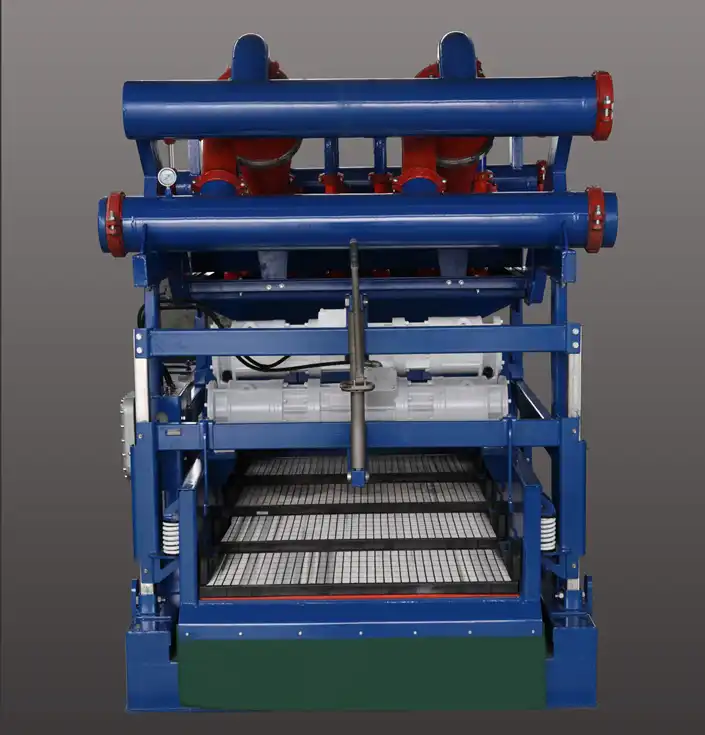
Mud cleaners represent sophisticated solids control devices engineered to eliminate fine particles from drilling fluids, significantly improving fluid recyclability and overall drilling performance. These systems integrate hydrocyclone technology with advanced shale shaker components, creating a comprehensive separation and screening process that targets particles within a very fine micron range.
Blog
Boost Drilling Efficiency with the Best Mud Cleaners
In today's competitive drilling industry, maximizing operational efficiency while minimizing costs remains a top priority for offshore platforms, shale gas operations, and geothermal projects. A high-quality mud cleaner serves as the backbone of effective solids control systems, removing unwanted particles from drilling fluids while preserving valuable resources. The right equipment can dramatically reduce downtime, extend equipment lifespan, and enhance overall drilling performance across various applications from deepwater exploration to environmental remediation projects.
Understanding Mud Cleaners and Their Role in Drilling
The Essential Function of Solids Control Equipment
The operational rule behind these gadgets contrasts significantly from conventional shale shakers, which essentially center on evacuating coarse solids. In step, solids control hardware particularly targets better particles to accomplish upgraded liquid quality. This accuracy division capability demonstrates important advantages over different boring situations, from jack-up stages in seaward operations to land-based shale gas extraction sites.
Impact on Drilling Fluid Management
Effective solids control specifically connects with made strides boring liquid effectiveness, decreased operational costs, and improved natural compliance. When boring liquids keep up ideal thickness and thickness characteristics, penetrating groups encounter smoother operations with fewer complications.
Regular support conventions, counting precise reviews and careful cleaning strategies, stay basic for supporting peak performance levels and avoiding expensive operational disruptions. Gear unwavering quality gets to be especially vital in challenging situations such as deepwater investigation vessels and geothermal well upkeep operations.
Comparing Mud Cleaner Technologies to Optimize Your Drilling Operation
Understanding Equipment Distinctions
The drilling industry offers various solids control solutions, including Mud Cleaner, each designed for different particle size separation needs. Desanders typically manage relatively larger particles, while desilters focus on finer particles. Modern solids control systems, such as the HMC series, provide flexible configuration options, allowing operators to adjust equipment according to specific operational demands.
The HMC technology stands out through its adaptable design, offering multiple operational combinations including desander and shale shaker configurations, desilter and shale shaker setups, comprehensive three-component systems, or standalone shale shaker operations. This versatility proves particularly valuable for operations requiring quick adaptation to changing geological conditions or varying fluid characteristics.
Power Source Considerations and Cyclone Options
Power source determination essentially impacts operational proficiency and establishment adaptability. Electric frameworks for the most part give steady execution with lower support necessities, whereas water-powered choices offer upgraded movability for farther boring locales. The choice frequently depends on site-specific framework and control availability.
Cyclone determination speaks to another basic choice point. The HMC framework obliges different violent wind sorts, including polyurethane tornados, iron-shell polyurethane variations, and ceramic choices. Each fabric offers particular points of interest with respect to solidness, chemical resistance, and operational life expectancy, permitting obtainment groups to optimize gear determination based on particular boring liquid characteristics and operational environments.
How to Choose the Best Mud Cleaner for Your Drilling Rig (Procurement Guide)
Evaluating Site Conditions and Requirements
Selecting fitting solids control gear requires intensive evaluation of boring location conditions, counting liquid types (water-based or oil-based) and particular fix arrangements. Diverse penetrating situations display one-of-a-kind challenges that impact hardware prerequisites. Seaward penetrating stages confront space imperatives and cruel marine conditions, whereas land-based shale operations may prioritize preparing capacity and mobility.
The HMC plan addresses space confinements through compact integration of desander, desilter, and shale shaker components, successfully preserving important space on mud tanks. This space-efficient approach is especially advantageous for seaward stages where each square meter carries premium value.
Core Selection Metrics for Procurement Teams
Successful gear obtainment equalizes numerous variables, counting preparing capacity, add up to fetched of ownership, product quality, and comprehensive after-sales support. Acquisition experts must assess long-term cost recommendations rather than centering exclusively on beginning buy costs. Quality pointers incorporate flexible sub-current capabilities, screen life span, and support accessibility.
The HMC arrangement joins a few highlights that upgrade operational value. Deck point adjustability without hardware shutdown permits real-time optimization, whereas PTS pre-tensioned screens provide expanded benefit life through high-strength, anticorrosion materials. The somewhat round and hollow slope deck plan moves forward screen pressure and sieving adequacy, contributing to upgraded partition efficiency.
Procurement Strategy Options
Modern procurement approaches encompass various strategies, including Mud Cleaner, OEM customization, bulk purchasing arrangements, and equipment rental solutions. Each approach offers distinct advantages depending on operational requirements and financial considerations. OEM partnerships enable customized solutions tailored to specific drilling applications, while bulk purchasing can deliver significant cost savings for large-scale operations.
Rental options provide flexibility for short-term projects or equipment evaluation purposes. The fully sealed structure design of advanced systems prevents particle leakage, ensuring consistent performance across different operational scenarios while supporting environmental compliance requirements.
Maximizing Drilling Efficiency: Practical Tips and Future Outlook
Integration and Optimization Strategies
Seamless integration of solids control gear into existing penetrating frameworks requires cautious planning and efficient usage. Workflow optimization starts with understanding particular operational necessities and arranging gear parameters appropriately. The HMC system's flexible sub-current capability permits fine-tuning through spout substitution, empowering optimization for changing geographical conditions and liquid characteristics.
Monitoring movable parameters speaks to a basic victory calculation for accomplishing top execution. Customary evaluation of division productivity, liquid quality measurements, and gear execution pointers empowers proactive optimization and avoids execution corruption. These checking hones gotten to be especially imperative in challenging situations such as deepwater investigation or geothermal well maintenance.
Emerging Technology Trends
The boring industry proceeds advancing toward expanded mechanization, improved inaccessible observing capabilities, and naturally economical plans. Future solids control frameworks will likely consolidate advanced sensors, prescient support calculations, and mechanized parameter alteration capabilities. These innovative products guarantee progressive productivity while lessening operational complexity.
Environmental compliance prerequisites drive advancement toward cleaner, more effective division advances. The completely fixed structure plan exemplified by the HMC arrangement speaks to current best practices for anticipating natural defilement while maintaining operational proficiency. Future advancements will likely emphasize decreased natural affect while improving execution capabilities.
Sustainability and Operational Excellence
Procurement experts progressively prioritize economical arrangements that provide long-term esteem whereas supporting natural stewardship. Energy-efficient plans, amplified gear life expectancy, and improved liquid recuperation rates contribute to overall maintainability destinations. The PTS screen innovation utilized in progressive frameworks embodies this approach through upgraded toughness and reliable execution characteristics.
Future-proof speculation techniques consider advancing administrative measures, innovative approaches, and operational adaptability necessities. Gear choice ought to emphasize flexibility, update potential, and comprehensive back capabilities to guarantee proceeded esteem all through operational lifecycles.
Conclusion
Selecting the optimal solids control equipment, including Mud Cleaner, requires careful consideration of operational requirements, site conditions, and long-term value propositions. Advanced systems like the HMC series demonstrate how innovative design approaches can address diverse drilling challenges while providing operational flexibility and enhanced efficiency. Success depends on partnering with experienced suppliers who offer comprehensive support, proven technology, and commitment to continuous innovation. The investment in quality solids control equipment delivers measurable returns through reduced operational costs, improved environmental compliance, and enhanced drilling performance across challenging applications from offshore platforms to environmental remediation projects.
FAQ
1. What factors determine mud cleaner efficiency across different drilling environments?
Efficiency depends on a few interconnected variables counting molecule measure conveyance, liquid characteristics, stream rates, and hardware setup. Seaward boring stages require vigorous plans able to take care of marine conditions, whereas shale gas operations may prioritize high-volume preparation capabilities. The HMC framework addresses these shifted necessities through adaptable arrangement choices and flexible operational parameters.
2. How can operators optimize maintenance schedules to prevent equipment downtime?
Preventive upkeep programs ought to incorporate customary review of hydrocyclone components, screen condition evaluation, and efficient cleaning strategies. Checking division proficiency and liquid quality markers gives early caution of potential issues. The PTS screen plan with anticorrosion materials expands benefit interims whereas keeping up steady execution, lessening maintenance frequency and related costs.
3. Are modern mud cleaners suitable for both water-based and oil-based drilling systems?
Contemporary solids control equipment accommodates various fluid types through appropriate material selection and configuration adjustments. The variety of cyclone options available with systems like the HMC series enables optimization for specific fluid characteristics. Polyurethane, iron-shell polyurethane, and ceramic cyclones offer different advantages depending on fluid chemistry and operational requirements.
Partner with CM Energy for Advanced Mud Cleaner Solutions
CM Energy delivers cutting-edge solids control solutions engineered to enhance drilling efficiency across offshore platforms, shale gas operations, and specialized drilling applications. Our TSC brand represents proven reliability with extensive global deployment, including over 350 deck cranes and 180 self-elevating platforms worldwide. We offer comprehensive mud cleaner supplier services, including OEM customization, technical consultation, and 24/7 support networks. Contact our procurement specialists at info.cn@cm-energy.com to explore tailored solutions for your drilling operations and discover how our innovative HMC technology can optimize your solids control performance.
References
1. American Petroleum Institute. "Recommended Practice for Field Testing of Drilling Fluids: API RP 13B-1." API Publishing Services, 2019.
2. Mitchell, R.F. "Petroleum Engineering Handbook: Drilling Engineering Volume II." Society of Petroleum Engineers, 2020.
3. Darley, H.C.H. and Gray, G.R. "Composition and Properties of Drilling and Completion Fluids: Sixth Edition." Gulf Professional Publishing, 2018.
4. International Association of Drilling Contractors. "Health, Safety and Environmental Reference Guide." IADC Publications, 2021.
5. Bourgoyne, A.T. "Applied Drilling Engineering: SPE Textbook Series." Society of Petroleum Engineers, 2019.
6. World Oil Magazine. "Annual Drilling Technology Review: Solids Control Systems and Environmental Compliance." Gulf Energy Information, 2023.

(852) 3919 6300