Best Wind Assisted propulsion System for Tankers
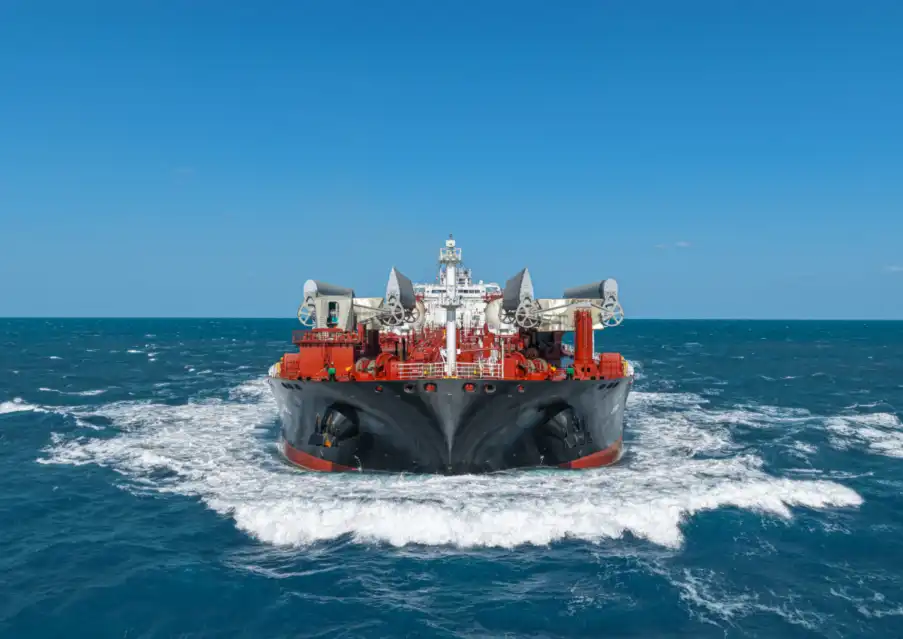
When looking for the best Wind Assisted Propulsion System for tankers, WindWings® stands out as the best option. It has a patented three-element rigid sail technology that saves up to 30% on fuel while also passing the strict IMO decarbonization standards. This cutting-edge Wind Assisted Propulsion System combines automatic camber change with proven aerodynamic performance. This makes it the best choice for chemical tankers, LR2 tankers, and Newcastlemax bulk ships that want to meet CII requirements and get their money back quickly.
Introduction
The marine business faces pressure to meet strict emission goals while cutting costs. Bunker fuel prices change unpredictably, and regulations like EEXI and CII are now mandatory. Tanker operators need practical solutions. Wind Assisted Propulsion Systems work alongside existing engines, using free wind energy to lower fuel consumption. The business case now includes lower OPEX, higher charter rates for green-certified ships, and protection against carbon taxation like the EU Emissions Trading System.
Understanding Wind Assisted Propulsion Systems for Tankers
Core Technology and Working Principles
Tanker WAPS technology works alongside the main propulsion system rather than replacing it. These systems harness wind energy through various methods. Advanced rigid wing designs automatically adjust angle of attack and camber in response to changing wind conditions. Modern versions use real-time sensor data and specialized control algorithms, adjusting sail positions dozens of times per minute. This automation ensures optimal performance regardless of weather or route changes, reducing crew workload significantly.
Technology Variants for Tanker Applications
Three main WAPS designs work well for tankers. Rigid wing sails offer the best thrust-to-weight ratios, ideal for chemical and product tankers with clear decks. Rotor sails using the Magnus effect perform well in crosswinds with compact footprints suitable for complex deck layouts. Kite systems provide high power but require specialized crew training and planned routes. Three-element rigid wing designs now achieve over twice the lift coefficients of older single-wing designs while minimizing structural loads.
Regulatory Compliance and Environmental Benefits
WAPS directly helps meet IMO's 2030 and 2050 decarbonization goals by reducing greenhouse gas emissions at the source. Tankers achieve significantly improved CII scores, enhancing charterability and potentially commanding higher rates from environmentally conscious cargo owners. The technology provides verifiable emission reductions satisfying both regulatory requirements and corporate sustainability reporting. WAPS is especially valuable in emission control areas where lower fuel consumption directly reduces SOx, NOx, and particulate matter emissions.
Comparing Wind Assisted Propulsion Systems With Traditional Propulsion for Tankers
Fuel Efficiency and Operational Economics
The economic analysis extends beyond fuel cost reduction. Ships equipped with a Wind Assisted Propulsion System can access preferential treatment under emerging green financing programs, potentially securing lower interest rates on mortgages and working capital lines. Insurance companies increasingly recognize these installations as risk mitigation measures, as improved CII scores reduce the likelihood of regulatory detention or charter party fines. This multi-layered financial benefit strengthens the business case beyond simple fuel savings calculations.
Capital Investment vs. Long-Term Returns
WAPS installation requires significant upfront capital, but payback periods have shortened as fuel prices rise and carbon costs materialize. Procurement teams must evaluate total ownership cost including installation, potential revenue loss during retrofit, ongoing maintenance, and benefits from lower fuel costs, higher charter rates, and regulatory compliance. Payback depends on vessel size, operating profile, and installed capacity. WAPS transferability between vessels during fleet renewal extends investment value beyond a single vessel's remaining operational life.
Operational Considerations and Integration Challenges
Deck space allocation requires careful planning to avoid interfering with cargo operations, especially on chemical tankers with complex piping systems. Air draft limitations become important for vessels operating under bridges or through constrained waterways, requiring folding or tilting mechanisms. Crew familiarization is another integration factor. While modern WAPS operate largely autonomously, crews need basic training in system principles, emergency procedures, and routine visual inspections. The learning curve resembles operating conventional deck crane equipment.
How to Choose the Best Wind Assisted Propulsion System for Your Tanker Fleet?
Vessel-Specific Evaluation Criteria
Some older vessels may require localized strengthening before installation, adding project cost but ensuring safe long-term operation. Structural assessment must consider vertical compression loads on foundations, overturning moments at maximum thrust, and dynamic loads from vessel motion in seaways. Procurement teams should require detailed engineering analysis from qualified naval architects before committing to WAPS installation. This upfront investment in assessment prevents costly surprises during installation and ensures system longevity.
Route Analysis and Performance Modeling
WAPS effectiveness varies significantly by geography and seasonal wind patterns. Procurement teams should request detailed performance modeling using historical wind data for their specific trade routes. The analysis should examine prevailing wind directions relative to typical vessel headings, seasonal wind speed variations, and optimization benefits with wind-assisted propulsion. Predictable trade lanes between fixed ports deliver the greatest WAPS benefits. Spot-trading vessels with variable routes require more conservative modeling but still achieve measurable gains.
Technology Selection: WindWings® Rigid Sail System
WindWings® represents the most capable WAPS technology currently available for tanker applications. This patented three-element rigid sail design features fully variable camber and angle of attack, enabling real-time optimization across the entire operating envelope. The system's aerodynamic performance has been independently verified by recognized fluid dynamics research institutions. During cargo operations, the wing structure retracts to a secure laydown position, providing clear access for hatch covers, cargo handling equipment, and deck machinery without operational compromise.
Technical Assessment Parameters
Evaluating WAPS suppliers requires attention to specific technical metrics. Performance assessment centers on thrust generation across varied wind conditions. Suppliers should provide comprehensive thrust curves showing output across full relative wind angle and speed ranges experienced on operational routes. System integration capability deserves close attention. Compatibility with existing propulsion systems, automation platforms, and bridge equipment is essential. Suppliers offering complete integration support packages significantly reduce implementation risk and long-term support costs.
Installation and Maintenance of Wind Assisted Propulsion Systems for Tankers
Retrofit Implementation Considerations
During the engineering phase of a Wind Assisted Propulsion System, opportunities for system placement optimization are typically identified, balancing aerodynamic performance against installation constraints and cargo operations. To avoid excessive revenue loss during system downtime, installation scheduling requires careful planning. Many operators coordinate special surveys or major repair windows simultaneously with WAPS retrofits, spreading costs across multiple capital projects. Some system components can be pre-assembled and factory-tested before vessel arrival, shortening the critical path timeline.
New-Build Integration Advantages
New-build WAPS installation offers significant advantages over retrofit. Structural supports integrate directly into vessel design, eliminating reinforcement requirements and reducing system weight. Electrical and control system integration occurs during initial outfitting. Shipyards increasingly seek WAPS integration guidance early in design processes, recognizing that early involvement optimizes overall vessel design and system performance. New-build vessels outperform retrofitted tonnage, though retrofit remains a viable path for existing fleet decarbonization.
Maintenance Programs and Service Support
The upkeep needs for the Wind Assisted Propulsion System are very similar to those for other machines on the deck. This means that crew members don't need to learn new skills and can use the ones they already have. As part of routine maintenance, parts of the control system, the stability of the hydraulic system, and the places where structures connect to each other are checked. The automated control systems have health tracking features that let teams know about problems before they become system-unavailable. This lets them plan preventative maintenance instead of fixing problems as they happen.
A big part of how reliable the Wind Assisted Propulsion System is in the long term is the service support system. Leading sellers offer full support packages that include the ability to diagnose problems remotely, global networks for distributing extra parts, and access to specialized technical knowledge when needed. These support structures are similar to the service models that operators already use for other specialized vessel equipment. This makes sure that the system is always available without having to create completely new repair skills.
The WindWings® system is made with features that make upkeep easier and repair intervals longer. Standard marine industry specs are used for critical wear parts, so they can be bought through current supply lines instead of having to be sourced from a single seller. The modular design theory lets parts be swapped out without taking the whole system apart. This lowers the cost of maintenance and keeps the ship running as much as possible during service visits.
Case Studies & Future Outlook for Wind Assisted Propulsion on Tankers
Real-World Performance Validation
Tankers with Wind Assisted Propulsion System technology have a lot of experience working on a wide range of trade lines and with different types of ships. Bulk carriers that have been modified with rigid sail systems have made calls at major ports around the world without any problems. This shows that these setups work well with the current port facilities and ways of handling cargo. Performance data gathered during real trips shows that fuel consumption has gone down, as predicted by models done before the installation. This backs up the business case that procurement teams used to support the investment.
Operators of chemical tankers say that installing a Wind Assisted Propulsion System has given them especially good results. This is because these ships usually follow the same routes, which means that route planning programs can get the most energy from the wind. The systems are especially useful during ballast legs, when the lower draft of the ship makes wind force more important than hydraulic resistance. Operators report real gains in their CII ratings, which directly lead to better charter marketability and the ability to win premium contracts with cargo owners who value environmental performance.
Emerging Technological Innovations
Wind Assisted Propulsion System technology is still changing quickly, with makers adding new features that make the business case even stronger. IoT-enabled tracking systems now let fleet managers on land see how all of their systems are working in real time. This lets them make better routing decisions based on data and find best practices that can be used by all of their boats. Machine learning techniques are being used more and more in control system logic. This means that setups of Wind Assisted Propulsion Systems can keep getting better as they use them.
Modular design methods make systems more flexible and lower their costs over their whole life. The useful life of naval equipment is much longer than what is usually expected because parts are made to be easily replaced. Also, systems can be moved from one ship to another during fleet renewal, which saves capital investments. Concerns about technology obsolescence and stuck assets during the buying process have been addressed by these innovations. This makes investments in Wind Assisted Propulsion Systems more appealing from a financial planning point of view.
Strategic Implementation Roadmap
Operators who want to use Wind Assisted Propulsion Systems should plan their implementation carefully instead of trying to convert the whole fleet at once. Initial installations on ships with the best operational profiles—long-haul routes, good wind exposure, and good deck layouts—gather performance data and operational experience that are used to guide future installations. This step-by-step method lets businesses build their own skills, improve their care methods, and show that their investments are paying off.
Working with skilled Wind Assisted Propulsion System providers throughout the adoption process increases the chances of success and speeds up the learning process. As opposed to just selling equipment, suppliers who offer full support from the initial feasibility studies through installation supervision and continued performance optimization are seen as key partners. This partnership is especially helpful as fleet owners use Wind Assisted Propulsion Systems on a wider range of vessel types and in a wider range of situations.
Conclusion
The Wind Assisted Propulsion System technology has grown from an experimental idea to a proven working solution. It gives truck owners a useful way to cut down on fuel costs while still following stricter environmental rules. The WindWings® rigid sail system is a good example of this level of technological development. It has been shown to save fuel thanks to its advanced automatic controls and strong marine-grade construction. Procurement teams that are looking at these systems can be sure they are making the right choice because they have more and better operating track records and more advanced performance modeling tools. As long as fuel prices stay high and carbon costs rise, the investment case keeps getting stronger. This makes adopting a Wind Assisted Propulsion System a strategic must for forward-thinking tanker owners who want to stay competitive in the long term and care for the environment.
FAQ
1. What fuel savings can tankers realistically achieve with Wind Assisted Propulsion System technology?
Fuel savings depend on the type of ship, its installed capacity, and its operating routes. However, tankers can save anywhere from a few percent on less-than-ideal routes to large percentages on the best wind paths. Ships that travel long distances and are always exposed to wind have the best success. It has been shown that the Wind Assisted Propulsion System can save a lot of fuel every day per fitted wing when conditions are right. This performance has been proven by real-world operations, not just theoretical predictions.
2. How complex is retrofitting Wind Assisted Propulsion System technology onto existing tankers?
How hard it is to retrofit relies on how old the ship is, how well its structure is, and how the deck is laid out. Modern tankers with enough deck room and a strong structure can usually fit Wind Assisted Propulsion System systems without a lot of changes. As part of the process, a structural study is done to make sure the foundations are strong enough, and localized reinforcement may be needed. Installation work is then organized with planned drydock times. Leading providers offer "turnkey" installation support that takes care of the whole process, from planning to commissioning. This keeps vessel operations running as smoothly as possible and lowers the risk of implementation for vessel owners.
3. Are regulatory incentives available for Wind Assisted Propulsion System installations?
There are a number of places that offer funding, tax credits, and better loan terms for installing Wind Assisted Propulsion Systems to help marine decarbonization technologies. As governments change their environmental policies, these programs change often, so operators should check with providers and industry groups to see what options are available right now. In addition to direct financial benefits, Wind Assisted Propulsion System technology also has secondary economic benefits. For example, it improves CII ratings, which makes charters easier to sell, and it may lower future carbon tax obligations under programs like the EU Emissions Trading System.
Partner with CM Energy for Advanced Wind Propulsion Solutions
Through our TSC name, CM Energy gives decades of experience in marine technology to the market for Wind Assisted Propulsion Systems. Through our relationship with top Wind Assisted Propulsion System providers, we can offer complete solutions that are designed to work with tankers. These solutions include a feasibility study, installation supervision, and long-term service support. We know how chemical tankers, product tankers, and big bulk carriers work and how to make sure that the systems work together in a way that improves performance without limiting operations flexibility.
Our technical team uses your real operational data to do thorough route analyses that give you accurate performance forecasts that help you make smart investment decisions. Our world service network and years of experience handling complex marine systems on a wide range of vessel types mean that you will always get help from CM Energy, no matter where your vessels are working. CM Energy has the technical knowledge and real-world experience to make sure your Wind Assisted Propulsion System project is a success, whether you're looking at it for brand-new ships or for your current fleet of ships that need to be retrofitted. Get in touch with us at info.cn@cm-energy.com to talk about how providers of Wind Assisted Propulsion Systems can help your fleet save money on fuel and follow the rules.
References
1. International Maritime Organization (2023). "Guidelines on Life Cycle GHG Intensity of Marine Fuels," Marine Environment Protection Committee Resolution MEPC.336(76).
2. Windship Technology Association (2024). "Wind Propulsion Technology Performance Verification Methodologies for Commercial Shipping Applications," Industry Standards Publication.
3. Lloyd's Register Maritime Decarbonization Hub (2023). "Wind-Assisted Propulsion Systems: Technology Assessment and Implementation Guidelines for Ship Operators."
4. Maritime Research Institute Netherlands (2024). "Aerodynamic Performance Validation of Multi-Element Rigid Wing Sail Systems for Large Commercial Vessels," Technical Research Report Series.
5. DNV Classification Society (2023). "Rules for Classification of Ships with Wind-Assisted Propulsion Systems," Part 6 Chapter 15, Service Specification Documentation.
6. American Bureau of Shipping (2024). "Guide for Wind-Assisted Propulsion System Installation and Operation on Tankers and Bulk Carriers," Marine Technology Advisory Publication.