Best Methanol Fuel Feed System for Marine Applications
More and more, ship owners are putting safety, following the rules, and protecting the environment at the top of their lists when looking for the best Methanol Fuel Feed System for marine use. A Methanol Fuel Feed System is a special piece of equipment that controls the flow of low-flashpoint fuel from holding tanks to engines that use both gasoline and diesel on bulk carriers, tankers, car carriers, and offshore support boats. Because methanol is corrosive, poisonous, and doesn't lubricate well, these systems are made with carefully designed parts and strict safety rules that make sure they work reliably in a wide range of marine conditions.
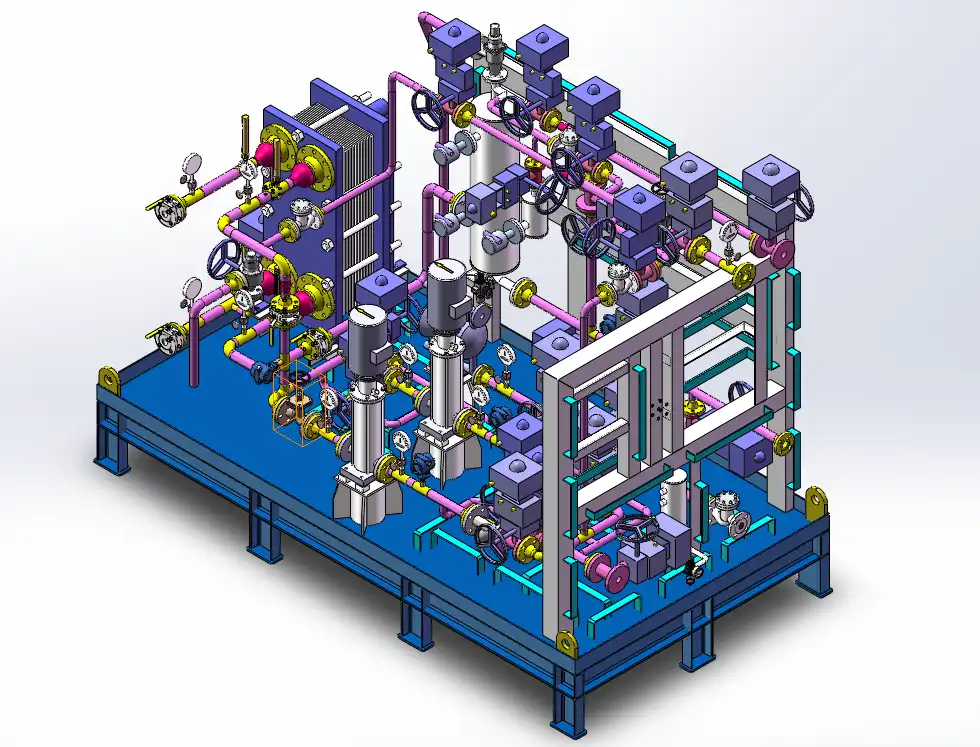
Understanding Methanol Fuel Feed Systems in Marine Applications
As the world moves toward better marine fuels, methanol has become more popular as a replacement for heavy fuel oil and marine diesel. A well-designed Methanol Fuel Feed System controls the whole fuel path and makes sure that the pressure, temperature, flow rate, and cleaning requirements set by the engine maker are always met, even when the load on the system changes.
Core Components and Operational Principles
Methanol delivery requires different materials and design factors than diesel systems. The design typically has four subsystems: methanol supply unit, filling and transport system, auxiliary system, and control and safety system. Methanol's flash point below 12°C and viscosity of 0.6 cSt demand supply pressure between 4 and 10 bar to prevent vapour formation. Temperature conditioning ensures consistent fuel atomization at injection tips for proper combustion.
Material Selection and Corrosion Resistance
Marine-grade designs prioritise corrosion protection through proper material selection. Wetted parts use 316L stainless steel or duplex alloys to handle methanol's acidic nature in saltwater environments. Seal materials use PTFE or EPDM compounds specially designed to resist swelling when exposed to methanol. Magnetically driven pumps or units with separate bearing chambers prevent metal-on-metal contact. Diamond-like carbon coatings on valve internals reduce friction and extend component life.
Safety Architecture for Low-Flashpoint Fuels
Because methanol is dangerous, it needs more than one safety layer. Double-walled pipes that are constantly purged with nitrogen make a buffer of safety between the fuel and the people on the vessel. In tight areas, forced ventilation systems keep 30 air changes per hour going, and hydrocarbon sensors keep an eye out for fugitive emissions. When emergency shutdown logic finds something is wrong, like a lack of air, gas levels above the 20% lower explosion limit, or the loss of important system parameters, it can cut off the methanol supply within two seconds.
Key Design Principles for Marine Methanol Fuel Feed Systems
When designing a Methanol Fuel Feed System for methanol uses, it's important to find a balance between strict safety rules and the ability to work with a wide range of vessels, from 40,000 DWT bulk ships to 400,000 DWT crude oil tanks.
Regulatory Compliance Framework
International maritime regulations establish the foundation for Methanol Fuel Feed System design. The IGF Code contains extensive requirements for installation, operation, and maintenance. SOLAS-IBC Code rules govern chemical handling, recognising methanol as both fuel and cargo on chemical carriers. Explosion-proof equipment ratings, gas-tight boundaries, and ventilation requirements derive from these regulations. Class society notations from DNV, Lloyd's Register, or ABS verify systems meet safety standards.
Pressure and Flow Management Strategies
Maintaining steady fuel supply across varying engine loads presents significant engineering challenges. Modern control and monitoring tools enable real-time adjustments to pump speeds, valve positions, and conditioning parameters. Programmable logic controllers receive continuous feedback from redundant sensor groups including Coriolis mass flowmeters, pressure transmitters, and temperature probes. Accumulator and buffer volumes help smooth fuel supply during load cycling, especially important for large two-stroke main engines at sea.
Customization for Vessel-Specific Requirements
Each vessel type presents different space and operational constraints. Offshore support vessels in dynamic positioning mode need highly responsive fuel systems handling rapid load changes. Pure car and truck carriers benefit from compact modular installations requiring less machinery space. Large ethane and ammonia carriers may integrate Methanol Fuel Feed Systems with existing cargo handling infrastructure. Modular skid-mounted designs enable factory pre-assembly, reducing onboard piping work and commissioning time during retrofit projects.
Comparative Analysis: Methanol Fuel Feed Systems vs Other Fuel Systems in Marine Applications
To choose the right fuel infrastructure, you need to know the pros and cons of different technologies and how they will affect ship operations in the long run.
Fuel Efficiency and Energy Density Considerations
Methanol has approximately half the energy density of conventional marine diesel, requiring larger fuel tanks for equivalent range. However, clean methanol combustion eliminates need for exhaust gas scrubbers or selective catalytic reduction systems required for heavy fuel oil installations. This weight and complexity reduction partially offsets the volumetric penalty. Compared to LNG systems, methanol has simpler bunkering infrastructure and ambient temperature storage without boil-off gas management.
Safety Profile and Handling Characteristics
While methanol presents toxicity and corrosivity hazards, its risks differ substantially from LNG's cryogenic dangers or hydrogen's extreme flammability. Methanol vapours are heavier than air and will not accumulate in high locations like natural gas. Spills readily mix with seawater, simplifying emergency response compared to persistent oil pollution. Clean combustion means less soot accumulation and reduced maintenance on turbochargers. Engine manufacturers report cleaner lubricating oil analysis results with methanol operation.
Lifecycle Cost Analysis
The total cost of ownership includes the cost of installation, ongoing upkeep, fuel, and meeting government regulations. The initial costs of the Methanol Fuel Feed System are usually about the same as those of LNG installations but higher than those of simple gasoline systems. Green methanol, which comes from sustainable sources, has lower carbon emissions and is becoming more and more important to fleets when they are buying fuel.
When the right steps are taken, maintenance needs can still be handled. When to change the filters depends on the quality of the fuel and how clean the storage area is, but after the initial starting phase, the plans are usually the same as for regular diesel engines. Not having any cryogenic parts or high-pressure hydrogen tanks means that less expert repair skills are needed.
Maintenance, Troubleshooting & Common Issues in Marine Methanol Fuel Feed Systems
Structured maintenance plans that are suited to the unique properties of methanol and the marine working conditions are needed for long-term, reliable operation.
Preventive Maintenance Protocols
Establishing regular inspection schedules begins system reliability. Differential pressure monitoring across filter assemblies provides early contamination warning. Filter elements typically need replacement every 1,000 to 2,000 operating hours after systems stabilise. Methanol's solvent properties may loosen existing tank deposits during first 500 operating hours, requiring more frequent filter checks. Corrosion monitoring extends beyond visual inspection using scheduled ultrasonic thickness measurements at weld joints and high-velocity flow areas.
Common Operational Issues and Diagnostic Approaches
Inconsistent fuel delivery often results from cavitation caused by inadequate supply pressure or excessive pump suction lift. Symptoms include unstable engine performance, increased vibration, and audible pump noise. Troubleshooting requires verifying proper tank levels, clean filters, and functioning vent systems preventing tank vacuum. Unexpected system shutdowns frequently originate from safety interlock activations rather than hardware failures. Systematic alarm log review identifies triggers including ventilation system malfunctions, gas detection alarms, or parameter excursions.
Performance Monitoring and Optimization
Key performance indicators are objective ways to check the health of a system. When you normalize fuel usage rates against engine load and vessel speed, you can see how efficiency has changed over time. Big changes from the starting values could mean that the injectors are clogged, the pump isn't working as well, or the fuel quality is changing in ways that need to be looked into.
How quick the engine is during load changes can help you figure out if the fuel flow is right and how to tune the control system. Slow acceleration reaction or limits on load acceptance could be caused by not enough fuel delivery capacity or control settings that are too conservative. Monitoring emissions, especially the amount of formaldehyde released when methanol is burned, makes sure that the engine is calibrated correctly and that the fuel is of good quality.
Procurement Guide for Marine Methanol Fuel Feed Systems
Choosing the right provider and system design is a big choice that will affect the safety of the vessel, the cost of operation, and compliance with environmental laws for the whole life of the asset.
Essential Supplier Qualification Criteria
Purchasing managers should give more weight to providers who have experience integrating naval fuel systems. Type approval certificates and design evaluation paperwork, which come from known classification groups, are objective proof that rules are being followed. Product approvals and DNV AIP (Approval in Principle) specifically check that Methanol Fuel Feed System designs meet the standards that apply.
The technical help services go beyond the original delivery. Suppliers who offer full engineering services, from idea design to help during commissioning and training for operators, lower project risk and speed up installation plans. Experienced sellers are different from commodity providers because they can offer unique solutions for retrofit applications or vessels with odd shapes.
Certification of manufacturing quality methods shows that output standards are always met. If a company has an ISO 9001 license or something similar, buyers can be sure that the manufacturing process will be able to be repeated and that the product can be tracked all the way through the supply chain.
System Configuration and Customization Options
Buyers need to be very clear about how much power they need based on the engine's specs and how it will be used. The design of a system is affected by flow rates, working pressure ranges, and room envelope limits. Modular designs are flexible enough to allow for phased installation or future capacity growth as rules change or the way a ship works changes.
Whether to buy combined turnkey systems or separate parts depends on the size of the job and the engineers who are available. Completely packaged units make managing the interface and assigning duties easier, but they might miss out on optimization possibilities for some ship plans. Component-level buying allows for the most customization, but it makes collaboration more difficult.
When buying things, you should give careful thought to the spare parts supply plan. Important parts that wear out quickly, like filter elements, seals, and sensor assemblies, should be listed, along with the suggested stock amounts based on how easy they are to get on land during normal vessel operations.
Ordering Process and Post-Sale Support
Lead times for engineered Methanol Fuel Feed System units usually run from a few months for normal configurations to longer times for installations that are very different from the norm. Early involvement of suppliers during the planning stages of a vessel makes sure that the manufacturing schedule is properly allocated and opens up possibilities for value engineering.
The warranty terms should make it clear how long the coverage lasts, what it doesn't cover, and what the manufacturer's responsibility is to fix any problems. Longer guarantee periods or all-inclusive service agreements help you plan your budget and may lower the total cost of ownership by including preventative maintenance.
For systems to work reliably, they need to be installed by a professional. Commissioning experts with a lot of experience make sure that everything was installed correctly, test it to make sure it works, and write down baselines for system performance. This literature is very helpful when trying to figure out what's wrong and shows that you're following the rules.
After delivering 19 ship sets of clean fuel supply and cargo handling systems, CM Energy has shown that it is an expert in maritime fuel supply systems. Two Methanol Fuel Feed System skids for Stena RoRo vessels are in our portfolio, which shows that we have real-world experience with tough marine uses. Since late 2022, we've been at the forefront of developing Methanol Fuel Feed System, and we offer full lifetime support, from the initial design to manufacturing, installation, and ongoing service.
Conclusion
The maritime industry's transition toward sustainable fuels positions methanol as a pragmatic pathway for meeting increasingly stringent emission regulations. Properly engineered Methanol Fuel Feed System addresses the technical challenges inherent in managing low-flashpoint fuels while delivering reliable performance across diverse vessel types from inland river craft to ultra-large crude carriers. Success depends on a thorough understanding of regulatory requirements, careful supplier selection, and commitment to rigorous maintenance protocols. As green methanol production capacity expands globally, early adopters position themselves advantageously within evolving carbon intensity reduction frameworks while gaining operational experience with proven alternative fuel technology.
FAQ
1. Can existing marine engines be converted to use methanol fuel?
Many new dual-fuel engine types can run on methanol by making changes to the control software, fuel injection systems, and lube oil requirements. The ability to retrofit relies on the type of engine and the amount of room that is available for methanol infrastructure. Engine makers offer change kits that come with the necessary hardware updates and technical information. When compared to pure diesel systems, retrofitting ships that were made with dual-fuel capability ready configurations is much easier and costs a lot less.
2. What makes methanol handling safer than other alternative fuels?
Because methanol is a liquid at room temperature, it doesn't have to be handled with the extreme cold that comes with LNG or the high pressure that comes with compressed hydrogen. Even though methanol is poisonous and corrosive, it can be kept safe by following standard safety procedures such as using air, PPE, and isolation techniques. Double-wall pipe with leak monitoring provides extra safety measures, and the fact that methanol dissolves in water makes it easier to clean up after a spill compared to lingering petroleum contamination.
3. How does fuel quality affect Methanol Fuel Feed System performance?
Pure methanol has a direct effect on how well it burns and how long the system lasts. Industrial-grade methanol usually meets the needs of naval applications. However, adding water or particles to it speeds up rust and clogs up precision parts. Reliable sellers give out fuel quality papers that show the amount of methanol, water, and residue in the fuel. During bunkering activities, samples are taken and tested on board to make sure the fuel meets the requirements before it is moved to storage tanks.
Partner with a Trusted Methanol Fuel Feed System Supplier
CM Energy offers complete methanol fuel supply options that are made to fit the needs of commercial maritime activities. Our engineering team has a lot of experience with chemical ships, liquid gas carriers, and vessels that carry both gas and oil. This means that they have a deep understanding of the rules and regulations that vessel owners have to follow. We provide a range of services that include LPG cargo handling setups as well as fuel systems for LNG, ammonia, and Methanol Fuel Feed System.
Our flexible system designs can be used for both new builds and retrofits on a wide range of vessels, such as bulk carriers, tankers, car carriers, and offshore support boats. With DNV type approval documents that show our technology is safe and tested on working ships, we offer reliable ways to meet emission standards and improve running efficiency.
Contact our technical team at info.cn@cm-energy.com to talk about your vessel's needs and find out how CM Energy's Methanol Fuel Feed System can help your fleet meet its environmental goals while keeping it running smoothly.
References
1. International Maritime Organization. (2023). "IGF Code: International Code of Safety for Ships Using Gases or Other Low-Flashpoint Fuels." IMO Publishing.
2. Verhelst, S., Turner, J.W., Sileghem, L., & Vancoillie, J. (2019). "Methanol as a Fuel for Internal Combustion Engines." Progress in Energy and Combustion Science, Vol. 70, pp. 43-88.
3. DNV GL. (2022). "Alternative Fuels for Shipping: Assessment of Methanol Fuel Supply Systems." DNV Maritime Technical Report Series.
4. Society of Naval Architects and Marine Engineers. (2023). "Design Considerations for Low-Flashpoint Fuel Systems in Marine Applications." SNAME Technical and Research Bulletin.
5. Brynolf, S., Fridell, E., & Andersson, K. (2021). "Environmental Assessment of Marine Fuels: Liquefied Natural Gas, Liquefied Biogas, Methanol and Bio-Methanol." Journal of Cleaner Production, Vol. 283.
6. American Bureau of Shipping. (2023). "Guide for Methanol and Ethanol Fueled Vessels." ABS Standards and Guides for Marine Applications.