Best AHC Crane for Deepwater and Subsea Operations 2026
In 2026, the best AHC Crane for deepwater and submarine work will have both improved active heave adjustment technology and a history of dependability. TSC's specialized offshore lifting solutions have built-in electrohydraulic power units and custom control systems that are made for accurate work in rough marine settings. When it comes to subsea installations, FPSO operations, and offshore wind projects, these cranes work exceptionally well. They also meet the highest safety standards and use the least amount of energy during long deepwater trips.
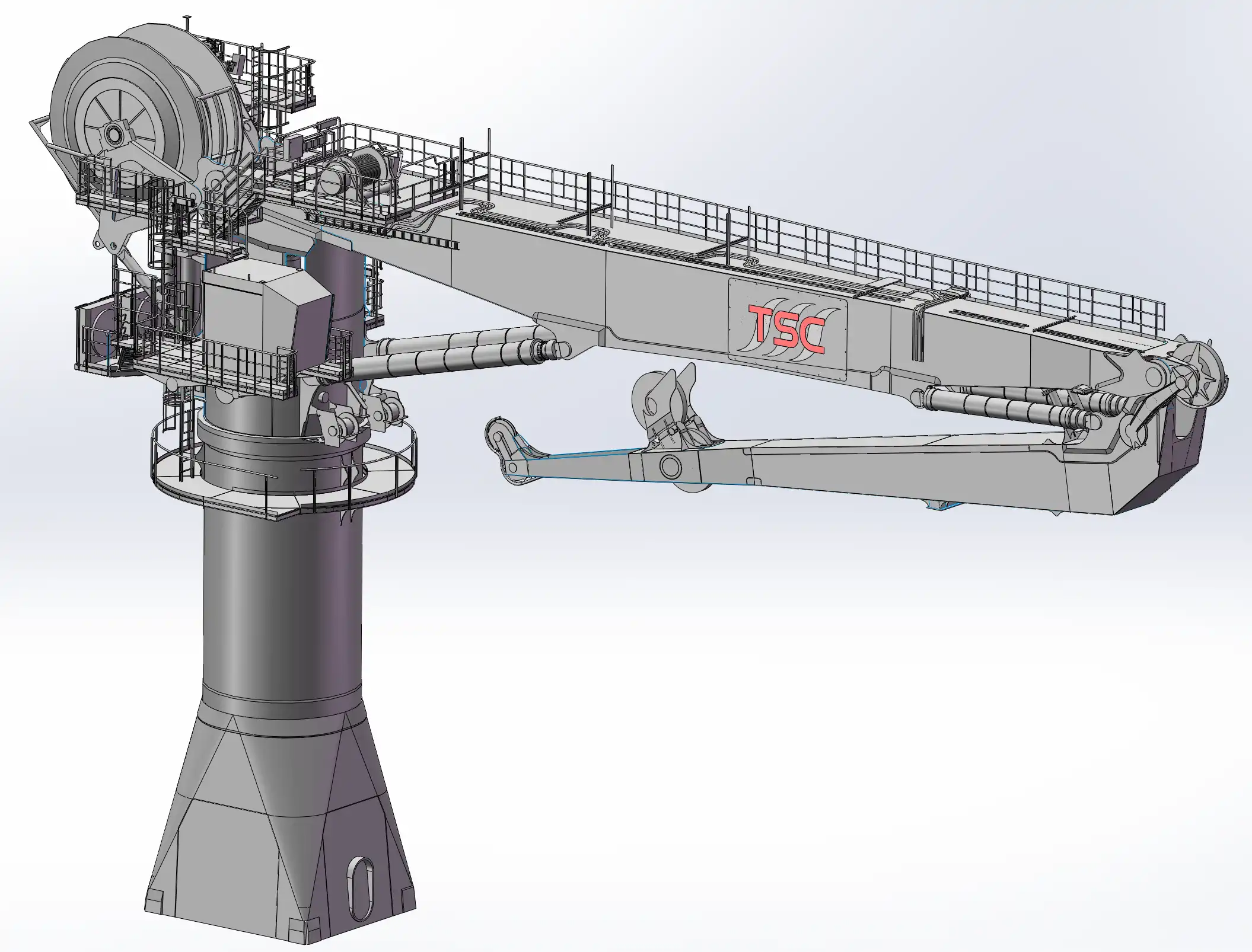
Understanding AHC Cranes and Their Role in Deepwater Operations
This new AHC Crane technology is a huge step forward in offshore lifting, and it was designed to stop ships from moving when the sea is rough. These specialized pulling tools use high-tech motion reference units to track pitch, roll, and heave movements in real time. They then change the tension on the wire rope automatically to keep the load stable no matter what the waves are doing.Advanced sensors and high-speed winch reaction systems keep an eye on how the vessel is moving all the time as part of active heave compensation technology. When waves move things up or down, the compensation system either gives out right away or pulls back the wire rope to keep the loads above the bottom still. This accuracy gets rid of the dangerous "snatch loads" that happen when regular cranes work in rough seas.
Key Crane Types for Subsea Applications
There are three main types of cranes used in modern offshore activities. Each type is best for a certain type of underwater work. Knuckle boom cranes are very flexible because their movable boom parts let you place loads precisely around obstacles. These systems work great in small areas where straight booms can't do their job well.Lattice boom designs can lift the most weight for installing heavy subsea equipment. Because their framework is strong and loads are spread out evenly across the whole structure, they are perfect for fitting big manifolds, risers, and underwater trees in very deep water.Tower-mounted systems have higher lifting points that make operations reach further while keeping the system stable. These setups are especially useful on floating production platforms that need to place the crane vertically to make the most of the room on the deck.
Operational Benefits in Subsea Environments
Adding active heave adjustment technology to offshore lifting operations changes them by making weather windows much longer. Operations that used to need calm seas can now be done safely in moderate sea states. This cuts down on project delays and downtime caused by bad weather.More accurate load control lets sensitive underwater equipment be placed to within millimeters, keeping valuable assets safe from damage during installation. This feature comes in very handy when connecting delicate parts or placing tools that need to work within very tight tolerances.When compensation systems are used, the start-stop processes that are common in traditional lifting operations are eliminated. This makes it possible to maintain a continuous workflow. Even when the sea level changes a little, projects keep moving forward steadily. This makes operations more efficient generally and lowers the cost of renting boats.
Comparing AHC Cranes with Traditional and Tower Cranes for Subsea Projects
Conventional lifting systems have a hard time working in deep water, where wave-driven vessel motion makes it hard to predict how loads will behave. Traditional cranes have trouble keeping their loads stable because the equipment they hang from moves around when the ship moves. This can cause safety issues and inefficient operations that can stop important underwater installations.
Superior Automation and Performance Characteristics
AHC Crane systems outperform traditional cranes through advanced motion compensation technology that automatically adjusts to vessel movement using thousands of sensor readings each second. Automated control improves stability, removes operator fatigue, and maintains lifting accuracy during long operations. Regenerative electric systems also improve energy efficiency by reusing stored energy. These cranes continue operating safely in sea conditions where conventional lifting equipment often reaches its operational limits.
Cost-Benefit Analysis for 2026 Projects
Investing in AHC Crane technology reduces weather-related delays, lowers vessel standby costs, and improves project completion schedules. Accurate lifting decreases equipment damage and maintenance expenses while allowing safer operations during moderate sea conditions. Companies using advanced compensation systems gain access to more demanding deepwater projects and specialized offshore contracts. Over time, improved efficiency, reliability, and operational flexibility increase competitiveness and create stronger long-term business value.
Leading Models for 2026 Deployment
Modern AHC Crane models are designed for different offshore applications. High-capacity systems support large subsea infrastructure projects with fast compensation speeds and precise control. Compact units for platform supply vessels provide strong performance in limited spaces while remaining reliable for offshore maintenance work. Specialized offshore wind designs include features that simplify turbine installation and maintenance by improving load transfer stability between floating vessels and fixed structures.
Procurement Considerations: How to Buy, Lease, or Rent AHC Cranes for 2026
To strategically buy active heave compensation systems, you need to carefully consider which buying methods will work best with your project's budget and time frame. By knowing the costs involved in each buying path, you can make smart choices that meet both short-term working needs and long-term business goals.
Purchase Considerations and Supplier Selection
Purchasing a new AHC Crane requires major capital investment but provides full operational control, warranty protection, and access to the latest technology. Used equipment offers lower upfront costs but requires detailed inspections of critical systems such as winches and control electronics. Established manufacturers like TSC provide engineering assistance, factory testing, and technical support, helping operators maintain long-term equipment reliability and performance during complex offshore operations.
Leasing and Rental Options
Leasing provides access to advanced AHC Crane systems while preserving capital for other investments. Lease agreements often include maintenance support and equipment upgrades during the contract period. Rental solutions work well for short-term or specialized offshore projects that require temporary lifting capability. Some providers also offer complete service packages that include equipment, operators, and maintenance support, reducing technical risk and ensuring consistent operational performance throughout the project.
Quality Assurance and Certification Requirements
Classification society approvals are essential for offshore AHC Crane operations. Organizations such as DNV, ABS, BV, and Lloyd’s Register verify safety and performance compliance. Factory acceptance testing confirms compensation accuracy, emergency shutdown performance, and system reliability before delivery. Ongoing inspections and recertification are also required to maintain operational approval. Working with qualified service providers ensures long-term compliance and supports safe crane operation throughout the equipment lifecycle.
Ensuring Safety and Maintenance for Optimal AHC Crane Performance
To keep working safety at its highest level in harsh subsea settings, we need to take thorough methods that meet both short-term safety needs and long-term reliability goals. These days, AHC Crane systems have many safety features that work together to keep things running smoothly even in the worst situations.
Critical Safety Technologies and Systems
Modern AHC Crane systems use advanced safety technologies to protect personnel and equipment during offshore lifting. Real-time load monitoring detects overload conditions and activates protective responses before dangerous situations develop. Emergency stop systems allow immediate shutdown from multiple vessel locations and include redundant backup pathways. Anti-collision technologies use sensors and automated controls to prevent suspended loads from striking vessel structures or nearby offshore equipment.
Preventive Maintenance Protocols
Preventive maintenance is essential for reliable AHC Crane performance in harsh marine environments. Regular inspections focus on wire ropes, hydraulic systems, and electronic controls to identify problems before failures occur. Specialized offshore lubricants protect mechanical parts against corrosion and temperature changes. Software updates improve system performance and maintain compatibility with modern offshore requirements. Consistent maintenance planning helps reduce downtime and extends the operational life of the equipment.
Operator Training and Certification
Safe AHC Crane operation depends on specialized operator training and certification. Training programs cover system theory, practical crane handling, troubleshooting, and emergency response procedures. Certification normally includes written examinations and operational testing to confirm competency. Continuous education programs keep operators informed about new technologies, updated regulations, and improved lifting practices. Regular refresher training strengthens operational safety while maintaining compliance with industry and regulatory standards.
Future Trends and Technological Innovations in AHC Crane Systems for 2026 and Beyond
The subsea lifting landscape continues evolving through technological innovations that enhance operational capabilities while addressing environmental sustainability concerns. Emerging technologies promise significant improvements in AHC Crane performance, efficiency, and environmental impact as the industry advances toward more sophisticated offshore operations.
Advanced Automation and Remote Capabilities
Future AHC Crane systems will increasingly use AI-based automation to predict vessel motion, improve compensation accuracy, and simplify operator control. Remote monitoring allows shore-based experts to assist offshore operations in real time through satellite communication systems. Predictive maintenance technologies continuously analyze vibration, temperature, and hydraulic performance data to identify equipment issues early, allowing maintenance to be scheduled before failures disrupt offshore operations.
Energy Efficiency and Environmental Considerations
Environmental improvements are shaping next-generation AHC Crane technology. Regenerative energy systems reduce power consumption by storing and reusing operational energy. Electric drive systems replace hydraulic components in many applications, improving precision while eliminating hydraulic leak risks. Advanced battery systems provide backup power and support peak energy demand, reducing fuel use and emissions. These technologies help offshore operators meet growing environmental and energy-efficiency expectations.
Strategic Investment Considerations for 2026
Strategic investment in AHC Crane technology requires attention to future operational and technological needs. Flexible system designs allow future upgrades without replacing entire crane systems, extending equipment service life and maintaining competitiveness. TSC’s upgradeable crane platforms support evolving offshore requirements and new technologies. Long-term partnerships with experienced manufacturers also provide access to ongoing technical support and future innovations that improve offshore lifting performance and operational efficiency.
Conclusion
To choose the best AHC Crane systems for underwater and submarine operations in 2026, you need to think carefully about the technology available, the needs of the operations, and the long-term benefits. Active heave correction technology has changed marine lifting operations by making it possible to have precise control in rough seas and by greatly expanding the weather windows during which operations can be carried out. Lifting systems that work well and are reliable are becoming more and more important for business success and safety compliance as the industry moves toward more complicated offshore projects.
FAQ
1. What makes an AHC Crane superior to conventional lifting systems?
Active heave compensation cranes instantly stop ships from moving by using advanced motion sensors and high-speed winch controls. This technology maintains suspended load stability regardless of wave conditions, enabling precise operations that conventional cranes cannot achieve safely in dynamic sea states.
2. How do I determine the right crane capacity for my subsea project?
Crane capacity selection depends on maximum load requirements, operational water depth, and expected sea conditions. Think about both harbor lifting capabilities for equipment handling and subsea lifting requirements for actual installation operations, ensuring adequate safety margins for challenging weather conditions.
3. What certification requirements apply to offshore crane operations?
Offshore AHC Crane operations require classification society approvals from well-known groups like DNV, ABS, or BV. Equipment must meet specific offshore lifting standards, and workers must have up-to-date certifications showing they know how to use the active heave adjustment system and what to do in an emergency.
Partner with CM Energy for Advanced AHC Crane Solutions
CM Energy's TSC brand delivers industry-leading active heave compensating technology. This is achieved by combining decades of technical knowledge with novel design methods for the hardest underwater lifting demands. Our entire AHC Crane systems work well in harsh offshore circumstances using proven parts and cutting-edge control technology.Over 350 deck cranes are in service worldwide, proving we can supply offshore industries with reliability and efficiency. We provide proven technology and field expertise. Over 25% of offshore drilling equipment and 180 self-elevating platforms employ our lifting technologies.
As a reputable AHC Crane manufacturer, we can provide you with unique solutions that meet your individual business needs while still meeting the high quality standards needed for offshore service. Our classification society licenses from DNV, ABS, BV, CCS, and LR show that we follow international rules, and our 159 approved patents show that we are committed to constant innovation.
Get in touch with our expert team at info.cn@cm-energy.com to talk about your deepwater lifting needs and find out how our advanced pay systems can help your offshore operations. You can look at our full line of marine lifting options and set up a meeting with one of our technical experts at cm-energy.com.
References
1. International Association of Classification Societies. "Guidelines for Active Heave Compensation Systems in Offshore Operations." Maritime Safety Standards, 2024.
2. Offshore Technology Conference. "Advanced Lifting Systems for Deepwater Subsea Installation: Performance Analysis and Case Studies." Houston Technical Papers, 2024.
3. Society of Naval Architects and Marine Engineers. "Design Principles for Active Heave Compensation in Marine Lifting Operations." Naval Architecture Quarterly, 2024.
4. American Petroleum Institute. "Recommended Practice for Offshore Lifting Operations: API RP 2D Supplement for Active Heave Compensation." API Standards Publication, 2024.
5. Det Norske Veritas. "Classification Notes on Active Heave Compensation Systems: Design, Testing, and Certification Requirements." DNV Technical Standards, 2024.
6. International Marine Contractors Association. "Guidelines for Safe Offshore Lifting Operations Using Active Heave Compensation Technology." IMCA Safety Guidelines, 2024.