Promoting Sustainable Development: Professor Zheng Nanfeng of Xiamen University Delivers Keynote Speech "Green Hydrogen Empowering Shipping: Pathways, Challenges, and Future Prospects"
At the Shipbuilding Forum of the 2025 World Shipping Convention, Professor Zheng Nanfeng of Xiamen University, Director of the Jiageng Innovation Laboratory, and a researcher at New Cornerstone Research Institute, delivered a keynote speech entitled "Green Hydrogen Empowering Shipping: Pathways, Challenges, and Future Prospects." Professor Zheng delved into the core issue of green energy transition, exploring the application prospects, technological bottlenecks, and breakthrough paths of hydrogen energy and green fuels in the shipping industry. He also systematically elaborated on the challenges and opportunities facing zero-carbon transformation, combining the current state of China's energy structure and industrial practices.
I. China's Zero-Carbon Energy Transition: Formidable Challenges, Multiple Pathways in Parallel
Professor Zheng pointed out that China's energy structure remains dominated by coal, with a high dependence on fossil fuels, posing a significant challenge to achieving near-zero emissions. While traditional coal-to-oil technology can alleviate liquid fuel shortages, its high carbon emissions make it difficult to meet zero-carbon requirements.
To address its energy predicament, China has adopted a multi-pronged strategy: ensuring the security of crude oil supply while prioritizing new energy sources as the core of its transformation. On September 24th, President Xi Jinping announced at the UN Climate Change Summit that by 2035, China's net greenhouse gas emissions across the entire economy will decrease by 7%-10% from peak levels, requiring a total installed capacity of 3.6 billion kilowatts for wind and solar power. Currently, the installed capacity is only about 1.7 billion kilowatts, necessitating an additional 1.9 billion kilowatts over the next decade, equivalent to more than 1.1 times the current capacity.
II. The Core Contradiction in New Energy Development: Consumption and Long-Term Energy Storage
Professor Zheng emphasized that the large-scale development of new energy lies not only in the installed capacity target but, more importantly, in the consumption problem. Wind and solar energy have inherent volatility and intermittency, and the mismatch between peak power generation and peak electricity consumption restricts their large-scale application.
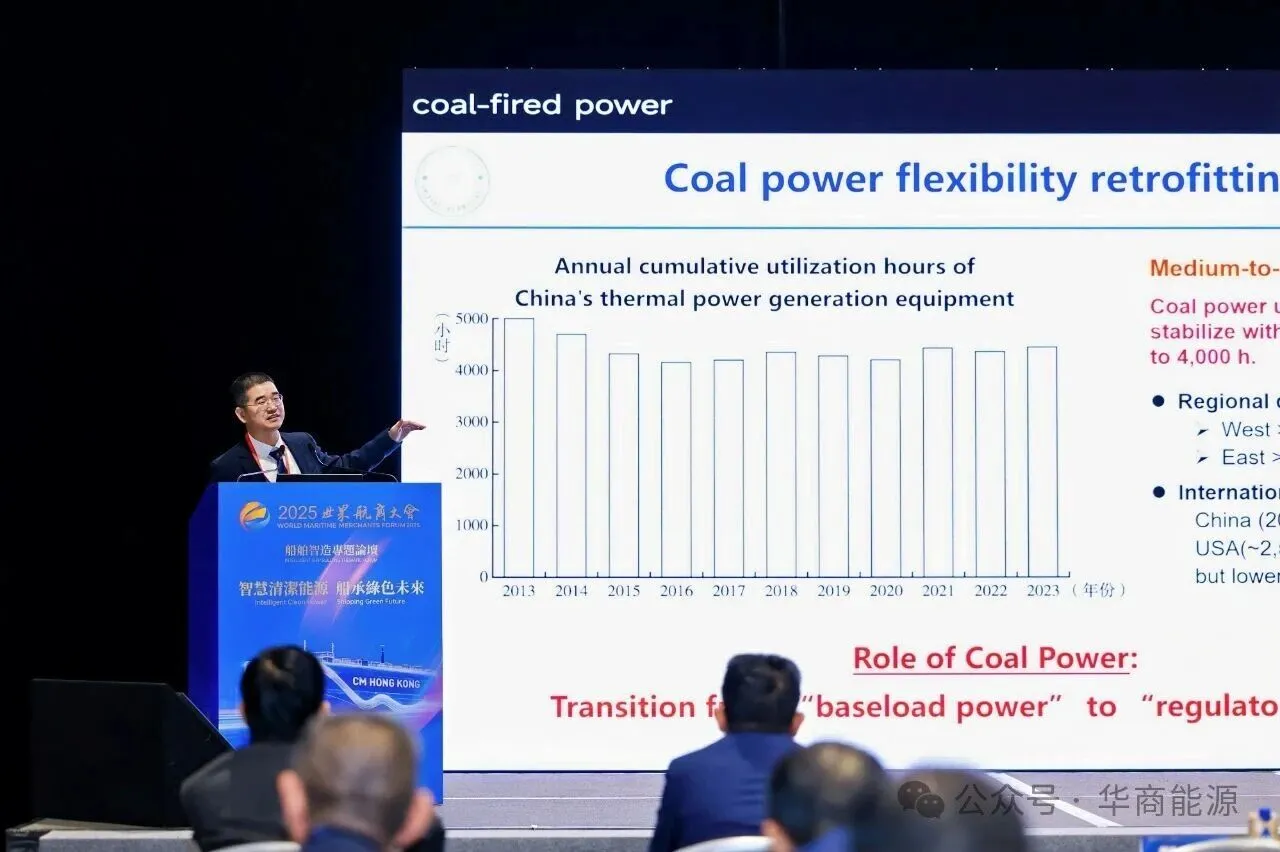
Currently, China is creating space for new energy through the flexible transformation of coal-fired power plants, but this is approaching the critical value of the power system's mechanical inertia. The traditional power system can no longer adapt to more new energy sources through simple coal-fired power plant transformation; therefore, the construction of a "new power system" has become an inevitable choice. In recent years, while the energy storage industry has developed rapidly, lithium-ion battery energy storage is only suitable for short-term scenarios and cannot economically cope with cross-seasonal or extreme peak-valley demand. This provides a significant opportunity for the development of hydrogen energy.
III. Hydrogen Energy: A Key to Long-Term Energy Storage and Energy Substitution
Hydrogen energy possesses both energy and material properties, enabling large-scale, long-term energy storage and can be converted into green liquid fuel, serving as a bridge connecting new energy sources and end-use applications. my country's annual hydrogen consumption accounts for approximately 40% of the global total, and its industrial foundation is solid. In specific scenarios such as mining, a closed loop of "hydrogen production—hydrogen storage—hydrogen use" has been formed, achieving economic feasibility. As the installed capacity of new energy sources further expands, the demand for long-term energy storage will become fully apparent, and the value of hydrogen energy will be fully realized.
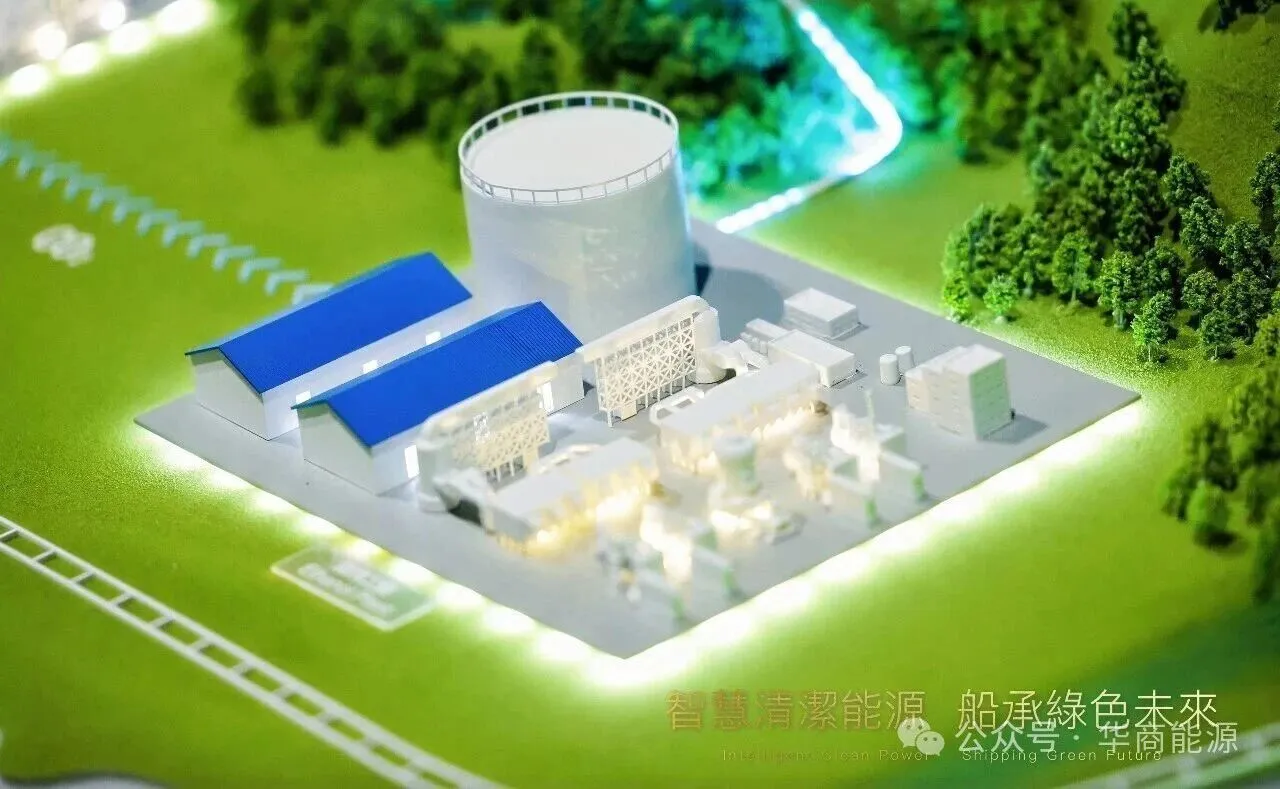
However, the hydrogen energy industry still faces challenges such as insufficient infrastructure and small-scale application. Furthermore, at the technological level, traditional water electrolysis for hydrogen production is difficult to adapt to the volatility of new energy sources, and in the commercial environment, there is an involution phenomenon of "price-driven, performance-neglecting" in electrolyzers, a crucial basic equipment.
To address the aforementioned issues, Professor Zheng's team proposed a combined technical solution, integrating low-cost alkaline hydrogen production with proton exchange membrane (PEM) hydrogen production that can adapt to fluctuations. This combined solution utilizes only 10%-20% of the proton exchange membrane components, achieving hydrogen production power consumption as low as 4.3 kWh/standard cubic meter, and can operate stably within a wide power fluctuation range of 20%-150%, adapting to the volatility of new energy sources and achieving low power consumption and wide-range fluctuation operation. Regarding cost optimization, by using off-grid hydrogen production, if the off-grid electricity price can be reduced to 0.1 yuan/kWh, while simultaneously optimizing BOP (Balance of Plant) and engineering construction costs, the future hydrogen price is expected to drop to 10 yuan/kg, promoting the large-scale application of hydrogen energy.
IV. Green Fuels: The Inevitable Path to Zero-Carbon Transition in Shipping
1. Locational Advantages Drive Green Fuel Development
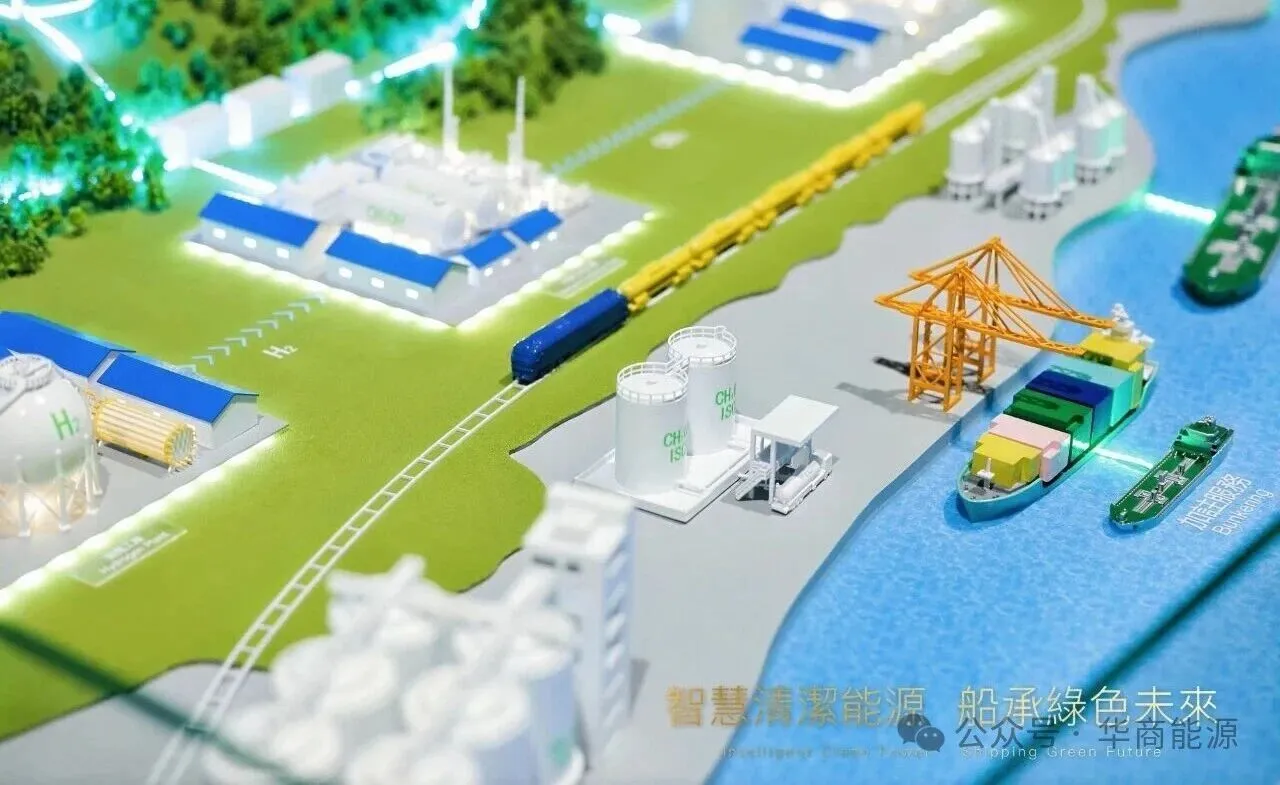
With limited zero-carbon pathways available to the shipping industry, green liquid fuels have become a key choice. Global shipping routes show a large concentration of vessels in East Asian waters. Transporting green fuels from traditional energy-producing regions like North Africa and the Middle East to Asia is extremely costly over long distances due to the lower calorific value of green fuels compared to oil. China, however, leveraging its abundant domestic new energy resources, can produce green fuels locally, giving it a significant locational advantage and potentially altering the global green fuel supply landscape.
2. Breaking Through Traditional Chemical Thinking: Exploring Flexible Production
The "green electricity—green hydrogen—green liquid fuel" pathway is largely mature, but traditional chemical processes rely on stable operating conditions, making them ill-suited to the volatility of new energy sources. Furthermore, the high investment and long payback periods of traditional chemical projects drive up fuel costs. Therefore, there is an urgent need to explore flexible production pathways with low fixed investment.
Professor Zheng's team is developing a technology that directly couples water electrolysis for hydrogen production with carbon dioxide hydrogenation. Combined with reactor structural modifications, this technology can reduce equipment costs and fixed investment, achieving stable operation under fluctuating conditions and providing a new pathway for green fuel production.
3. Comparison of Methanol and Ammonia Fuel Selection
Methanol, as a short-term transitional fuel, has good compatibility with existing ships. However, if produced from fossil fuels, it has high carbon emissions. While biomass methanol can achieve zero carbon emissions, the dispersed nature of biomass feedstocks necessitates cross-regional transportation for large-scale production, resulting in high costs.
Ammonia fuel, on the other hand, has long-term advantages. Nitrogen is widely available and inexpensive; if the price of hydrogen drops below 10 yuan/kg, the price of green ammonia is expected to be below 3000 yuan/ton, making it economically competitive; moreover, it burns without carbon, achieving thorough decarbonization. Currently, ammonia internal combustion engines and gas turbine technologies are progressing smoothly, and in the future, they will not only be used in ships but also contribute to the deep decarbonization of the power system.
V. Synergistically Promoting Green Energy Transition and Zero-Carbon Shipping Goals
Professor Zheng summarized that China already possesses a global leading advantage in renewable power generation capacity, technology, and cost. However, achieving green energy transition and zero-carbon shipping goals requires transforming individual advantages into comprehensive systemic advantages. This requires collaborative efforts from industry, academia, and policymakers. Through technological breakthroughs and industrial synergy across the entire "green electricity—green hydrogen—green ammonia/green methanol" chain, China will occupy a leading position in the global energy transition and zero-carbon transformation of shipping.
Further Reading:
Huashang Energy and Jiageng Innovation Laboratory jointly established Huashang Xiamen Hydrogen Energy Technology (Xiamen) Co., Ltd., a technology innovation-driven enterprise specializing in alkaline water electrolysis for hydrogen production. The company is committed to the innovative research and development of core materials such as electrolyzer electrodes and composite membranes, as well as fuel cell stack structures, to create high-performance hydrogen production equipment. Test results of the electrolyzers independently developed and produced by Huaxia Hydrogen Energy show that the comprehensive energy consumption for hydrogen production is less than 4.4 kWh/Nm³, the load adjustment range is 30%–110%, the hydrogen content in oxygen is <1.5% across the entire power range, the load increase/decrease response rate is >10%/second, and the cold start time is <10 minutes. Currently, the company's products have been successfully delivered to wind power hydrogen production projects, and the green hydrogen is used in downstream chemical ammonia synthesis, representing a significant project in China's green transformation of the chemical industry.