Where to Buy Methanol Feed System for Ships
When shipowners and marine engineers search for reliable sources to purchase marine fuel delivery solutions, the question of where to buy Methanol Feed System for ships becomes paramount. Today, reputable suppliers offering certified, safety-compliant systems are found across major maritime hubs in Europe, Asia, and North America. Companies like CM Energy, operating under the TSC brand, have emerged as trusted partners delivering turnkey methanol fuel supply solutions backed by class society approvals and extensive dual-fuel vessel experience. Selecting the right supplier involves verifying technical credentials, after-sales support networks, and proven installation track records to ensure your investment meets both regulatory standards and operational demands.
Introduction
This is a very important time for the marine business to start reducing its carbon footprint. Methanol has become very popular as an alternative fuel, especially among companies that run container ships, chemical truck boats, and bulk carriers that want to cut down on greenhouse gas emissions. As the foundation of this change is a strong Methanol Feed System that delivers methanol to dual-fuel engines in a safe and efficient way while dealing with the unique problems that this low-flashpoint fuel brings.
When they look for these tools, procurement managers and technical heads have to make hard choices. In addition to making sure the pressure, temperature, flow rate, and cleanliness meet the engine manufacturer's requirements, buyers also have to deal with safety rules, material compatibility issues, and the need for the new system to work seamlessly with the ship's existing systems. This guide walks you through the most important things to think about and helps you find suppliers who can give you systems that meet the operational needs and sustainability goals of your fleet.
As shipping companies speed up their plans to use green fuels, knowing where and how to get reliable methanol supply equipment has become a key economic edge. The information in this article will help you make smart buying decisions that will support both compliance and long-term vessel performance, whether you're putting new ships into service or planning upgrades.
Understanding Methanol Feed Systems for Ships
Core Components and Operating Principles
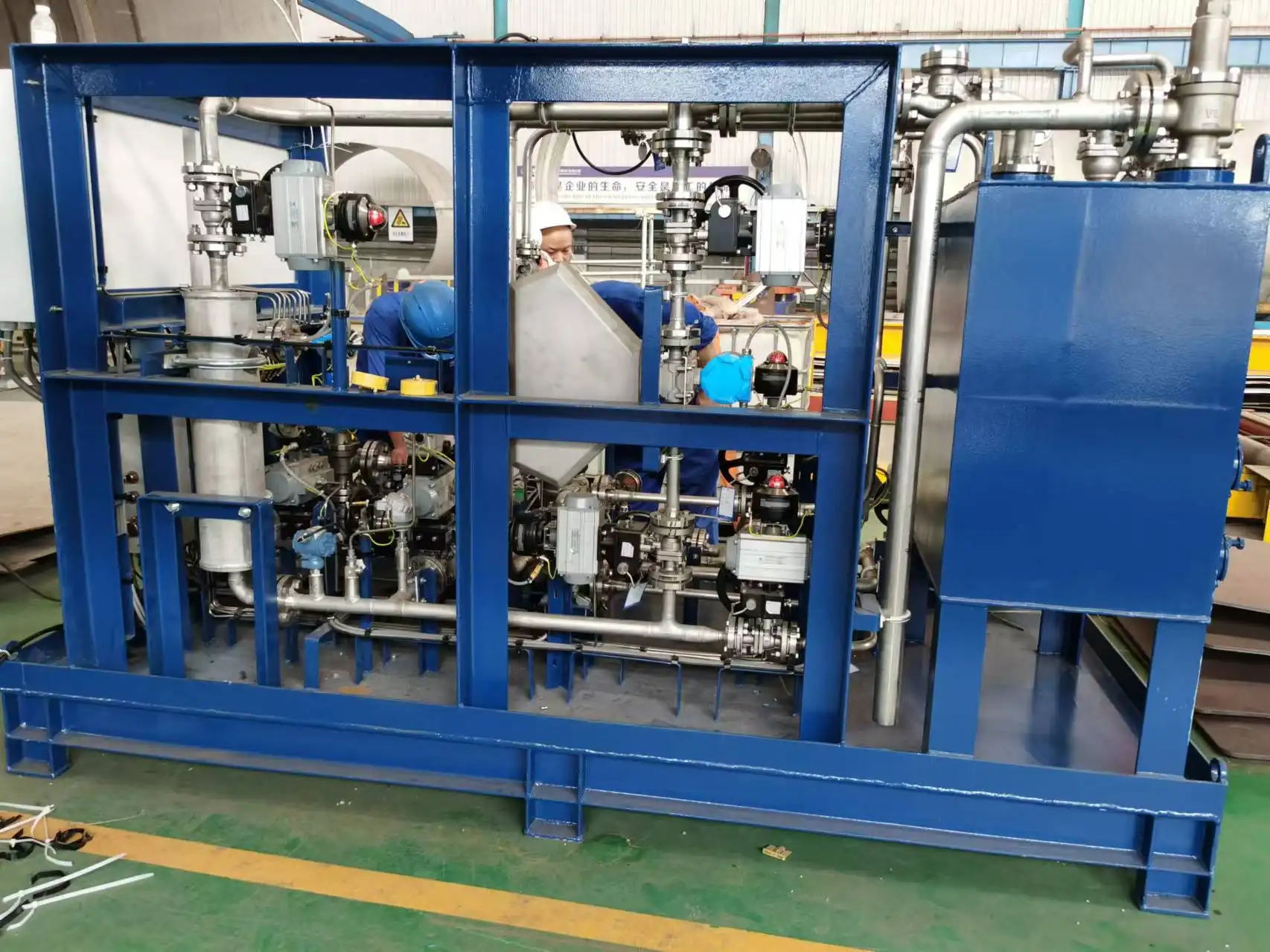
A full methanol fuel supply system is made up of several parts that work together. The methanol supply machine is the most important part of the process because it changes fuel to exact specs that engine makers need. This unit keeps the pressure and flow steady even when the load changes. It responds correctly during important phases like starting the engine, switching fuels, and emergency shutting down.
According to chemical vessel rules, the filling and delivery system takes care of the complicated tasks of methanol bunkering, storage, and transfer. Because methanol has traits like a flashpoint at 11°C, is corrosive, and is toxic, this section uses special materials and containment strategies. Double-walled pipes with airtight gaps between them add an extra layer of safety, and constant gas detection tracking helps find leaks quickly.
Auxiliary systems support temperature regulation through integrated heat exchanges that keep the boiling point of methanol below 64.7°C. This stops vapor lock from happening. The whole process is controlled by safety and control systems that have redundant instruments and automatic stop routines that meet the requirements of the IMO IGF Code and classification society standards from DNV, ABS, and other well-known groups.
Safety Architecture for Low-Flashpoint Fuels
Choosing the right materials is an important part of design. Most primary wetted parts are made of 316L stainless steel, which doesn't react with formic acid, which is a byproduct of methanol contact. Elastomer seals can only be made from PTFE or EPDM because other materials swell and break down when they come in contact with methanol's solvent properties.
Because methanol isn't very lubricating, the system architecture uses special pump designs with separate bearings or the dosing of additives that make it more lubricating. Diamond-like carbon coatings on moving parts make them last longer in high-pressure situations. Plug-and-play installation is made easier by modular skid-mounted designs, which cuts down on dry-dock time for both newbuild and retrofit projects.
Maintenance Considerations for Maritime Environments
Routine repair methods keep systems reliable even in rough sea conditions. Integrated nitrogen purge lines make it possible to safely get ready for any repair that needs to break the containment. The control system goes through a series of steps, which include draining to a special tank, cleaning with nitrogen, vacuum drying if desired, and making sure that the lower explosive limit readings are zero before letting people in.
Even though dynamic seals are immune to chemicals, they need to be inspected and replaced every year as part of regular maintenance. In diesel systems, seals can last for years, but because of how they react to cold flow and compression set, methanol-compatible seals wear out in different ways. Understanding these upkeep cycles helps buyers make good budgets for costs that go beyond the original investment.
Key Factors to Consider When Buying a Methanol Feed System for Ships
Engine Compatibility and Performance Parameters
Understanding your engine's main specs is the first step in choosing the right fuel delivery system. Dual-fuel engines from companies like MAN and WinGD need precise supply parameters. These can be as low as four to ten bars for auxiliary applications and as high as fifteen bars for systems that feed high-pressure injection pumps. These needs must be met by the system, which must also keep the flow stable even when the load changes.
The ability to control temperature has a direct effect on the reliability of operations. Because methanol has a higher gas pressure than most marine fuels, it needs to be carefully controlled at high temperatures to avoid cavitation and keep the phase stable. Quality systems have heat exchangers that can change based on what the engine needs. This keeps the fuel in the best condition no matter the environment or the way it is used.
Accuracy of flow meters is very important for how well combustion works and how much pollution it produces. Advanced systems deliver precise mass flow rates, which helps the engine be calibrated correctly and makes sure that environmental rules are followed. This level of accuracy is especially useful when switching between methanol and pilot fuels, because thermal shock must be avoided.
Material Integrity and Corrosion Resistance
Because methanol is a strong fluid, it is important that only the best materials are used throughout the Methanol Feed System. Parts made of carbon steel that work well in regular fuel systems break down faster when they are used with methanol. Austenitic stainless steel construction for primary containment is the best way to do things in this tough situation because it lasts a long time.
Seal compatibility is more than just chemical protection. PTFE and EPDM materials can withstand the chemical attack of methanol, but they don't have the same mechanical properties as other seal materials. Buyers should make sure that suppliers show they understand these details by showing they have service experience and documented seal replacement intervals that are based on real operating data instead of guesses.
Coating systems for the inside of tanks and pipes need extra care. Standard epoxy coats might not protect well enough; zinc silicate mixes are usually needed for methanol service. Making sure that providers give clear instructions on how to prepare the surface and apply the coating helps avoid expensive repairs and system failure before it's time.
Automation and Control Integration
Modern equipment for supplying methanol has advanced control logic that automatically handles complicated operational sequences. This automation makes things safer by cutting down on mistakes made by people during important tasks like switching fuels, starting up the system, and shutting it down in an emergency. Instrumentation that is explosion-proof and approved for use in dangerous areas is a basic need, not an extra that can be added on.
Being able to connect to current ship automation systems makes operations run more smoothly and cuts down on the need for team training. Standard communication protocols make it easier for systems to share data with engine control systems. This lets all of the systems work together to get the best performance and emissions. Remote monitoring helps with preventative maintenance by finding problems as they arise before they affect operations.
Redundancy features keep mission-critical apps safe while they're running. Dual pump designs that work in 2x100% capacity mode make sure that there is a steady flow of fuel, even when parts are being serviced or break down unexpectedly. Buyers should check with providers to see if they build redundancy into the layout of the system or only offer it as an extra. The difference between the two has a big impact on the system's long-term stability.
Comparing Methanol Feed Systems: How to Choose the Best for Your Ship
System Configuration Options
Methanol supply equipment comes in a number of different shapes and sizes to fit different types of vessels and different types of operations. It is possible to add standalone methanol supply units to existing fuel system architectures, which makes them useful for retrofit projects that need to use modular approaches because of limited space or existing infrastructure. Complete integrated systems offer turnkey solutions that work well for new construction projects that can benefit from full design optimization.
The choice of pump technology affects both how well it works and how often it needs to be maintained. While centrifugal pump designs are simple and reliable, they may need lubricity additives because methanol isn't very good at lubricating. Positive displacement pumps let you precisely control flow even when the pressure changes, but they need more complex seal designs and more regular upkeep. Knowing the practical trade-offs helps match the right pump technology to the way a vessel works.
Depending on the amount of deck room you have and how you need to spread weight, skid-mounted and distributed system layouts have different benefits. Pre-fabricated skids make installation and commissioning easier. This is especially helpful for retrofits where cutting down on yard time is important for cost-effectiveness. Distributed systems let you set them up in more ways, but they are harder to set up and harder to reach for upkeep in the future.
Evaluating Supplier Capabilities
When evaluating potential suppliers, technical heritage is very important. Companies that have worked on dual-fuel ships, liquefied gas carriers, and chemical tankers can offer useful insights that companies that make generic equipment can't. This background helps them come up with useful design ideas that solve problems in the real world instead of just meeting the requirements on the specification sheet.
Documentation for certification and approval gives independent validation of the quality of the system design and manufacturing. Look for sellers that have class society product certificates from well-known organizations such as DNV, ABS, Lloyd's Register, and the China Classification Society. Approval in Principle badges show that new designs have been carefully checked by experts in the field before they are put in place for the first time. This lowers the risk of the project for early users.
Coverage of the service network affects the long-term success of operations. When ships work in more than one area, having access to global spare parts and expert help becomes very important. Suppliers who offer full after-sales support, such as help with setup, crew training, and ongoing upkeep advice, provide value that lasts long after the equipment is bought.
Price Versus Value Analysis
Total cost of ownership should guide supplier comparisons rather than purchase price alone. Higher-quality materials and designs may cost more initially but reduce maintenance and failures. Flexible customization supports phased fleet deployment, while energy-efficient pumps, heat exchangers, and controls can significantly lower operating costs over a 15–20-year lifecycle for Methanol Feed System.
Where to Buy Methanol Feed Systems for Ships: Trusted Suppliers and Manufacturers
Identifying Reputable Suppliers
Reputable marine methanol suppliers should have proven dual-fuel vessel experience, successful project deliveries, and strong technical expertise. DNV product certificates and Approval in Principle documentation provide independent safety validation. Customer references further reveal commissioning support, spare-parts availability, responsiveness, and long-term supplier reliability beyond marketing claims.
Regional Supplier Considerations
Regional supplier selection should balance cost, quality, logistics, engineering capability, and service support. Asian suppliers often leverage shipbuilding expertise, European suppliers emphasize innovation and classification cooperation, while North American suppliers focus on service and compliance. Proximity, multilingual support, and time-zone coverage improve design coordination, commissioning, and troubleshooting efficiency.
Value-Added Services That Matter
Value-added services include experienced commissioning support, detailed as-built documentation, and vessel-specific training combining classroom and hands-on instruction. Ongoing online resources and refresher courses support long-term operational proficiency. Strategic spare-parts stock at major maritime hubs, rapid delivery, and transparent pricing help minimize downtime and improve long-term maintenance cost planning.
Procurement Process and Best Practices for Purchasing Methanol Feed Systems
Developing Effective Technical Specifications
Effective technical specifications should define fuel pressure, temperature, flow, cleanliness, electrical requirements, available space, and weight limits. They should reference applicable classification and flag-state standards and involve the chosen class society early. Clear interface requirements for piping, power, controls, inert gas, and ventilation improve quote accuracy and reduce installation changes.
Evaluating Proposals Effectively
Evaluate supplier proposals by comparing scope, technical compliance, and delivery commitments rather than price alone. Standardized scope comparisons distinguish turnkey systems from equipment-only offers. Detailed compliance matrices with supporting documents and certifications improve accountability, while reviewing production capacity, backlog, and delivery history helps identify schedule risks and protect project timelines.
Structuring Supplier Relationships for Success
Long-term supplier partnerships build deeper understanding of fleet needs and improve solutions across projects. Clear contracts should define responsibilities, technical support, documentation, installation, commissioning, training, and warranty terms. Established communication protocols, regular reviews, clear escalation channels, and dedicated project managers further strengthen coordination and improve project outcomes.
Conclusion
To find the best marine methanol fuel delivery system, you need to carefully consider the technical capabilities, supplier qualifications, and long-term support infrastructure. When shipowners buy methanol power systems, they are paving the way for a lower carbon footprint in the marine sector. The choices they make about which suppliers to work with will have long-lasting effects on how the ships operate. A reliable Methanol Feed System is also essential for delivering methanol fuel safely and consistently to the engine. Focusing on proven experience, full certification, and strong after-sales support will set up your fleet for success in the changing world of clean fuel.
CM Energy is a great example of the kind of engineering-focused method that methanol systems need. TSC is ready to help you with your green shipping efforts by providing systems designed to work in the harsh maritime environment. They have a lot of experience with dual-fuel vessels, have delivered projects on time, and offer full service from design to lifecycle support.
FAQ
1.What safety features are essential in a marine methanol supply system?
A basic safety requirement is double-walled pipes with ventilated annular spaces that are constantly checked for gas. When a leak is found, the system should have automatic stop procedures that keep the fuel tanks from mixing within seconds of an alarm going off. Block-and-bleed valve designs offer two ways to isolate a system during repair. Materials need to be able to handle the acidic nature of methanol. For rubber seals, the only materials that won't break down in methanol service are PTFE or EPDM.
2.Can existing diesel vessels be converted to methanol fuel operation?
A lot of methanol systems are installed as part of retrofit projects, especially on vessels that still have a lot of life left in them. Installing the fuel supply equipment is pretty easy; it usually comes as pre-built skid units that cut down on yard time. The bigger problem is changing old fuel tanks so they meet chemical carrier rules by adding the right coatings and cofferdams. Whether or not you can convert your main engine depends on whether or not manufacturers make retrofit kits for your engine model.
3.How does system automation improve operational safety?
Complex tasks are handled by automated control routines that do things like moving between methanol and pilot fuels and keeping the temperature from dropping too low by timing valve operations and flow rate changes. In an emergency, automated shutdown logic shuts down the system faster than a person could, cutting off fuel sources and starting nitrogen purge processes. Continuous tracking with the ability to sound a warning lets crews know about problems as they arise, before they get too bad, which supports early action.
Partner With CM Energy for Your Methanol Feed System Needs
CM Energy offers tried-and-true methanol fuel supply solutions that are designed to work in maritime settings. Our TSC brand blends technical innovation with real-world operational experience. We are a maker of Methanol Feed Systems that have been installed on a variety of vessel types. Because some of our team members have worked on dual-fuel ships, liquid gas carriers, and chemical trucks, the systems they've made are more useful in real life than just meeting theoretical requirements.
We give you full control over how the system is set up; for retrofit projects, we can provide separate methanol supply units, and for new builds, we can provide fully integrated solutions. We work with shipowners throughout the whole project lifecycle because we are DNV certified, offer full installation support, and can provide service anywhere in the world. Our engineering team works closely with the main engine makers, classification societies, and design schools to make sure that everything fits together perfectly and that all the rules are followed.
Are you ready to talk about your personal needs? Get in touch with our marine fuel systems experts at info.cn@cm-energy.com to find out how our methanol supply solutions can help your fleet reach its carbon-reduction goals with tried-and-true technology and dependability.
References
1. International Maritime Organization. "Interim Guidelines for the Safety of Ships Using Methyl/Ethyl Alcohol as Fuel." Maritime Safety Committee, 2022.
2. DNV Classification Society. "Rules for Classification of Ships: Alternative Fuels and Technologies." Technical Standards Publication, 2023.
3. Jensen, Henrik and Sørensen, Marie. "Methanol as Marine Fuel: Technical and Operational Considerations." Journal of Marine Engineering Technology, Volume 21, Issue 4, 2023.
4. Maritime Research Institute Netherlands. "Safety Assessment of Methanol Fuel Supply Systems for Shipping Applications." Research Report M-2023-47, 2023.
5. American Bureau of Shipping. "Guide for Methanol and Ethanol Fueled Vessels." ABS Technical Publications, 2023.
6. European Maritime Safety Agency. "Guidance on Alternative Fuels in European Waters: Focus on Methanol Applications." EMSA Policy Document, 2024.