Knuckle Boom Crane Guide: Features, Setup & Safety Tips
To get through the complicated tasks of offshore and marine activities, you need precise lifting equipment that works well in tough circumstances. Knuckle Boom Crane technology is a big step forward in moving goods by sea because it can move in ways that aren't possible with standard fixed-boom systems. These lifting tools are driven by hydraulics and have jointed arm mechanisms that make them very easy to move around in tight areas. This makes them essential for installing wind turbines offshore, working on FPSO units, and running bulk carriers. By learning about their operational capabilities, setup needs, and safety practices, procurement pros can make smart choices that improve project efficiency while upholding the highest safety standards in a wide range of marine applications.
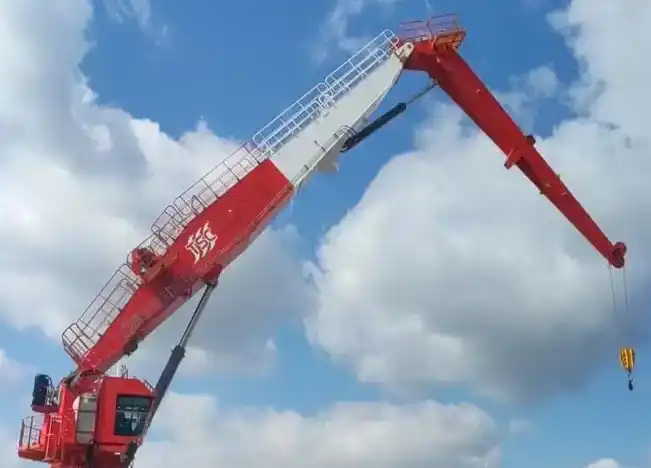
What Is a Knuckle Boom Crane and How Does It Work?
Knuckle Boom Crane systems are complex flexible lifting machines with jointed arms that are driven by hydraulics to move materials precisely in tough conditions. Unlike regular stiff-boom cranes, which have a set shape, these articulating systems have many pivot points that let operators fold and stretch the boom sections in a very flexible way.
Advanced Hydraulic Architecture
Articulating cranes use high-pressure hydraulics to power boom pistons, allowing precise, millimeter-accurate movements. Load-sensing valves automatically adjust flow based on operational needs, optimizing power and response times. Integrated control systems continuously monitor boom angles, load weights, and stability factors, ensuring safe, accurate operation in tight offshore or shipboard environments.
Operational Mechanics and Performance
Their "up-and-over" boom design enables complex lifts in constrained marine settings, such as transferring goods between ships or onto offshore platforms. Strong high-tensile steel and interconnected pivot points distribute loads evenly, resisting vertical and lateral stresses, enhancing durability, and ensuring reliable performance during prolonged offshore operations.
Key Features and Advantages of Knuckle Boom Cranes for B2B Buyers
For marine and underwater tasks, lifting equipment that works very well and always works as expected is needed. Articulating crane technology offers big operating benefits that have a direct effect on the success rates of projects and the operational efficiency of a wide range of maritime uses.
Superior Maneuverability and Compact Design
Articulating cranes excel on confined decks, folding compactly when idle to free up space on PSVs and OSVs. Their ability to maneuver around obstacles reduces vessel movements, speeds up cargo handling and equipment installation, and cuts weather exposure risks, improving project efficiency and lowering operational costs.
Enhanced Safety Features and Load Management
Advanced safety systems monitor boom loads, angles, and stability in real time. Overload sensors and automatic shutdown procedures prevent accidents, protecting both crew and equipment. Integrated control displays provide operators precise load positioning while maintaining safe clearances, crucial near sensitive areas or personnel.
Operational Efficiency and Maintenance Benefits
Hydraulic load-sensing systems optimize power use by adjusting pressure and flow to operational needs, improving efficiency. Modular designs simplify maintenance, giving easy access to critical components, reducing downtime, and ensuring long-term reliability for offshore operations.
Setting Up and Operating Knuckle Boom Cranes Safely
To use flexible crane systems successfully, you need to plan ahead and think about things like the conditions at the spot, the operations that need to be done, and safety issues. Setting up things correctly is the first step to running a safe and effective business. It also helps keep people and things safe during all phases of operations.
Pre-Operational Site Assessment
Site evaluations are critical for safe crane operations, assessing vessel stability, deck space, equipment proximity, and operating clearances. Understanding these factors helps operators plan effective methods that meet project goals while maintaining safety margins. Environmental conditions like wind, waves, and vessel movement also shape Knuckle Boom Crane operating limits, keeping lifts safe under changing weather.
Installation and Setup Procedures
Professional installation focuses on base alignment, structural connections, and hydraulic integration. Certified teams follow manufacturer procedures to mount, align, and test systems thoroughly. Gradual load testing ensures all parts function within limits, optimizing performance and preventing operational issues that could affect safety or efficiency.
Operator Training and Certification
Comprehensive operator training teaches hydraulic operation, load calculation, safety systems, and emergency responses. Ongoing certification keeps operators updated on evolving safety standards and best practices. Regular refreshers introduce new technologies and methods, enhancing operational efficiency and minimizing risk during complex lifting tasks.
How to Choose the Best Knuckle Boom Crane for Your Business Needs?
To choose the right articulating crane systems, you need to carefully look at your operational needs, the features of the vessel, and your performance goals. This process of review makes sure that the equipment chosen gives the best performance while also meeting the goals of the project and staying within the budget.
Operational Requirement Analysis
Understanding the unique moving needs is the first step in choosing the right tools. The tools specs needed to safely and efficiently complete a project are affected by things like load weights, reach needs, operational frequency, and the environment. By carefully looking at these factors, you can avoid both over-specification, which raises costs needlessly, and under-specification, which could weaken practical capabilities. Vessel integration factors have a big effect on the choices about what tools to buy. The equipment specs and installation needs are affected by things like the amount of deck space available, the mounting spots on the structure, the type of power source, and the operating clearances. If you know about these limits early on in the selection process, you can avoid having to make expensive changes or deal with practical issues during the project execution phases.
Performance Specifications and Capabilities
TSC makes flexible crane systems that are designed to work in coastal and offshore environments. The KBC2250 type can lift up to 25 metric tons and has a boom that can reach up to 30 meters in length. This makes it perfect for medium-duty offshore work. The strong build of these units makes them able to weather harsh marine conditions and keep working well for long periods of time. With pulling powers of up to 70 metric tons and boom lengths of up to 35 meters, the KBC3150 model offers better lifting capabilities. This bigger machine has an extra hook that can hold up to 10 metric tons of weight, so it can handle multiple loads at once during complicated operations. Both types are made to last for 25 years, which means they will be useful to marine users for a long time.
Quality Standards and Certification
Some of the strictest international standards that TSC pivoting crane systems have to follow are API-2C clearance and approval from major classification societies like DNV, ABS, CCS, BV, and LR. These certifications make sure that equipment meets the high standards for safety and efficiency needed for offshore operations. They also make it easier for regulators to approve equipment across foreign markets. Full quality control measures for Knuckle Boom Crane include ISO-certified manufacturing, DNV-certified welding, and detailed testing plans that ensure each crane meets performance standards before delivery. By focusing on quality, operators receive equipment that performs reliably even during heavy-duty marine lifting and offshore operations.
Maximizing Value: Maintenance, Parts, and Supplier Support
Effective repair plans and dependable provider support have a big effect on how available equipment is for use and how much it is worth in the long run. By knowing these things, workers can come up with complete support plans that get the most out of their equipment while keeping costs low over its lifetime.
Preventive Maintenance Programs
Systematic repair programs keep equipment working well and stop expensive breakdowns that could stop important activities. Parts of the hydraulic system, structural elements, and control system functions that wear out during everyday use are the main focus of regular inspections. Early detection of problems that are starting to happen allows replacement before they fail. Routine maintenance points are easy to get to on TSC designs, which makes it easier to finish planned maintenance chores quickly. This ease of access cuts down on the time needed for repair while still making sure that important parts get the care they need during regular service intervals. Modular component designs make it easy to quickly change worn-out parts, which cuts down on downtime during maintenance times.
Technical Support and Service Network
Operators get quick help when operating problems arise thanks to comprehensive expert support. TSC keeps expert teams with a lot of experience that can help with fixing remotely and provide on-site service when needed. This support network is especially helpful for workers who work offshore, where broken equipment has a direct effect on project costs and plans. Replacement parts that are available through approved distribution networks are guaranteed to meet the quality and specs of the original parts. TSC keeps large parts inventories that allow for quick delivery of important parts, which keeps operations running smoothly when new parts are needed. The integrated electrical control systems developed by TSC encompass load management capabilities, safety alarm functions, and operational data recording features that support both safe operations and maintenance planning. These systems give useful information about how things work, which lets you plan ahead for repair and keep records of how things work for legal reasons.
Conclusion
With articulated lifting capabilities that allow exact cargo handling in difficult settings, Knuckle Boom Crane technology is important equipment for modern marine and offshore operations. Knowing their practical benefits, how to set them up, and how to keep them in good shape helps procurement pros make smart choices that improve project success while still meeting strict safety standards. With their advanced hydraulic systems, strong construction, and many safety features, these cranes are essential for a wide range of naval tasks, from installing wind turbines offshore to running bulk carriers.
Frequently Asked Questions
1. What factors determine the lifting capacity of articulating crane systems?
The lifting ability is based on the load radius, boom length, and how the machine is set up to work. The boom's maximum capacity is at its smallest radius, when it is fully retracted. As the radius rises, the maximum capacity drops. Load moment estimates take into account the shape of the boom and where the load is placed to make sure that activities stay safe.
2. How do articulating cranes provide safety advantages over conventional lifting equipment?
Integrated load tracking systems keep an eye on operational factors all the time, stopping dangerous situations before they happen. The flexible design lets you precisely place the load without having to move the equipment. This makes operations simpler and lowers the risks that come with them during important lifting tasks.
3. Can these cranes be customized for specific offshore applications?
TSC specializes in making crane designs that are unique and fit the needs of each business. Some of the changes that can be made are custom boom setups, better environmental protection, and merging with control systems that are specific to the vessel in order to get the best performance for each operation.
Partner with CM Energy for Superior Knuckle Boom Crane Solutions
CM Energy is a reliable company that sells knuckle boom cranes and the latest TSC flexible crane systems, which are designed to work in tough marine and offshore environments. The KBC2250 and KBC3150 models are both part of our wide range of products. They are both made to meet strict international standards and are very reliable in use. With over 350 deck cranes in use around the world and approval from major classification societies, CM Energy has a track record of providing custom solutions that improve operations efficiency. Our skilled engineers are here to help you with everything, from the initial consultation to installation and ongoing upkeep. This way, we can make sure that your investment gets the most value over its entire working lifecycle. Email our experts at info.cn@cm-energy.com to talk about your unique needs and find out how our cutting-edge crane technology can help your maritime activities.
References
1. International Association of Classification Societies. "Guidelines for Marine Crane Design and Operation Standards." Marine Equipment Technical Standards, 2023.
2. American Petroleum Institute. "API Specification 2C: Specification for Offshore Pedestal Mounted Cranes." Petroleum Equipment Standards, 2022.
3. European Committee for Standardization. "EN 12999:2020 Cranes - Loader Cranes Safety Requirements." European Safety Standards for Mobile Cranes, 2020.
4. Det Norske Veritas. "DNV-OS-D101: Marine and Machinery Systems and Equipment." Offshore Standards for Marine Operations, 2021.
5. Maritime and Coastguard Agency. "Marine Guidance Note 280: Lifting Appliances and Cargo Handling Gear." UK Maritime Safety Guidelines, 2023.
6. International Maritime Organization. "Guidelines for Marine Lifting Operations and Equipment Standards." IMO Resolution A.1089, 2022.