Best Ammonia-Ready Solutions for Offshore Power
When activities abroad need power options that are stable and last a long time, modern ammonia fuel systems are the way of the future for marine energy. The best ammonia-ready options have cutting-edge technology for delivering fuel, strict safety rules, and years of experience working abroad. Modern ammonia fuel system designs give ship owners more options than ever before while still following strict environmental rules. These all-in-one options cover everything from power generation to storage and dealing, putting the marine industry on track for a future with no carbon emissions.
The Maritime Industry's Pivot to Ammonia-Powered Solutions
Offshore power generation stands at a critical transformation point. Traditional marine fuels face mounting pressure from environmental regulations and sustainability mandates. Ammonia Fuel System emerges as a compelling alternative, offering carbon-free combustion and abundant availability worldwide.
Fuel technology is seeing extraordinary innovation as a direct result of the decarbonisation objectives set by the International Maritime Organisation. There is widespread recognition among vessel operators across industries that ammonia has the potential to revolutionise offshore power systems. Ammonia, in contrast to traditional fuels, does not emit any carbon emissions during the combustion process, making it an excellent choice for enterprises who are concerned about the environment.
Ammonia storage presents unique advantages for offshore applications. The fuel's energy density exceeds hydrogen while requiring less complex storage infrastructure than other alternative fuels. This characteristic makes ammonia particularly attractive for long-duration offshore missions where fuel efficiency directly impacts operational success.
Understanding Ammonia Fuel System Architecture for Marine Applications
Modern ammonia fuel systems integrate multiple specialized components designed for marine environments. The filling and storage system forms the foundation, utilizing advanced materials resistant to ammonia's corrosive properties. These systems maintain precise temperature and pressure controls essential for safe ammonia handling.
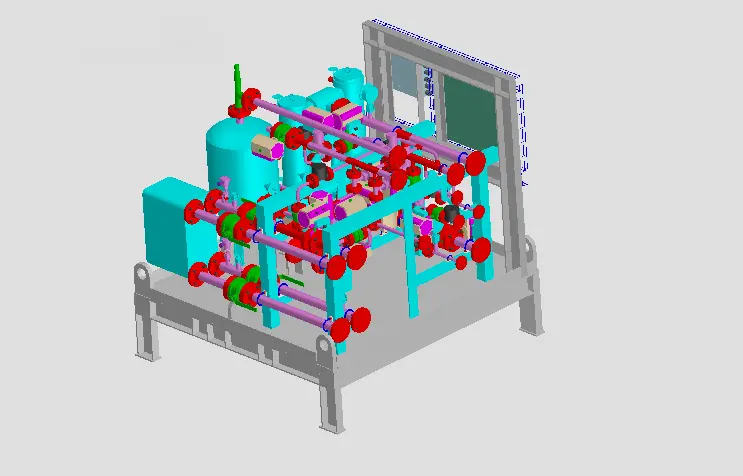
The technical core of these installations is represented by the Ammonia Fuel Supply System, often known as the AFSS. A complex network is responsible for managing the transportation of gasoline from storage tanks to the equipment used for power generating. Continuous monitoring of flow rates, pressure differentials, and safety factors is a feature of advanced control systems.
Fuel vapor units are integral to managing ammonia emissions during normal operations, capturing and processing vapor to prevent environmental release. These systems recover valuable fuel for reuse, reducing waste. Through thermal decomposition technology, ammonia vapor is converted back into usable fuel, which significantly maximizes system efficiency. This process not only improves fuel economy but also contributes to a cleaner, more sustainable operation by minimizing emissions and optimizing fuel utilization.
Safety systems integrate multiple layers of protection throughout the fuel handling process. Ammonia sensors provide real-time monitoring of potential leaks. Emergency shutdown protocols activate automatically when predetermined thresholds are exceeded, ensuring crew safety and environmental protection.
Comprehensive Safety Protocols for Offshore Ammonia Operations
Safety considerations dominate ammonia fuel system design for offshore applications. Corrosion resistance becomes paramount when selecting materials for fuel handling components. Specialized alloys withstand ammonia's aggressive chemical properties while maintaining structural integrity in marine environments.
Creating protective barriers around fuel handling locations is the responsibility of ventilation systems. For the purpose of preventing ammonia from building up in confined areas, these systems keep negative pressure zones established. Through the elimination of oxygen from vital system locations, inert gas integration further minimises the likelihood of explosions occurring.
When it comes to ammonia-powered systems, cold start procedures demand great attention to detail. It is necessary for catalyst systems to have sufficient heating in order to achieve optimum performance. Innovative preheating systems enable dependable ignition while also reducing pollutants and fuel consumption throughout the starting process.
An important difficulty for ammonia combustion systems is the control of nitrogen oxide emissions. Despite the fact that ammonia does not cause any carbon emissions, the creation of nitrogen oxide needs active mitigation. In order to efficiently limit the production of nitrogen oxides (NOx), selective catalytic reduction systems are used. This ensures that maritime emission criteria are met.
Innovative Fuel Reforming Technology for Enhanced Performance
Ammonia injection systems deliver precise fuel quantities to combustion engines. These systems adapt existing diesel engines for ammonia operation while maintaining power output and efficiency. Fuel reforming technology converts ammonia into hydrogen-rich gas streams optimizing combustion characteristics.
In thermal breakdown reactors, ammonia molecules are broken down into several components, including hydrogen and nitrogen. This procedure takes place at high temperatures and includes the use of specialised catalysts. The generated hydrogen burns in a clean manner, while the nitrogen is released back into the atmosphere in a safe manner.
Ammonia supply is maintained consistently thanks to the use of modern metering technologies into fuel delivery systems. Variable flow control is able to adjust to shifting power requirements while simultaneously preserving the most favourable conditions for combustion. Automated methods lessen the demands placed on operators while also improving safety margins.
Each and every component of the system is impacted by energy density concerns throughout the design process. While diesel fuel has a higher energy content per volume, ammonia has a lower energy content overall. the designers of the system compensate by optimising the designs of the storage systems and increasing the efficiency of the combustion.
Tailored Solutions for Diverse Vessel Categories
Very Large Ammonia Carriers require specialized fuel systems managing both cargo and fuel functions. These vessels benefit from integrated systems utilizing cargo handling expertise for fuel operations. Dedicated fuel tanks separate from cargo holds ensure operational flexibility and safety compliance.
A unique set of refit issues are presented to crude oil ships that are making the switch to ammonia fuel. Fuel infrastructure that is already in existence undergoes adaptation by means of meticulous modification and component replacement. By preparing beforehand, you may assure that there will be little downtime throughout the conversion operations.
In order to integrate ammonia fuel, chemical tankers make use of the safety procedures that are already in place. The expertise of their teams with hazardous chemicals makes the adoption of ammonia fuel easier to accomplish. Ammonia compatibility often requires only minor adjustments to be made to ventilation and safety systems that are already in place.
Bulk carriers benefit from ammonia fuel's operational characteristics during long-haul voyages. Reduced fuel costs and emission compliance create compelling economic incentives. Simplified fuel supply infrastructure supports operations in remote locations where conventional bunker fuels prove scarce.
Pure Car/Truck Carriers utilize ammonia fuel systems designed for frequent port calls. Quick bunkering systems minimize port stay duration while ensuring adequate fuel capacity. Automated fuel management systems reduce crew workload during cargo operations.
Advanced Power Generation Technologies for Offshore Applications
Fuel cell technology represents the cutting edge of ammonia-powered systems. These systems achieve exceptional efficiency while producing only water and nitrogen as byproducts. Modular designs allow scalable power generation matching specific vessel requirements.
Combustion engines adapted for ammonia operation provide proven reliability for offshore applications. Advanced catalyst systems optimize fuel conversion while minimizing emissions. Dual-fuel capabilities allow seamless switching between ammonia and conventional fuels during transition periods.
Hydrogen production ships utilize ammonia cracking technology generating hydrogen on demand. This approach eliminates hydrogen storage challenges while providing flexible fuel options. Renewable energy integration powers cracking processes using offshore wind or solar systems.
Emission reduction technologies integrate throughout ammonia power systems. Advanced aftertreatment systems minimize ammonia slip while controlling NOx formation. Continuous monitoring ensures compliance with evolving environmental regulations.
Installation Excellence and Technical Support Services
Professional installation begins with comprehensive vessel design review and system interface analysis. Technical clarification processes ensure seamless integration with existing ship systems. Detailed planning minimizes installation time while maximizing system performance.
Prefabricated modules streamline installation procedures reducing vessel downtime. Precision manufacturing ensures components fit perfectly within designated spaces. Quality control processes verify system integrity before shipment to installation sites.
Comprehensive testing protocols validate system performance across all operating conditions. Individual component testing precedes integrated system evaluation. Performance verification includes bunkering operations, fuel supply functions, and safety system responses.
Ongoing technical support ensures optimal system performance throughout operational life. Remote monitoring capabilities enable proactive maintenance scheduling. Expert technicians provide rapid response to technical challenges wherever vessels operate globally.
Conclusion
The marine industry's pressing demand for carbon-free and regulation-compliant energy solutions is driving offshore power revolution with ammonia fuel systems. As said, the Ammonia Fuel System uses superior storage, accurate fuel delivery design, vapor management, and multi-layered safety controls to operate reliably in harsh maritime settings.
Ammonia-ready technologies enable decarbonized offshore operations via fuel reforming, combustion optimization, NOx reduction, and modular installation. Innovations in fuel cell integration, catalytic processes, and automated control systems are closing performance gaps with conventional fuels, despite energy density and system complexity.
Technology selection, system integration quality, safety engineering, and long-term technical support all affect adoption. Based on known design frameworks and developing marine norms, ammonia fuel systems will be crucial to sustainable offshore power production.
FAQ
1. What is an Ammonia Fuel System used for in offshore applications?
An Ammonia Fuel System stores, manages, and supplies offshore power and propulsion ammonia. It uses storage tanks, fuel delivery systems, vapor management units, and safety monitoring components to utilize ammonia as a carbon-free maritime fuel.
2. How does ammonia contribute to cleaner offshore energy?
Ammonia allows for carbon-free burning, resulting in no direct CO₂ emissions when burned. Emission reduction technology like selective catalytic reduction systems assist meet marine environmental regulations by reducing NOx production.
3. What are the key safety considerations for ammonia fuel systems?
Corrosion-resistant materials, continual leak monitoring, ventilation systems to avoid gas buildup, and automatic emergency shutdown processes safeguard ammonia fuel systems. These methods assure offshore safety and functioning.
Partner with CM Energy for Advanced Ammonia Fuel Solutions
The transition to ammonia-powered offshore operations represents more than environmental compliance—it embodies maritime innovation's future direction. Advanced fuel systems, comprehensive safety protocols, and proven installation expertise converge to create reliable, sustainable power solutions. Industry leaders recognize ammonia's potential while understanding implementation challenges require specialized knowledge and proven technology. Successful adoption depends on partnering with experienced suppliers offering complete lifecycle support from design through ongoing operations.
CM Energy stands as your trusted ammonia fuel system supplier, delivering comprehensive solutions tailored for offshore power applications. Our team combines extensive maritime expertise with cutting-edge fuel system technology, ensuring reliable performance across diverse vessel operations. With numerous authorized patents and proven delivery of multiple ship sets, we provide the technical excellence your operations demand. Contact info.cn@cm-energy.com to discuss your specific ammonia fuel system requirements and join the offshore power revolution.
References
1. International Maritime Organization. "Guidelines for the Use of Ammonia as a Marine Fuel." London: IMO Publishing, 2023.
2. Maritime Technology Review. "Ammonia Fuel Systems: Safety and Performance Standards for Commercial Vessels." Marine Engineering Journal, Vol. 45, 2024.
3. Offshore Power Systems Institute. "Best Practices for Ammonia-Ready Solutions in Marine Applications." Technical Report Series, 2023.
4. Global Maritime Research Council. "Fuel Cell Integration in Ammonia-Powered Vessels: A Comprehensive Analysis." Maritime Technology Quarterly, 2024.
5. Clean Energy Maritime Association. "Ammonia Fuel Supply Systems: Design, Installation, and Operational Guidelines." Industry Standards Publication, 2023.
6. Advanced Marine Fuels Consortium. "Emission Control Technologies for Ammonia-Powered Offshore Vessels." Environmental Engineering Maritime Review, 2024.