The AHC crane is now a cutting-edge piece of equipment for offshore engineering projects. The Active Heave Compensation system is designed to work in really bad weather at sea. It lets you lift things accurately and safely, even in severe waves. These cranes may be used for a wide range of offshore tasks, from installing wind turbines to moving subsea modules, by making up for the movement of the vessel. These cranes satisfy the strict needs of contemporary offshore industries thanks to CM Energy's strong and flexible solutions. They also make operations safer and more efficient.
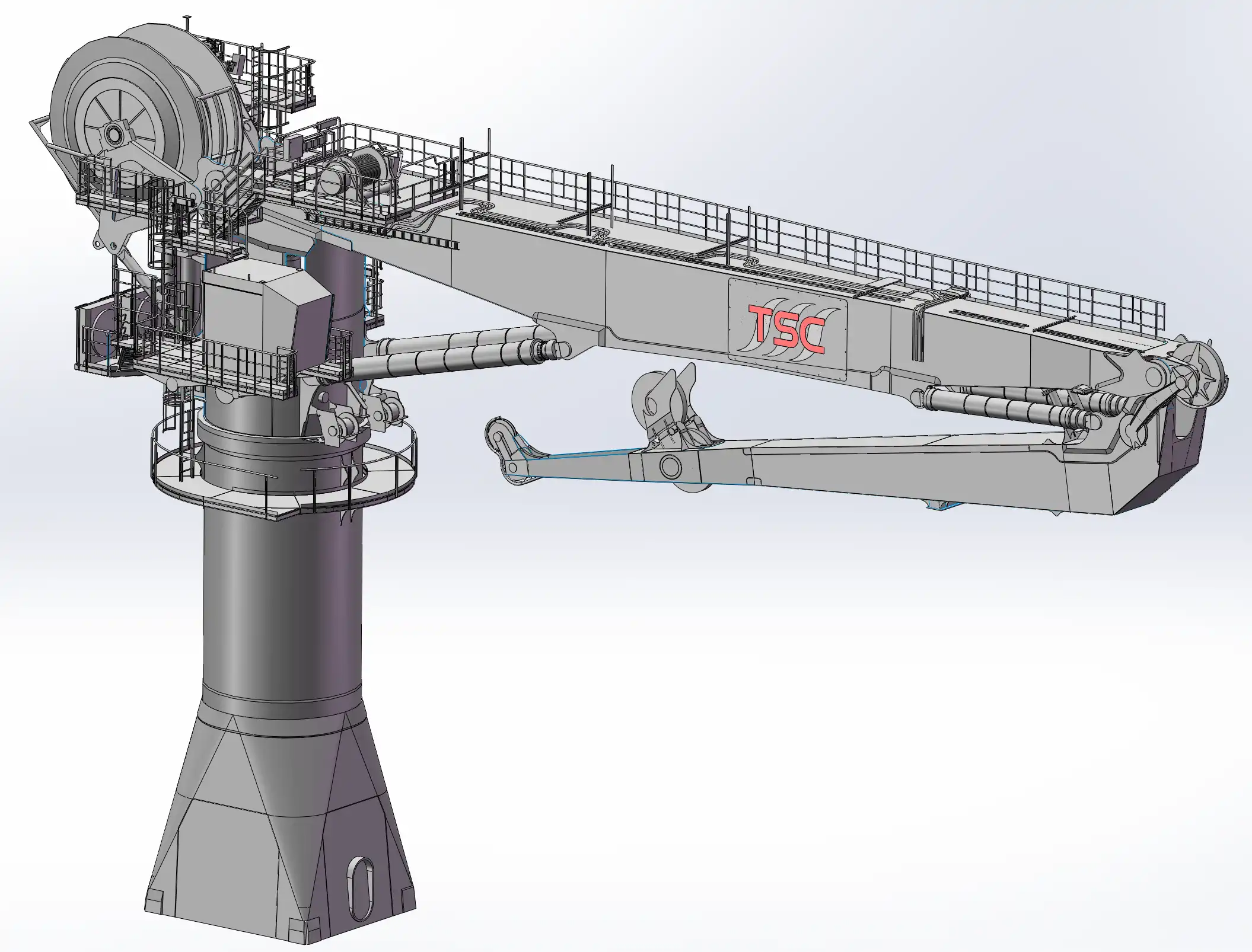
Advantages of Using AHC Cranes in Offshore Engineering
There are several advantages to putting AHC cranes on offshore sites and support vessels, such as the following:
Better safety
One of the best things about AHC cranes is that they make things safer. Active adjustment avoids load swings that might be dangerous by reducing the sway and motion induced by waves. This is also crucial for offshore work, where circumstances are more likely to cause mishaps. AHC cranes assist keep people, ships, and equipment safe by reducing these motions. This makes the work environment safer in tough offshore environments.
More efficient operations
By reducing the effects of motion, AHC technology makes activities run more smoothly. This lessening of wobble makes lifting and positioning more accurate and controlled, which in turn speeds up the time it takes to load and unload. Faster cycles lead to better productivity, which means that operations may operate more smoothly and, in the end, less downtime.
Longer Life for Machines
AHC cranes greatly lower the mechanical stress on the crane's parts by successfully controlling motion caused by waves. This lessening of tension helps keep important systems, including the winch system and hydraulic parts, from wearing out too quickly. Because of this, the crane needs less maintenance, which lowers repair costs and makes it last longer, making it a cost-effective choice for offshore work.
Settings that may be changed to fit your needs
AHC cranes are flexible because their settings may be changed to fit the demands of various offshore projects. For instance, CM Energy offers custom systems that can handle different lifting capabilities and ways of working. This flexibility makes it possible to make the crane function better for diverse jobs, such lifting huge things, placing things exactly, or working in tough environments. This makes it a useful equipment for offshore operations.
Following the rules and being reliable
AHC cranes are certified by well-known classification authorities like DNV and ABS, which means they meet worldwide safety and quality requirements. These certifications make sure that the cranes satisfy strict safety and operational standards, which gives operators and other stakeholders piece of mind. Following these rules makes sure that the cranes are reliable and long-lasting, so they can work well in tough offshore conditions while still following international rules.
Core Uses of AHC Cranes in Offshore Engineering
Active Heave Compensation cranes excel in complex offshore environments. Their versatility accommodates numerous critical operations, each requiring precision and reliability. Here are some core uses that demonstrate their outstanding capabilities:
Offshore Wind Turbine Installation
Offshore wind farms often face unpredictable sea states, making heavy load handling a strategic challenge. AHC cranes, integrated on installation platforms, precisely manage the hoisting and positioning of oversized turbine components. This reduces installation time and mitigates the risk of equipment damage or personnel injury during lifting operations.
Floating Production Storage and Offloading (FPSO) Units
FPSO boats work in tough offshore conditions and often move big equipment and modules. AHC cranes make hoisting steady by making up for the movements caused by waves. They make it possible to safely move storage tanks, processing equipment, and maintenance loads, which keeps production going and makes sure safety rules are followed.
Deck Operations for VLCC and ULCC Crude Oil Tankers
Loading arms, hoses, and safety equipment need to be handled well on the decks of Very Large Crude Carriers (VLCC) and Ultra Large Crude Carriers (ULCC). The AHC crane makes sure that the cargo stays constant even when the ship moves, which is important for safe and dependable crude oil transfer.
Handling Cargo on a Bulk Carrier
Bulk carriers carry a wide range of goods, including grains and minerals. These cranes can handle different loads, operate in different areas, and deal with fluctuations in the weather. AHC technology makes it easier to handle goods, which cuts down on loss or damage, and speeds up turnaround times in port and offshore transshipment.
Deck work on LNG/LPG carriers
Carriers of liquefied natural gas (LNG) and liquefied petroleum gas (LPG) must follow severe safety and accuracy rules. AHC cranes make it safe to load and unload cryogenic containers and other equipment by making up for the movement of the vessel and avoiding dangerous accidents.
Rescue and salvage missions in the deep sea
For emergency response, you need to be reliable even when things are uncertain. These cranes can raise rescue equipment, obstacles, and supplies for underwater recovery. They also have to deal with complicated maritime movements to keep the equipment from breaking down or slowing down rescuing operations.
Putting together heavy parts at a shipyard
AHC cranes help in the construction of big ship components at shipyards by making sure that everything is lined up correctly and that the weight is managed. Their small size and ease of maintenance help projects go forward faster and cut down on downtime, which is especially important for achieving tight delivery deadlines.
How does the Active Heave Compensation system improve crane stability?
Lessening the Effects of Wave Motion
The main job of the Active Heave Compensation (AHC) system is to offset the effects of wave motion, which is a big problem for cranes that work offshore. In offshore areas, the water may change quickly, making boats move with the waves. AHC technology moves the crane's position in real time to make up for the vertical movement produced by the waves. This keeps the crane's hook and cargo steady, which lowers the chance of mishaps caused by sudden swaying or jerking.
Better Load Control
AHC systems let you manage the load very accurately, particularly while lifting big or fragile things. AHC cranes make lifting operations smoother and more predictable by reducing the vessel's natural heave motion. This level of accuracy is very important for offshore projects where loads need to be placed just right. So, the crane can work well without putting the safety of the cargo, crew, or nearby infrastructure at risk.
Longer Lifespan of Equipment
The AHC technology also helps the equipment last longer by reducing the mechanical stress on the crane's parts. Cranes that are often moving in strong seas might wear out too quickly. The AHC system, on the other hand, actively compensates for motion caused by waves, which lowers stress on the crane's structural parts, hydraulic systems, and winches. This not only makes the crane more stable, but it also cuts down on maintenance expenses and makes the crane last longer.
Advancing Offshore Engineering with CM Energy's Innovation
CM Energy's commitment to independent research has resulted in over 159 patents and innovative solutions for offshore lifting challenges. Their AHC cranes leverage electro-hydraulic systems integrated with intelligent control modules for precise load handling and real-time monitoring. With over 25% global market coverage in offshore drilling equipment and more than 350 deck cranes supplied worldwide, their expertise is industry-trusted. This strategic positioning supports green technologies and carbon reduction initiatives, propelling the maritime industry toward a sustainable future.
Conclusion
The AHC crane is still at the forefront of offshore engineering because it provides safe, dependable, and effective lifting solutions. Its capacity to stop vessel motion solves some of the biggest problems that arise while building and operating offshore constructions including wind farms, FPSOs, and cargo ships. Operators can make the most of project timetables and safety compliance with the help of TSC's cutting-edge designs and worldwide knowledge. This shows how important these cranes are in the changing offshore scene. Finding more about the many uses of these cranes and how they can be customized shows why they are still an important part of the marine industry.
Frequently Asked Questions About AHC Cranes
1. What differentiates an AHC crane from traditional cranes?
AHC cranes incorporate active heave compensation technology to offset vessel movement caused by waves. This capability maintains load stability, increasing safety and operational efficiency in offshore environments.
2. Can AHC cranes operate in extreme sea states?
Yes, they are designed to function efficiently in harsh conditions, ensuring critical offshore operations continue uninterrupted.
3. Are these cranes customizable for specific offshore applications?
Absolutely. CM Energy provides tailor-made solutions, adjusting lifting capacities, working radii, and control systems to meet diverse operational needs.
4. What maintenance requirements do these cranes have?
The robust design emphasizes easy maintenance, using proven modular components that reduce downtime and spare part complexity.
5. How does certification impact the reliability of AHC cranes?
Classifications by CCS, DNV, ABS, BV, and LR ensure that cranes meet stringent safety, quality, and performance criteria essential for offshore deployments.
Contact CM Energy to Buy AHC Cranes
Discover the tailored AHC crane solutions offered by CM Energy, an industry-leading AHC crane supplier in offshore lifting and heavy machinery. Our cranes meet diverse operational requirements across global maritime industries. With years of expertise and cutting-edge technology, we are committed to providing reliable and efficient solutions for your lifting needs. Contact us at info.cn@cm-energy.com to discuss your project needs and receive expert advice.
References
- “Offshore Crane Operations: Fundamentals and Safety,” International Maritime Organization Report, 2023
- “Advances in Heave Compensation Technologies for Offshore Cranes,” Journal of Marine Engineering, Vol. 34, 2024
- “Floating Wind Turbine Installation Strategies,” Offshore Renewable Energy Conference Proceedings, 2024
- “FPSO Equipment Handling: Risk Mitigation and Equipment Performance,” Petroleum Engineering Review, 2023
- “Marine Safety and Engineering Controls for LNG Carrier Deck Operations,” Maritime Safety Journal, 2024
- “Innovations in Offshore Heavy Lift and Salvage Operations,” Journal of Offshore Mechanics and Arctic Engineering, 2023