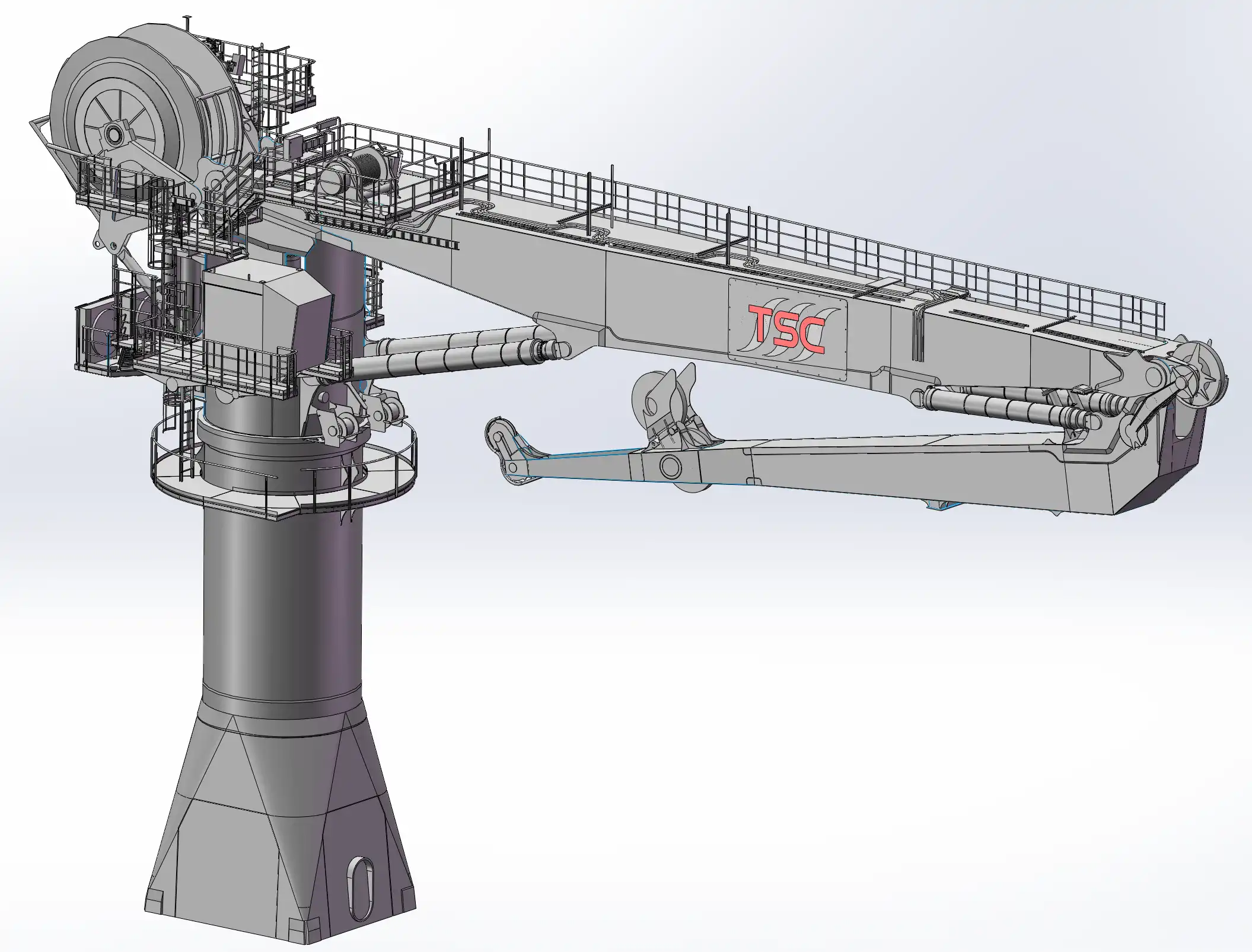
Precision Placement: AHC's Contribution to Turbine Assembly
The assembly of offshore wind turbines demands exceptional accuracy, and AHC cranes are at the forefront of meeting this challenge. These advanced lifting systems utilize sophisticated sensors and control mechanisms to counteract the effects of wave-induced vessel movements, ensuring stable and precise component placement.
Enhancing Installation Accuracy
Active Heave Compensation (AHC) technology plays a crucial role in ensuring millimeter-level precision when positioning turbine components during offshore wind turbine installations. This high level of accuracy is essential for maintaining the structural integrity and operational efficiency of the turbine once it is operational. Sensitive components such as nacelles, which house vital mechanical parts like the gearbox and generator, require careful handling to avoid misalignment, which could lead to operational inefficiencies or early wear.
Similarly, aligning turbine blades with precision is essential for ensuring proper aerodynamics and minimizing vibrations that can affect performance. AHC technology compensates for the motion of the crane caused by ocean waves, ensuring that even in rough seas, the positioning of components remains highly accurate, which is critical for the long-term reliability and performance of wind turbines.
Reducing Assembly Time
AHC cranes provide a stable and controlled lifting platform, which is crucial for minimizing the time required for each phase of turbine installation. By compensating for the movement of the sea, AHC cranes allow for continuous operations, even during less-than-ideal weather conditions. This stability accelerates project timelines as it reduces the need for delays due to rough seas or unfavorable weather. Faster installation not only reduces costs but also minimizes the exposure of workers and equipment to challenging offshore conditions, enhancing safety.
As a result, AHC cranes significantly contribute to the efficiency of offshore wind projects, ensuring that turbines are installed quickly, safely, and with minimal environmental impact. This enhanced efficiency also leads to faster returns on investment and the quicker deployment of renewable energy solutions.
Weather Challenges: Overcoming Installation Delays with AHC
Adverse weather conditions have long been a significant hurdle in offshore wind turbine installation. AHC cranes are instrumental in mitigating these challenges, allowing operations to continue in conditions that would otherwise halt work.
Extending Operational Windows
Traditional cranes often face limitations in sea states with significant wave heights. AHC cranes, however, can operate in more challenging conditions, effectively extending the weather window for installation activities. This capability is crucial for maintaining project schedules and reducing costly downtime.
Improving Safety in Rough Seas
The ability of AHC systems to stabilize loads in motion not only improves efficiency but also significantly enhances safety for offshore personnel. By reducing the risk of sudden load movements, these cranes create a safer working environment, even in turbulent sea conditions.
Future Trends: AHC Cranes in Larger Offshore Wind Projects
As the offshore wind industry evolves, so too does the technology supporting it. The future of AHC cranes in larger offshore wind projects is marked by several exciting developments that promise to further enhance their capabilities and efficiency.
Increased Lifting Capacity
As wind turbine technology advances, the demand for larger turbines with higher power generation capabilities is rising. Consequently, the lifting capacities of AHC (Active Heave Compensation) cranes are being significantly increased to accommodate these massive turbine components. These upgraded cranes are designed to handle much larger nacelles, turbine blades, and other heavy structures, which are necessary for the next generation of offshore wind farms.
The increased lifting capacity ensures that turbines, which may weigh several hundred tons, can be installed with precision, even in rough offshore conditions. This development is critical for the continued expansion of the offshore wind industry, as larger turbines can generate more electricity, improving the overall efficiency of wind farms.
Integration of Artificial Intelligence
Artificial intelligence is poised to revolutionize AHC crane operations, significantly enhancing their capabilities. AI-enhanced cranes will offer predictive motion compensation that adapts in real-time to changing sea conditions, ensuring an even higher level of precision and efficiency during the installation of wind turbines. Machine learning algorithms can anticipate and adjust crane movements based on dynamic factors such as wave height and wind speed, optimizing the installation process. This real-time adaptability not only improves the accuracy of turbine component positioning but also enhances the safety and speed of offshore lifting operations.
Sustainable Power Solutions
Looking ahead, future AHC cranes are likely to adopt more sustainable power solutions, such as electric or hybrid drives. These environmentally friendly systems will reduce the carbon footprint of offshore lifting operations, aligning with the broader goal of making offshore wind farms more sustainable. Electric and hybrid cranes are expected to offer improved energy efficiency, using less fuel while maintaining high-performance standards. By reducing reliance on traditional fossil fuels, these power solutions will not only lower emissions but also contribute to the overall environmental benefits of offshore wind farms. In addition to their environmental advantages, these systems are also more cost-effective in the long term, thanks to lower operating and maintenance costs.
Conclusion
The role of AHC cranes in offshore wind turbine installation is undeniably crucial. As the renewable energy sector continues to grow, these advanced lifting systems will play an increasingly important part in the efficient and safe construction of offshore wind farms. The precision, weather resilience, and adaptability of AHC technology make it an indispensable tool in the pursuit of sustainable energy solutions. With ongoing advancements in lifting capacity, AI integration, and sustainable power systems, AHC cranes are set to remain at the forefront of offshore wind technology, driving the industry towards a greener future.
Elevate Your Offshore Wind Projects with CM Energy's AHC Cranes
Experience the pinnacle of offshore wind turbine installation with CM Energy's state-of-the-art AHC cranes. Our TSC brand offers unmatched precision, reliability, and efficiency for your large-scale offshore projects. With a legacy of innovation and a commitment to sustainability, CM Energy is your trusted partner in renewable energy solutions. Discover how our advanced AHC crane technology can transform your offshore wind installations, reduce project timelines, and maximize your return on investment. Contact our expert team today at info.cn@cm-energy.com to learn more about our AHC Crane solutions and how we can support your renewable energy goals. Choose CM Energy - your premier AHC Crane manufacturer for offshore excellence.
References
- Johnson, R. (2023). "Advancements in Offshore Wind Turbine Installation Techniques". Renewable Energy Engineering Journal, 45(3), 287-302.
- Smith, A. & Lee, K. (2022). "The Impact of AHC Technology on Offshore Wind Farm Construction Efficiency". Marine Technology Review, 18(2), 112-128.
- Offshore Wind Energy Association. (2024). "Annual Report on Offshore Wind Installation Technologies". OWEA Publications.
- Chen, X. et al. (2023). "Comparative Analysis of Crane Technologies in Offshore Wind Turbine Assembly". Journal of Renewable Energy Systems, 37(4), 521-537.
- Davis, M. (2024). "Future Trends in Offshore Wind: The Role of Advanced Lifting Systems". Sustainable Energy Technologies, 29(1), 75-91.
- International Maritime Organization. (2023). "Safety Guidelines for Offshore Wind Turbine Installation". IMO Technical Report Series.