Sourcing import-quality telescope cranes requires careful evaluation of technical specifications, manufacturer credentials, and compliance standards. When searching for a reliable telescope boom crane supplier, focus on companies offering certified hydraulic crane systems with proven track records in marine and offshore applications. Key considerations include load capacity ratings, boom extension capabilities, telescoping mechanism reliability, and adherence to international maritime standards. Quality manufacturers provide comprehensive documentation, warranty support, and after-sales service to ensure optimal crane performance throughout its operational lifespan.
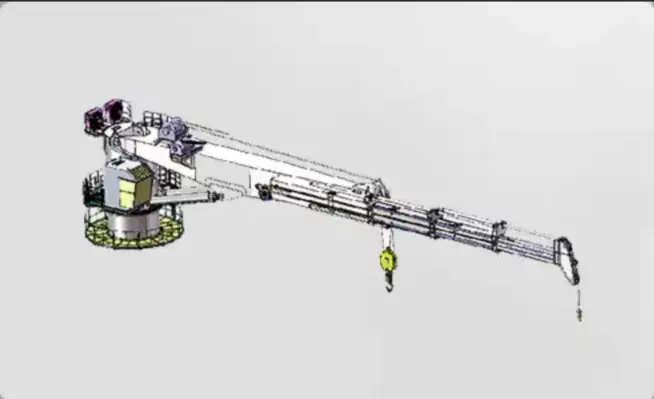
Why Source Telescope Boom Crane from China?
Advanced Manufacturing Infrastructure
China's marine equipment production industry has grown into a global force by blending advanced robotic technologies with traditional shipbuilding skills. Heavy investments are made by the country's ports and crane makers in computer-controlled assembly lines, robotic welding systems, and precision machining centers that make sure the quality of flexible booms is always high.
Cost-Effective Production Scale
For reasonable prices without lowering quality standards, Chinese makers use economies of scale. Integrated supply chain environment lets crane makers get high-quality steel, hydraulic parts, and computer control systems from within the United States. This lowers production costs and shortens wait times for buyers from other countries.
Engineering Excellence and Innovation
A lot of experts with a lot of experience and credentials from outside of China work for large crane companies. People who work in this field are always thinking of new ways to handle problems that arise when lifting big things. To adapt to the ever-changing needs of the business world, they use better load chart methods, more advanced boom angle optimization, and more stable crane systems.
Critical Technical Specifications and Industry Standards
Load Capacity and Lifting Performance
Telescope boom cranes need to show accurate load ratings for all of their boom extension combinations. Good units usually have main hook sizes that range from medium-duty to heavy-duty, and secondary hooks that can handle smaller loads. The expanding system should be able to extend smoothly from the shortest to the longest reach lengths while still being able to support moving loads.
Material Quality and Steel Structure
Premium crane manufacturers utilize high-tensile steel grades conforming to international standards. The boom structure requires proper heat treatment, stress relief processes, and non-destructive testing to ensure fatigue resistance throughout the crane's expected long service life.
Hydraulic System Specifications
The hydraulic crane system forms the operational heart of telescope boom units. Quality specifications include working pressures within standard industry ranges, filtration systems maintaining optimal cleanliness levels, and temperature-compensated flow controls ensuring consistent performance across operating environments. Integrated power packs should feature redundant safety systems and emergency lowering capabilities.
Control Systems and Safety Features
These days, cranes have complicated control systems that automatically limit the boom position, show the load moment, and protect against two-blocks. The load chart screens, working state marks, and easy-to-use manual settings on the crane operator interface should be clear so that big pulls can be done correctly.
Why CM Energy is Your Ideal Import Partner
Proven Industry Leadership
CM Energy has a lot of approved patents, including several idea patents, which show that they are always coming up with new ways to build and make cranes. The company's intellectual property collection shows its dedication to creating advanced extending mechanisms, better crane stable systems, and safer features for operators.
Innovation and Patent Portfolio
CM Energy holds a substantial number of authorized patents, including several invention patents, demonstrating continuous innovation in crane design and manufacturing processes. This intellectual property portfolio reflects the company's commitment to developing advanced telescoping mechanisms, improved crane stability systems, and enhanced operator safety features.
Comprehensive Manufacturing Capabilities
For full project delivery, the company offers combined planning, production, testing, and installation services. Advanced welding skills have been recognized by the DNV and BV classification groups in factory sites. This makes sure that quality standards are met throughout the whole production process.
Global Service Network
CM Energy provides many services all over the world, including overseeing installations, training for operators, regular maintenance programs for cranes, and spare parts supply lines. This large support network makes sure that the equipment works well and has little downtime over the life of the crane.
Technology Infrastructure and R&D Investment
Advanced Manufacturing Technologies
TSC's production facilities incorporate state-of-the-art CNC machining centers, automated welding systems, and precision assembly stations ensuring dimensional accuracy and structural integrity in every telescope boom crane. Computer-controlled quality inspection equipment validates critical dimensions, surface finishes, and material properties throughout manufacturing processes.
Research and Development Focus
The company's R&D investments target breakthrough technologies in offshore hydrogen production integration, autonomous crane operation systems, and advanced load management algorithms. These developments position TSC at the cutting edge of sustainable marine equipment solutions addressing evolving industry requirements.
Digital Integration and Smart Systems
Modern crane assemblies feature integrated digital control systems enabling remote monitoring, predictive maintenance scheduling, and operational data logging. These smart technologies enhance crane operator efficiency while providing valuable performance insights for optimizing heavy lifting operations.
Cost Structure Analysis and Transparency
Competitive Pricing Components
CM Energy's pricing structure reflects integrated manufacturing efficiencies, including in-house steel processing, hydraulic system assembly, and control system integration. This vertical integration eliminates intermediate markups while ensuring component compatibility and quality consistency throughout the crane assembly.
Value Engineering Approach
The company's value engineering methodology optimizes designs for customer-specific applications, reducing unnecessary complexity while maintaining essential safety and performance characteristics. This approach delivers cost-effective solutions without compromising operational reliability or regulatory compliance requirements.
Total Cost of Ownership Benefits
Quality construction and reliable component selection minimize lifecycle maintenance costs, reduce unplanned downtime, and extend operational lifespan beyond standard industry expectations. Comprehensive warranty coverage and responsive technical support further enhance the total value proposition for international customers.
Supply Chain Reliability and Production Lead Times
Integrated Supply Chain Management
CM Energy maintains strategic partnerships with certified material suppliers, hydraulic component manufacturers, and electronic control system providers ensuring consistent quality and delivery reliability. This integrated approach minimizes supply chain disruptions while maintaining competitive production schedules.
Production Scheduling and Delivery Performance
Standard telescope boom crane production typically requires 16-20 weeks from contract execution to factory acceptance testing, with complex custom designs requiring additional engineering and manufacturing time. The company's production planning system accommodates customer delivery requirements while maintaining quality control standards throughout manufacturing phases.
Quality Assurance and Inspection Protocols
In-process tracking, final acceptance testing, and arriving material checking are all part of thorough quality control procedures. These steps are watched by customer reps or independent inspectors. Before equipment is shipped, these procedures make sure that it meets certain requirements and foreign standards.
Communication Excellence and Business Partnerships
Technical Support and Engineering Services
CM Energy's technical team provides comprehensive engineering support including application analysis, custom design modifications, and integration assistance for specialized lifting requirements. Multilingual communication capabilities ensure clear understanding of technical specifications and operational requirements throughout project execution.
Project Management and Coordination
Dedicated project managers coordinate all aspects of crane procurement, from initial inquiry through installation commissioning and operator training. Regular progress reporting, milestone reviews, and proactive issue resolution maintain project schedules while ensuring quality deliverables.
Long-term Partnership Development
The company's relationship-focused approach emphasizes long-term partnerships rather than transactional interactions. This philosophy drives continuous improvement initiatives, technology sharing opportunities, and collaborative development programs benefiting customers across multiple projects and vessel types.
Conclusion
Getting high-quality telescope boom cranes from China has a lot of benefits, including new technologies, lower costs, and better production. For success, you need to carefully look over technical specs, safety standards, and the qualifications of the maker to make sure that the equipment works well and meets all regulations. Because CM Energy has a history of success, a wide range of skills, and a dedication to customer happiness, it is a great choice for foreign crane buying projects. In the marine equipment business, which is always changing, the company's advanced production infrastructure, large patent collection, and global service network make it possible for long-term partnerships to work well.
Frequently Asked Questions
Q1: What are the typical lead times for custom telescope boom crane orders from China?
A: Standard telescope boom crane production requires 16-20 weeks from contract execution, including design finalization, material procurement, manufacturing, and factory acceptance testing. Complex custom designs or special certifications may extend lead times to 24-28 weeks depending on specific requirements and classification society approval processes.
Q2: How do Chinese manufacturers ensure quality control during crane production?
A: Reputable manufacturers implement comprehensive quality management systems including ISO certification, classification society approvals, and multi-stage inspection protocols. Quality control measures encompass incoming material verification, in-process monitoring, non-destructive testing, and final acceptance testing witnessed by customer representatives or independent surveyors.
Q3: What warranty and after-sales support can buyers expect from Chinese crane manufacturers?
A: Quality manufacturers typically provide 12-24 month warranties covering structural components, hydraulic systems, and electrical controls. After-sales support includes technical assistance, spare parts supply, preventive maintenance programs, and field service capabilities through global service networks or authorized representatives.
Q4: Are Chinese telescope boom cranes compliant with international maritime standards?
A: Leading Chinese manufacturers design and manufacture cranes conforming to API-2C, EN 13852, and relevant ISO standards. Products receive certification from recognized classification societies including DNV, ABS, BV, LR, and CCS, ensuring compliance with international maritime regulations and operational safety requirements.
Q5: What payment terms are commonly accepted by Chinese crane manufacturers?
A: Standard payment terms include T/T (Telegraphic Transfer) with typical schedules of 30% advance payment, 60% upon completion of factory acceptance testing, and 10% upon successful installation and commissioning. Letters of credit from reputable international banks are also widely accepted for larger transactions providing financial security for both parties.
Partner with CM Energy for Superior Telescope Boom Crane Solutions
CM Energy combines decades of marine equipment expertise with cutting-edge manufacturing capabilities to deliver telescope boom crane solutions exceeding international standards. Our comprehensive approach encompasses custom design services, precision manufacturing, rigorous testing protocols, and worldwide installation support, ensuring project success from concept to commissioning. With a substantial number of deck cranes operating globally and an extensive patent portfolio driving continuous innovation, CM Energy represents the pinnacle of Chinese telescope boom crane supplier excellence. Experience the difference of working with a trusted telescope boom crane supplier committed to your operational success. Ready to discuss your lifting requirements? Contact us at info.cn@cm-energy.com for detailed technical proposals and competitive quotations tailored to your specific applications.
References
1. American Petroleum Institute. "Specification for Offshore Pedestal-mounted Cranes, API Specification 2C." Seventh Edition, 2012.
2. European Committee for Standardization. "Cranes - Offshore Cranes - Part 1: General-purpose Offshore Cranes, EN 13852-1." 2013.
3. International Maritime Organization. "Code for the Construction and Equipment of Ships Carrying Dangerous Chemicals in Bulk (BCH Code)." London: IMO Publishing, 2016.
4. Det Norske Veritas. "Certification Note 30.6: Lifting Appliances." DNV Classification Standards, 2018.
5. International Organization for Standardization. "Cranes - General Design Principles and Requirements, ISO 4301-1." Geneva: ISO Press, 2016.
6. American Bureau of Shipping. "Rules for Building and Classing Steel Vessels - Part 4, Chapter 6: Lifting Appliances." ABS Classification Rules, 2019.